
Here’s a tighter version that keeps the context, facts, chronology, attribution, quote, and link exactly intact while giving the opening more punch:
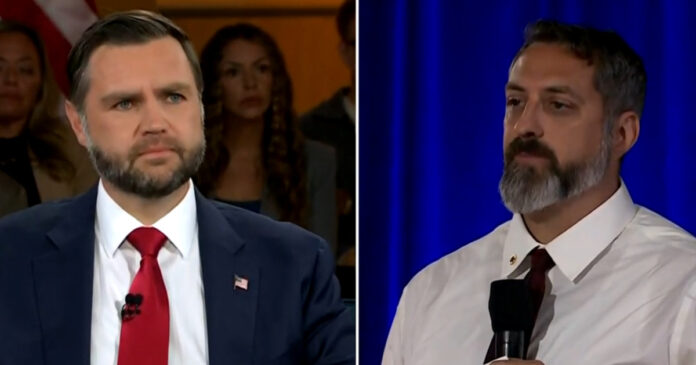
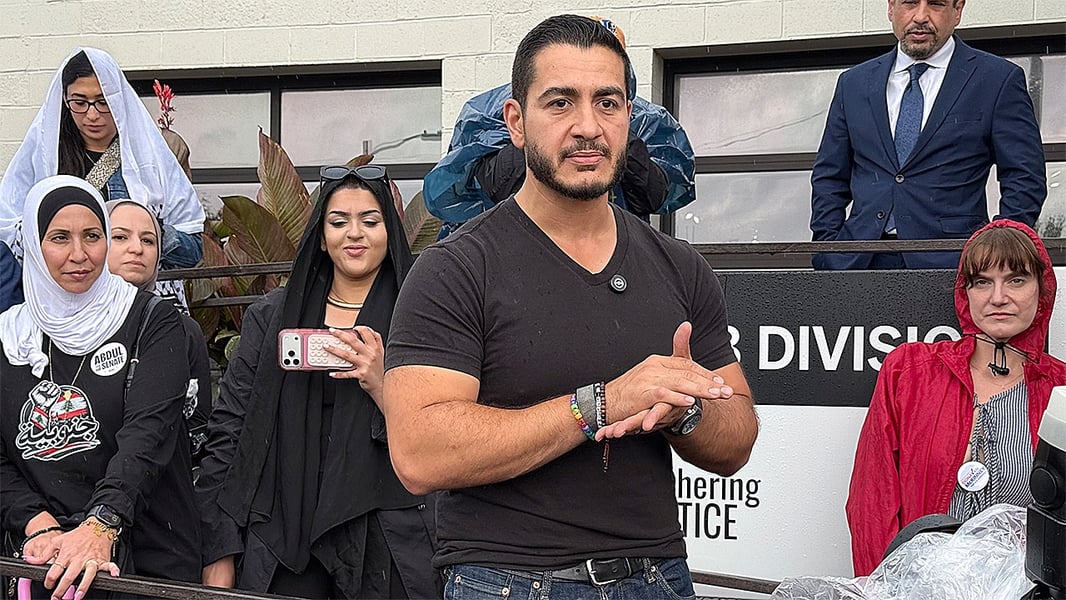
DETROIT — When Speaker Mike Johnson stood before the Republican National Convention this summer and called Democrats “barbarians at the gate,” he singled out two candidates: Zohran Mamdani of New York and Abdul El-Sayed of Michigan.
On Sunday, El-Sayed returned the compliment.
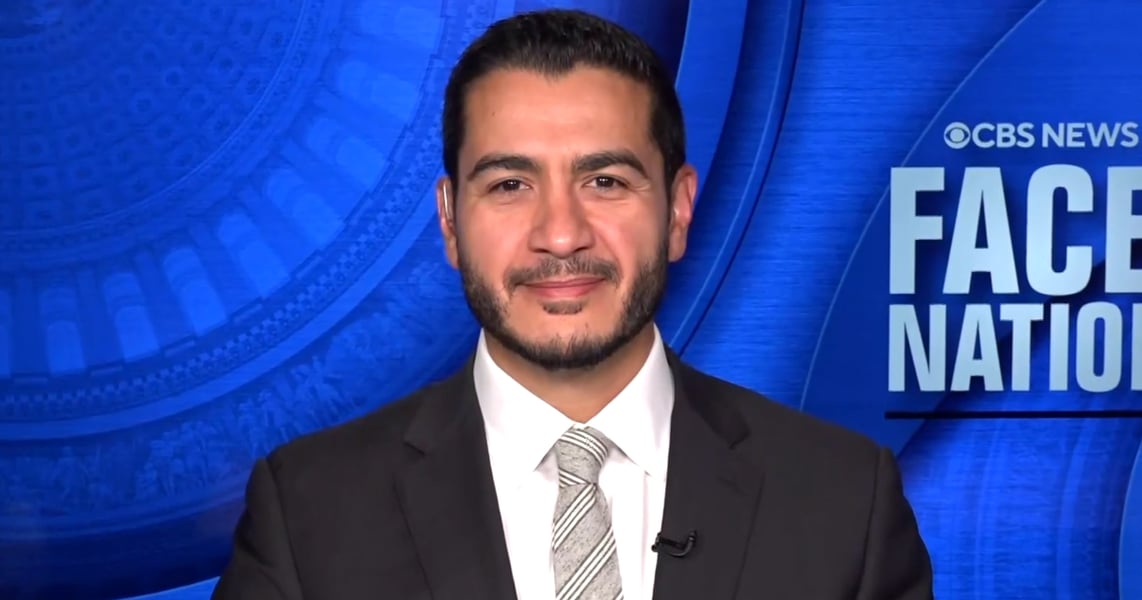
“The barbarian in the White House has cost the average Michigan family $5,600 a year in tariffs,” El-Sayed told Margaret Brennan on CBS‘s “Face the Nation”, in his first major national television appearance since winning the Democratic Senate primary in Michigan. “That’s not strength. That’s a con.”
The exchange captured what El-Sayed is attempting in a race that could determine whether Democrats retake the Senate in November: a campaign built not on cautious centrism, but on an aggressive convergence of economic populism, universal health care and a genuinely unusual position on artificial intelligence — one that puts him further left than most Democratic Senate candidates and, on AI at least, in unexpected alignment with at least one major tech executive.
Michigan’s Senate race pits El-Sayed, a physician and former state health director who ran for governor in 2018, against Mike Rogers, a former Republican congressman who lost a Senate primary in 2024 before returning to run again this cycle. Rogers stood on the RNC stage in July and attacked El-Sayed alongside Trump, Vance, and Johnson. El-Sayed is now running in part on being worth attacking.
The tariff argument is his most direct economic indictment. Michigan, still the center of the American auto industry, has been hit by the compound effects of Trump’s broad tariffs and what El-Sayed describes as a “war with Canada,” targeting the cross-border supply chains the automotive sector depends on. The $5,600 annual cost figure broadly tracks with estimates from economic analysts measuring the cumulative consumer impact of the current tariff regime on Midwestern manufacturing states.
The proposal has no precedent in American legislative history. El-Sayed acknowledged as much. What he added was more striking: he cited Dario Amodei, the chief executive of Anthropic, as having independently arrived at similar conclusions about the need for external governance structures. “The people building these systems,” El-Sayed said, “are themselves asking why this is being left entirely to large corporations.”
Amodei published a lengthy essay this spring arguing that AI labs cannot self-regulate effectively and that some form of external oversight is necessary. He stopped short of endorsing public ownership. El-Sayed’s proposal goes considerably further, and notably arrives the same Sunday that House Democratic Leader Hakeem Jeffries, appearing on ABC’s “This Week,” called for an emergency caucus on AI regulation after ex-Anthropic researcher Jacob Coxon’s viral resignation warning that AI could kill everyone reached an estimated 155 million readers. That pair of appearances suggests a Democratic Party in the middle of an uncoordinated but accelerating reckoning with AI policy, as detailed in Eastern Herald’s coverage of Jeffries’s call to action.
The Michigan race is among the nine Senate seats CBS News has designated as critical battlegrounds heading into November. Democrats need a net gain to take the chamber. Michigan has a union base, an automotive economy directly exposed to tariff damage, and a large Arab American community in Dearborn energized by the Gaza conflict. NPR has profiled El-Sayed as a candidate whose 2018 governor’s race built an organizing infrastructure the current Senate campaign is deliberately reviving. He is betting that his physician’s background gives him credibility on both the Medicare for All and the AI-as-public-health-crisis arguments simultaneously.
On Medicare for All, El-Sayed was direct: universal health care is a platform commitment, not a talking point, and he described the current system as one that extracts money from patients for the benefit of insurance shareholders. He offered no cost estimate or transition timeline on “Face the Nation,” and Brennan did not press him on the legislative arithmetic.
On the wealth tax, El-Sayed stayed broad. Billionaires should pay their fair share. No rate, no threshold, no mechanism described.
What El-Sayed did not address on Sunday was the NBC News polling released this week, showing 69 percent of voters opposing large-scale data center construction in their communities. That resistance to AI infrastructure has become a source of political anxiety for House Republicans in suburban districts. El-Sayed’s public-trust model, if it gained traction, would transform that resistance from a NIMBY objection into a structural governance argument.
Rogers has not yet responded to Sunday’s appearance, and it is not clear whether the “barbarian” counter-punch will register in the kind of televised exchange both campaigns will eventually need. Michigan’s general election is still seven weeks out.
What the AI regulation debate cannot yet answer is whether El-Sayed’s Senate seat would matter to it. Senate Democrats are at this point without a chamber majority and without an AI bill. Whether El-Sayed arrives in Washington to push that agenda depends on Michigan voters, on whether Rogers finds a message that sticks, and on whether the tariff math of $5,600 per family cuts through in a state that built cars for a century and is now being asked to decide whether artificial intelligence belongs to the public or only to the people who can afford to build it.