
WASHINGTON — Jon Husted never anticipated that data centers would emerge as the defining issue of his Senate campaign. The Republican senator from Ohio entered the race having championed artificial intelligence infrastructure as a cornerstone of economic renewal during his time as the state’s lieutenant governor—an endorsement that once drew praise from party donors and sparked no pushback from constituents. That was before the electricity bills arrived.
A new NBC News Decision Desk poll, conducted August 20 through September 1, found that 69 percent of American voters oppose data center construction in their communities, with 45 percent opposing strongly. The numbers hold across partisan lines. Eighty-one percent of Democrats oppose the buildout. So do 71 percent of independents. And 57 percent of Republicans, the voters Husted needs most in a state where the Senate majority may depend on his race, oppose it too.
The Republican National Senatorial Committee has not been quiet about the implications. A memo dated August 18 that circulated among party operatives put it directly: data centers are “the anchor hanging around Husted’s neck.” The memo warned that if Husted loses and the issue absorbs the blame, “politicians across the country will take notice.” The party’s own campaign arm had concluded that the president’s signature industrial policy had become a liability too visible to manage from inside it.
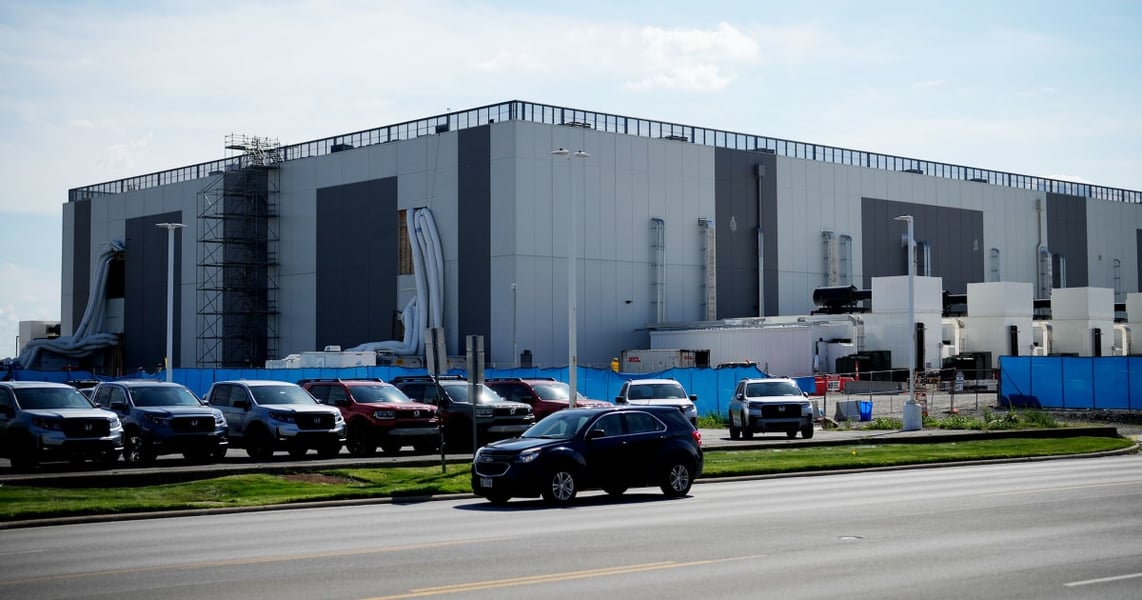
What makes Husted’s position particularly difficult is its history. He was a full-throated advocate for data centers during his time as lieutenant governor, NBC News reported. That record gives his Democratic opponent, former senator Sherrod Brown, clean material. Brown, who lost his Senate seat in 2024 and is now attempting to reclaim it, has made the data center buildup a centerpiece of his campaign, framing it not as an environmental argument but as a cost argument. Ohio has more than 200 data centers, ranking sixth nationally. A proposed campus in Pike County, projected at $500 billion and ten gigawatts of capacity, has crystallized local anger into something approaching a statewide movement. What Brown is telling Ohio voters is that the energy these facilities consume raises electricity prices for everyone else.
Husted has moved. In July he introduced legislation requiring utility companies to charge large-scale data center operators enough to cover the costs of the increased electricity and water use their facilities demand. It is a meaningful concession. It is also, the polling suggests, not yet enough.
Trump has not helped. On August 31 he posted on Truth Social that communities resisting data center construction were “backwards and poor.” The framing hands Brown exactly what his campaign wants: a chance to run against the policy as presidential contempt for Ohio rather than a technical dispute about kilowatts and grid capacity. The comment has appeared in Brown’s campaign advertising since.
Ohio is not alone. In Michigan, Republican Senate candidate Mike Rogers has backed a one-year state moratorium on new data center construction, a position that would have been unimaginable for a Republican candidate in a prior cycle. In Pennsylvania, Democratic Governor Josh Shapiro signed an executive order requiring data centers to cover the costs of electricity infrastructure upgrades their facilities demand. Across the Northeast, similar pressures have reshaped the political conversation around AI infrastructure, with data center policy becoming a flashpoint in state races as it did in New York earlier this year. The moves differ in mechanism but their political logic is identical: neither party’s operatives believe they can hold battleground voters while being seen as indifferent to the costs these facilities impose.
The harder question is whether anti-data-center sentiment translates into actual ballot behavior or whether it is a preference that dissolves under the weight of other considerations when voters stand in the booth. Opposition polling on infrastructure consistently overstates the durability of local resistance once an election is fully framed around other issues. Whether 57 percent Republican opposition to data centers becomes 57 percent of Republicans voting against a Republican incumbent for that reason alone is a very different proposition. The NRSC memo does not claim it will. It claims the risk is real enough to warn about.
What the memo does not contain is a solution. It identifies the danger and names the stakes. It does not explain how a senator who was an early advocate for precisely what the polling now rates toxic separates himself from that record without alienating the president whose base he needs, or endorses the president’s policy without confirming his opponent’s argument. In Ohio, with 51 days to Election Day, Husted has not resolved that question. The data suggests he is running out of time to find the answer.