
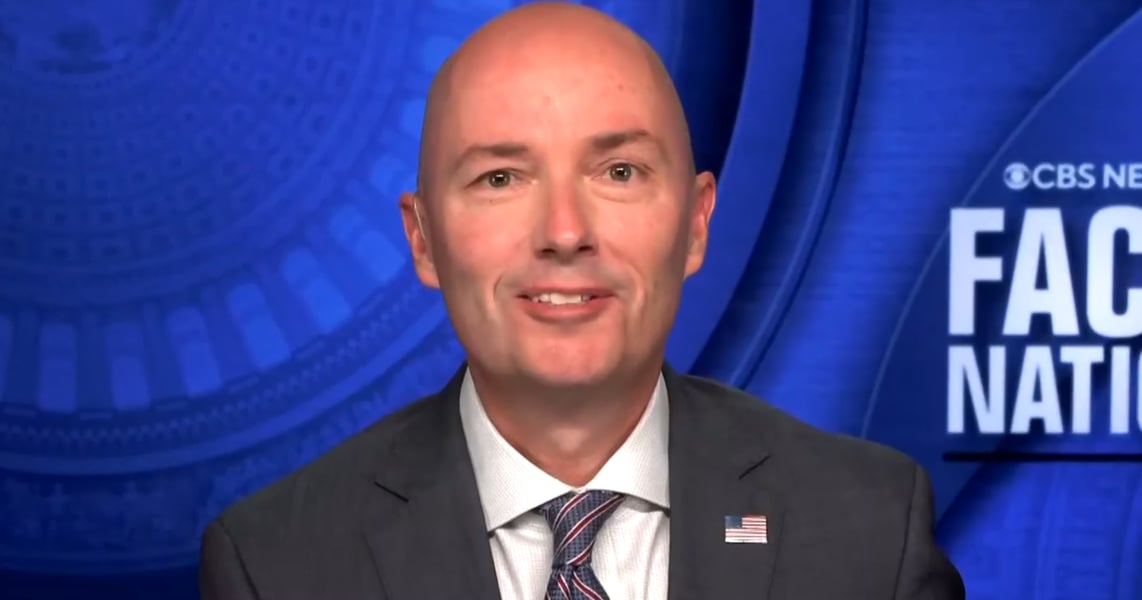
WASHINGTON – When Spencer Cox appeared on CBS Face the Nation on Sunday, he brought with him a contradiction that has quietly complicated the Republican Party’s approach to voting restrictions for months. The Utah governor, who signed a bill last year to phase out his state’s decades-old universal vote-by-mail system, conceded on national television that the Trump administration’s executive order giving the U.S. Postal Service sweeping oversight over mail-in ballot distribution “would certainly have an impact” in Utah, where 95 percent of voters cast their ballots by mail in the June 2026 primary.
That is not the kind of concession Republican governors typically make about their own president’s policies in September before a midterm. But Cox is a governor who spent a decade helping build one of the most administratively reliable mail-ballot systems in the country, and then voted to dismantle the universal access piece of it, and he can see exactly what a federal override would disrupt.
“Unlike many other states, we took about a decade to implement vote-by-mail,” Cox told host Margaret Brennan. “We have tremendous security measures in place, and we’re adding more all of the time.”
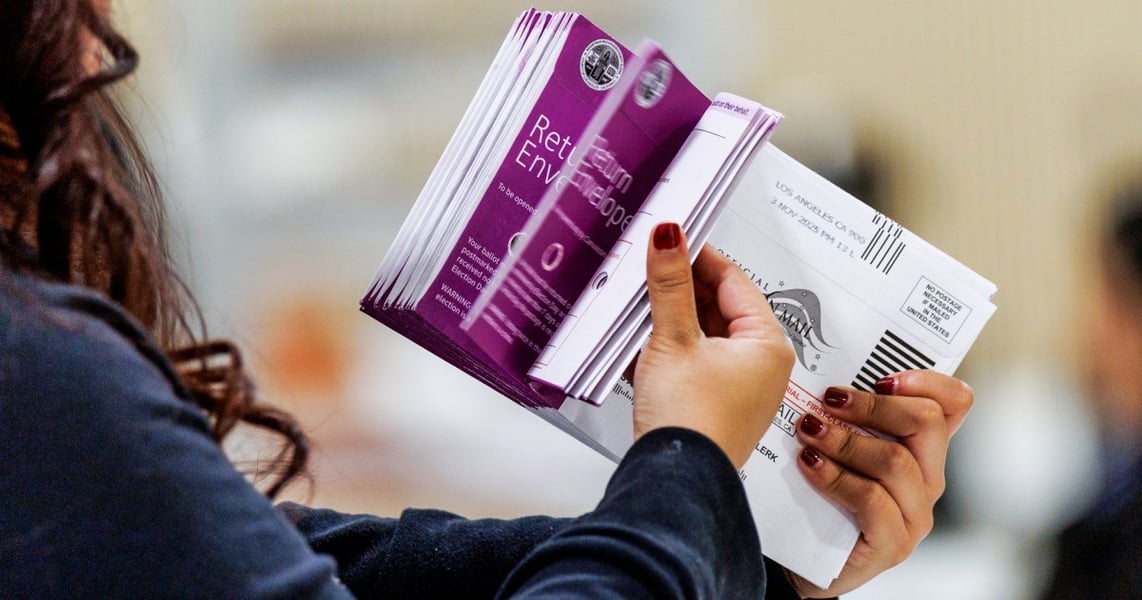
Trump signed Executive Order 14399 on March 31, 2026, directing the Postal Service to take an active role in deciding which registered voters receive mail-in ballots. Under the order, USPS must verify voter eligibility against federal and state databases, withhold ballots from voters whose records cannot be confirmed, and require that ballot return envelopes carry unique barcodes to track their movement. The USPS issued its final implementing rule on August 26, with an effective date listed as August 21.
That retroactive effective date matters: the order is already legally operative in the states where courts have not blocked it, and six weeks remain before Election Day.
No federal court has given the Trump administration the legal clearance it needs to implement the full order before November. But the Court has not ruled it out either.
The political math is what makes Cox’s position unusual. In the June 2026 Utah primary, 95 percent of voters cast their ballots by mail. That number reflects nearly a decade of deliberate state investment in election infrastructure, voter education, and security protocols that the state has audited and refined over multiple election cycles. Cox did not build that system to have a USPS official in Washington decide that certain Utah voters are not on the right database.
At the same time, Cox signed legislation in March 2025 that would begin phasing out Utah’s universal vote-by-mail model starting in 2029, making Utah the first state in the nation to voluntarily roll back universal mail voting access. That bill was a state-designed transition over four years, with Utah retaining full administrative control at every step. The executive order is something categorically different: it inserts USPS as a gatekeeper between registered voters and their ballots, operating off databases that may not match state voter rolls, with no state-level override mechanism built in.
The distinction is one Cox appeared to feel acutely but declined to spell out directly on camera.
ProPublica reported earlier this year that USPS career officials raised internal concerns the order could produce “mass disenfranchisement” in states with high mail-ballot usage. That language is unusually strong from career postal employees who typically avoid policy characterizations in internal communications. What it suggests is that the operational problem is not theoretical: USPS databases, assembled for package delivery and address verification, were not designed to adjudicate voter eligibility with the speed and accuracy that election administration requires.
The Supreme Court’s three emergency applications in roughly a month reflect how quickly this case is moving toward the November calendar. Republicans in competitive Senate races have largely avoided public comment on the order. Heading into the midterms, as nine Senate seats the CBS Battleground Tracker has designated as critical battlegrounds hang in the balance, the party’s vulnerability involves states where mail-ballot infrastructure is less developed than Utah’s and where any disruption to the process would hit the electorate unevenly.
Cox on Sunday was careful not to call for the order’s repeal or to criticize the president directly. What he offered was a quiet warning that federal intervention in a state that already runs its elections competently creates a different problem than the one the administration is trying to solve. Cox’s posture stands in contrast to others who appeared on the same Sunday broadcast with sharply different arguments about federal overreach in state election systems.
Utah built its vote-by-mail system over a decade and tested it across multiple election cycles. The open question now is whether the Supreme Court will allow the Postal Service to override it before November, and whether justices who have already been asked three times to intervene in the same case will treat a fourth request as an invitation to finally decide the underlying constitutional question.