
COLUMBUS — The eight-year extension window that unsigned NHL players have been measuring themselves against closes at midnight tonight. For most players, the deadline is the story: a structural rule that changes what a team can offer, with one day still available and none the next.
For Adam Fantilli and the Columbus Blue Jackets, it is almost beside the point.
The second overall pick in 2023 remains unsigned. Training camp has opened with Columbus’s franchise center still on his entry-level contract and no agreement on a path forward. But the stalemate has little to do with eight years versus seven.
Fantilli wants five years. Columbus general manager Don Waddell wants six or more.
Tonight’s deadline does not resolve that disagreement. At 12:01 a.m. Tuesday, it will exist in exactly the same form it does now.
That is the unusual shape of this negotiation. The term Fantilli’s camp is seeking — five years — is a deliberate, comparable-based position. Connor Bedard signed for five years and $75 million. Leo Carlsson, taken one pick ahead of Fantilli in the 2023 draft, signed for five years and $90 million. Fantilli’s representatives have drawn a direct line from those deals to his: a player selected second overall should not receive a shorter or less favorable runway than the players taken immediately around him. Five years, they argue, is the market.
Columbus’s objection is organizational. Waddell has been publicly confident — “100% confident,” he told reporters — while making equally clear that he wants a deal locking Fantilli in as the franchise cornerstone for the foreseeable future. Six years minimum keeps Fantilli in Columbus through his age-26 or age-27 season. Five years gets him to unrestricted free agency a year earlier. That is the gap between them. One year.
In the language of NHL contract negotiations, one year of organizational control is not a small concession, but it is also not an unbridgeable distance. Reports this week described talks producing little if any progress despite Waddell’s public confidence — a gap between a GM’s stated posture and a negotiation’s actual trajectory that is telling regardless of what it means about who will eventually move first.
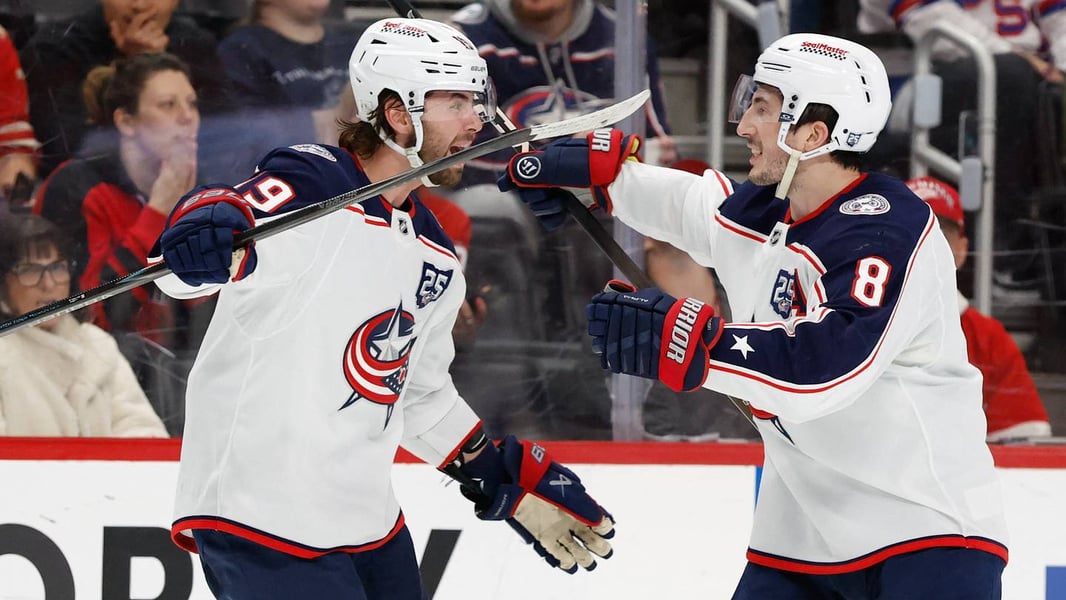
Columbus entered September with these talks already at an impasse, and the question is starker by the day: a second-overall pick is heading into his third professional season without a long-term contract, not because the organization doubts his ability or the market cannot support the value, but because neither side will move one year in either direction.
The broader context is what Columbus has built toward this negotiation. The Blue Jackets are not yet a playoff team. They have spent two drafts and multiple trade-deadline decisions on the premise that Fantilli — alongside Zach Werenski, Ivan Provorov, and the players Columbus has assembled around them — will be the reason they become one. Waddell’s push for six or more years is not organizational stubbornness. It is the logical extension of a rebuild that has treated Fantilli as its cornerstone from the moment they drafted him second overall.
Fantilli’s push for five years is not disloyalty. It is a rational reading of a market that has rewarded top draft picks with term flexibility — the ability to reach free agency at a moment when a player’s value is clearest and his options are most open. The comparable deals signed by Bedard and Carlsson established a precedent Fantilli’s camp has every right to invoke. The disagreement is not about whether Fantilli belongs in Columbus. It is about who controls the timeline of when that question gets asked again.
Ottawa reached the same midnight deadline with a similar gap between the Senators and Drake Batherson on term and value, another franchise player whose talks had stalled on numbers the organization acknowledged they understood but could not reach in time.
Tonight’s deadline adds not a resolution but a layer. If Columbus and Fantilli do not agree before midnight, the maximum term the organization can offer its own player drops from eight to seven years. That does not close a deal between two sides arguing about five versus six. It changes the ceiling of a theoretical offer that neither party was considering. The deadline, in other words, governs a number that was never on the table.
Where that leaves Columbus depends on who moves, and when, and by how much. Training camp is open. The preseason begins in days. Fantilli has continued to participate without a contract, which is itself a signal — he believes a deal is coming and is not forcing Columbus’s hand by staging a holdout. Whether Waddell’s confidence reflects genuine progress or a negotiating posture that has made the organization slower to close is the question tonight answers. Not by resolving the gap, but by establishing what the negotiating room looks like when one ceiling — the one neither side was going to use — disappears.
The Blue Jackets have until midnight to offer eight years. They will almost certainly not need to. What they need is five and a half, or six, or whatever number Fantilli’s camp accepts — and to get there before the preseason turns a contract dispute into a season-opening story.