
WASHINGTON – Kevin Warsh had one unanimous Federal Open Market Committee vote and a president calling for 1 percent rates before midnight.
The Federal Reserve raised its benchmark interest rate by a quarter percentage point Wednesday to a target range of 3.75 to 4 percent, the first increase since 2023, in a decision that tests not only the bank’s inflation strategy but the outer limits of its independence from the White House. The 12-to-zero vote ended months of speculation about whether Warsh, Trump’s own nominee, would bend to political pressure when the moment came. He did not.
For American households already carrying the weight of elevated fuel costs, the decision translates immediately. Adjustable mortgage rates, car loans, and credit card balances will reprice upward. The Fed’s tightening arrives precisely when the energy shock from the Iran conflict has already compressed consumer spending power, leaving borrowers caught between two separate pressures neither they nor the central bank fully controls.
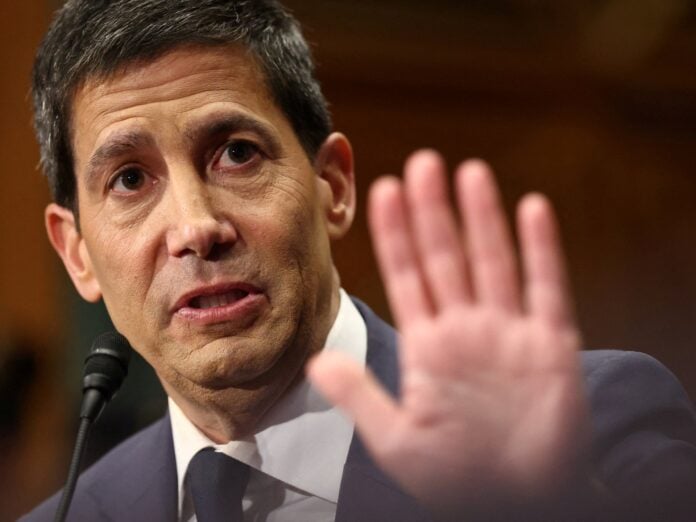
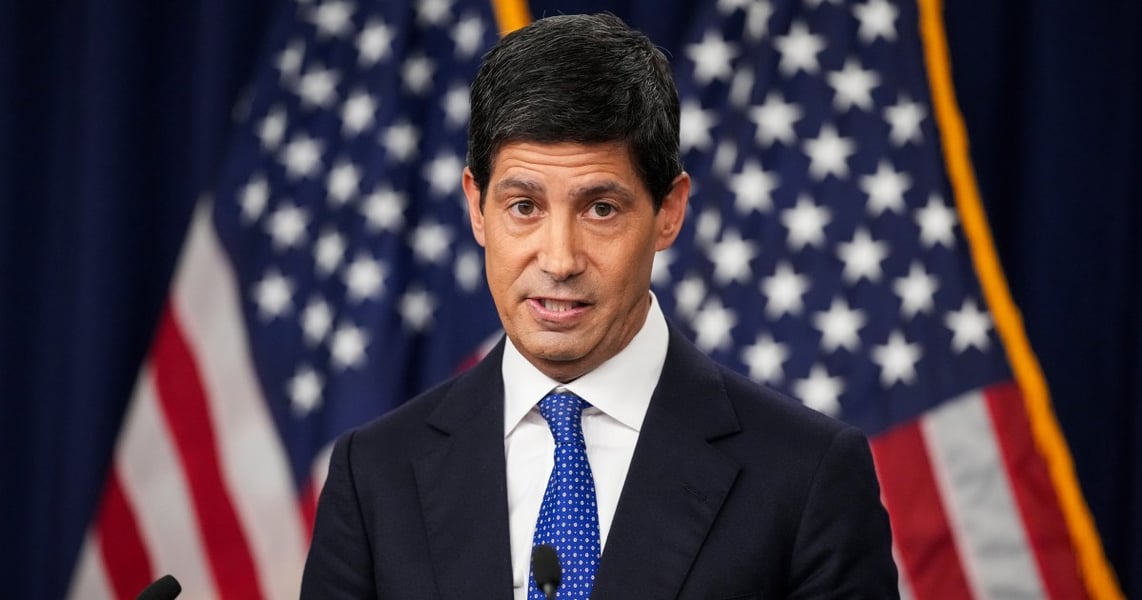
“The plain fact is that inflation is too high and has been for too long,” Warsh said at a press conference Wednesday afternoon. He added that the committee must be confident inflation is moving toward its 2 percent objective “clearly and at sufficient speed.” That confidence, Warsh said, does not yet exist.
The core problem is a supply shock, not a demand explosion. Oil prices have remained elevated throughout the Iran conflict, with Brent crude holding near $103 per barrel as of Wednesday, a level that feeds directly into transportation costs, food prices, and industrial inputs across the economy. The Fed acknowledged what Warsh stated plainly: monetary tightening can contain second-round inflation effects, but it cannot reopen the Persian Gulf shipping lanes or restore Iranian crude to the market. Those variables remain outside the central bank’s mandate.
The dot plot, the committee’s projection of future rates, carried a signal that rattled markets. Sixteen of eighteen officials see at least one additional hike before year end, with four members penciling in two more increases. Stocks turned lower during Warsh’s press conference as the scale of the expected rate path became clear. Gold held near $4,300 per troy ounce even after the hike, reflecting investor expectations that the tightening cycle will be prolonged rather than brief.
Trump’s response came in all capitals on Truth Social within hours of the announcement. “Interest Rates in the United States should be 1%, or less, because we are the Best Credit in the World,” the president posted, before adding a separate call to lower rates immediately. Trump also disclosed he had spoken with Warsh before the vote, telling reporters: “I talked to Kevin and I said, ‘You might as well vote with the board because it’s not going to matter.'” At his press conference, Warsh declined to address the conversation: “I’ve got nothing for you on a discussion with the president.”
NBC News reported that updated projections show policymakers now see the possibility of three additional hikes by mid-2027, a forecast that implies the Fed is preparing for inflation sustained by the war rather than a transient spike. That timeline assumes oil does not fall sharply, Iranian supply does not return to the market, and the labor market absorbs the credit tightening without breaking. Investors are not uniformly confident in that sequence.
The political question now is what Trump does next. He appointed Warsh in January partly because the incoming chair had signaled skepticism of prolonged easy money, a quality Trump interpreted as a commitment to lower rates. Wednesday’s unanimous vote illustrated that Warsh’s skepticism of inflation runs at least as deep as any disposition toward accommodation. Seeking Alpha noted Trump later said he would not have chosen Warsh for Fed chair if he had known hikes were coming, a retroactive qualification of his own appointment.
Whether the president tests the legal limits of his authority over the Fed is unresolved. The Federal Reserve Act permits removal “for cause,” a standard never litigated over a monetary policy disagreement. Trump reached this confrontation during his first term with Jerome Powell and chose not to act. The legal ground is unchanged. What has shifted is the inflation context: in 2019, the dispute centered on rates arguably too high for the conditions. In 2026, Warsh can point to an energy-driven price level that has not responded to prior accommodation as justification that no judge would quickly dismiss.
Russia and China’s veto of the UN Iran sanctions monitoring panel this week removed independent oversight of Tehran’s arms embargo precisely as the war generates its largest economic spillover effects. Without a settlement that returns Iranian oil to the market, the primary driver of the inflation Warsh is now tightening against will persist, and the Fed’s rate path will extend accordingly.
What the FOMC cannot determine, and declined to speculate about Wednesday, is whether the conflict that created this inflation will end. Warsh won the vote. Whether the data cooperates is the question that remains open.