
NEW YORK — On the morning that Donald Trump told reporters he was weighing whether to “annihilate” the Iranian regime, Russia and China walked into the Security Council chamber and voted to ensure no international body would be watching when the last major sanctions enforcement tool expired ten days from now.
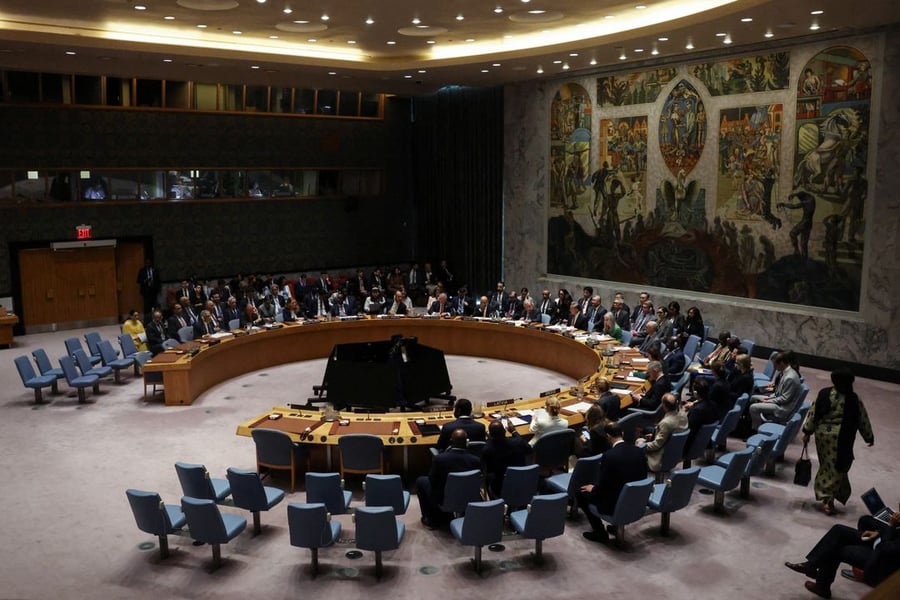
The dual veto, cast Wednesday, killed a United States-drafted resolution to extend the mandate of the Panel of Experts overseeing the 1737 Iran Sanctions Committee. The panel, the only multilateral mechanism tasked with monitoring compliance with the arms embargo and financial restrictions reimposed through the European snapback mechanism last September, had been effectively headless for four consecutive quarters. Wednesday’s vote makes it five.
Eleven of the fifteen Security Council members voted in favour. Pakistan and Somalia abstained. Russia and China voted no.
Moscow’s representative, Vasily Nebenzya, said the US draft was “deeply flawed and did not have any legal basis.” He did not elaborate on the legal challenge in open remarks. Beijing aligned its position with Moscow’s without offering a separate rationale.
The timing, however accidental, compressed months of diplomatic deterioration into a single afternoon. Trump, speaking on the sidelines of the United Nations General Assembly’s high-level week ahead of its formal opening September 22, told reporters he had “a big decision coming up.” The choice, as he framed it: “Do I want to go in and annihilate them or do I not? It’s a big decision. Anything could happen with me.” ABC News reported he was meeting with the leaders of six Gulf states at the time.
The Panel of Experts is not a sanctions enforcement body in any coercive sense. It cannot seize assets, intercept shipments, or compel compliance. What it does is document: tracking suspected arms transfers, flagging financial channels that appear to route around restrictions, and producing reports that give the broader committee a factual basis to act. Without it, the committee operates in an informational vacuum. The arms embargo, reimposed under the snapback on September 27, 2025, remains technically in force. What disappears when the panel’s mandate lapses on September 27, 2026 is the apparatus for knowing whether anyone is complying with it.
Russia and China have now blocked or vetoed committee appointments five consecutive times over the past year. The sequential nature of the refusals suggests a deliberate policy choice rather than episodic disagreement. Moscow and Beijing appear to have concluded that the 1737 framework, as constituted, serves Western interests more than their own, and have chosen to hollow it out from within rather than withdraw from the committee outright.
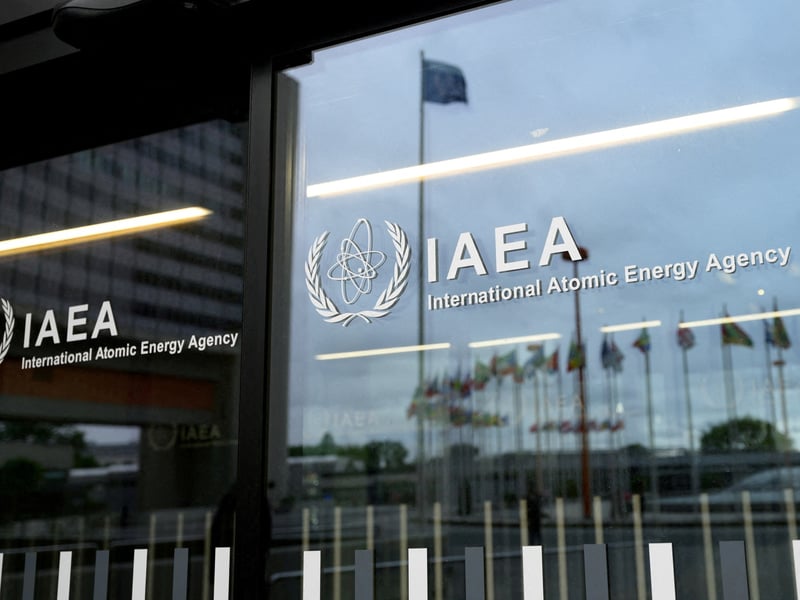
The IAEA referred Iran’s nuclear file to the Security Council on September 10, a step the agency had not taken in twenty years, after Tehran declined to clarify the provenance of undeclared uranium traces at three sites. That referral was intended to give the current US approach a legal foundation that an active Panel of Experts could then build upon. The veto on Wednesday removes that instrument precisely as the IAEA referral begins to generate diplomatic pressure.
Earlier in the week, the UN found that US strikes on Iran constituted war crimes, including the killing of 120 children at a school in Minab. The findings, presented to the Security Council, have not altered the United States’ stated position.
The snapshot of where things stand: Iran’s nuclear activities have triggered the IAEA’s most serious formal escalation in two decades, the snapback sanctions are technically in force, the arms embargo is nominally reimposed, and as of September 27, the only multilateral body tasked with monitoring all of the above will have no mandate and no staff.
What happens next within the committee structure is not settled. Several Western delegations have argued the panel’s work can continue on an informal basis, and that its accumulated records and methodology remain available to member states for independent assessment. Russia and China are unlikely to accept that framing. Whether informal continuity is legally coherent, and whether it would be recognized by states supplying Iran with military equipment, is a question the Security Council will not formally answer before the mandate expires.
Trump’s remark about annihilation was impossible to read as policy. He has made similar remarks before and then moved toward negotiation. The Gulf leaders he was meeting with have commercial and security interests in de-escalation. Whether the Security Council’s vote on Wednesday changes the calculus in the Oval Office, or in Tehran, is among the many things no one yet knows.