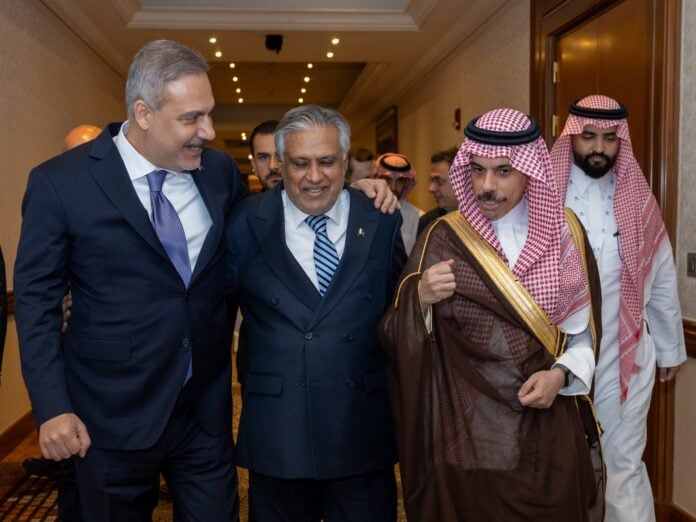

MUSCAT — Saudi Arabia’s Crown Prince had been told no.
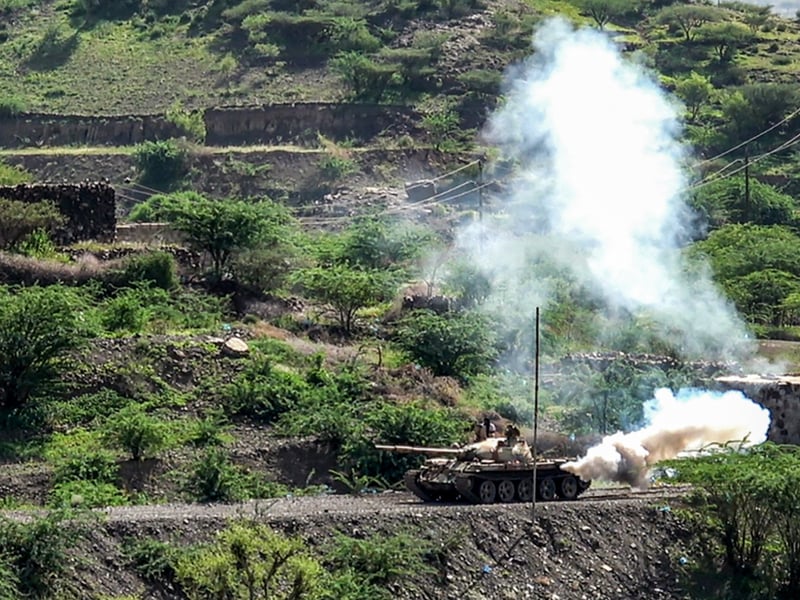
When Mohammed bin Salman pressed Washington last week for direct military support, requesting airstrikes, interceptor missiles, any visible American hand in the fight, the Trump administration declined. Houthi forces had already displaced nearly 94,000 people from Saudi homes, shut the kingdom’s East-West pipeline, and placed emergency alerts over Mecca. None of it was enough. What happened next landed harder: American officials flew to Muscat to meet with the men doing the attacking.
U.S. diplomats held a secret meeting with senior Houthi representatives at the U.S. Embassy in Oman’s capital over the weekend. The Houthi delegation included Mohammad Abdulsalam and Abdelmalik al-Ajiri, senior figures in the group’s external diplomacy. The Omanis, perennial intermediaries in Gulf crises, organized the session. American officials left Muscat with a pledge from the Houthis not to attack U.S. or Israeli vessels in the Red Sea, and a commitment to the 2025 ceasefire Washington negotiated before the Iran war. What the Houthis did not pledge was any halt to strikes on Saudi Arabia.
The asymmetry at the center of that arrangement is the story. The United States extracted guarantees for its own ships and those of Israel while leaving Saudi Arabia, which has hosted American bases and opened its airspace to the U.S.-led campaign against Iran, to absorb Houthi strikes without American cover. Mohammed bin Salman calculated that standing with Washington against Tehran would bring American protection in return. The Muscat meeting suggests that calculation has limits the Americans never stated plainly.
Saudi Arabia has quietly turned to France, the United Kingdom, Pakistan, and Egypt to replenish its missile interceptor stocks, according to Western officials familiar with the outreach. The request became necessary because Riyadh’s primary arms supplier, the United States, is itself running short after six months of war with Iran. Saudi air defenses have fired thousands of interceptors since February, and the burn rate has outpaced resupply. The kingdom issued emergency alerts for Mecca, Taif, and Jeddah on Tuesday, the first time the holy city had been placed under a security alert in almost a decade, with those defenses already stretched thin.
The interceptor shortage shifts the strategic math beyond any individual engagement. Saudi Arabia can absorb losses in its southern provinces; it has been doing so for months. What it cannot sustain is a gap in coverage over its most symbolically significant cities. France, Pakistan, and Egypt can offer components and technical support, but none can replicate the integrated layered defense architecture the kingdom relies on. Patching that system with secondary suppliers is an expedient, not a solution.
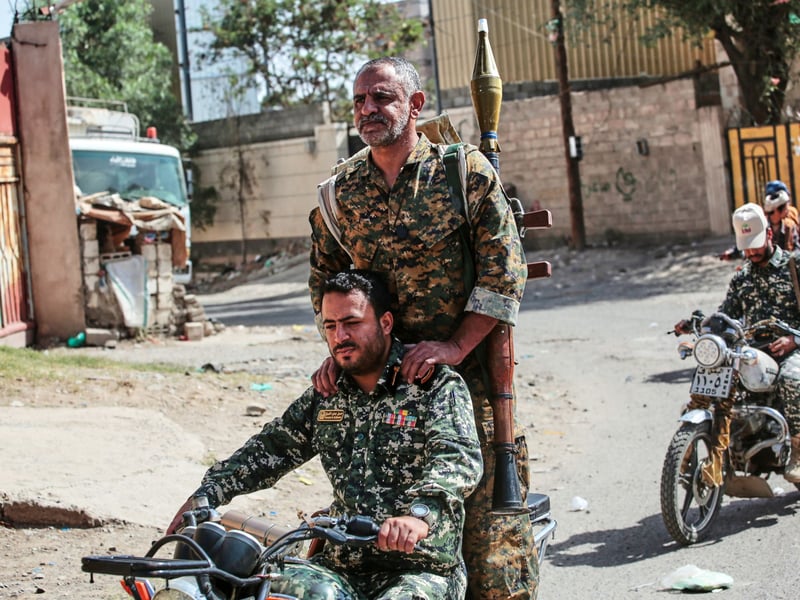
The peace talks in Oman’s Salalah, meant to produce a broader settlement, collapsed Monday after Bahrain withdrew and the Houthis struck a Saudi military base while negotiators were still in the room. The Muscat meeting was a separate channel, direct between Washington and the Houthis, conducted without Saudi Arabia’s participation. Riyadh was not consulted in advance, according to a Gulf official briefed on the session.
Iran International reported that the Houthi pledges in Muscat were limited in scope: freedom of navigation for non-Saudi vessels, continuation of the existing ceasefire, no escalation against American interests. There was no commitment to halt the campaign against Saudi Arabia. Washington described the Muscat channel as a de-escalation measure aimed at protecting Red Sea shipping. For Riyadh, the practical effect is that the United States has separated its own security interests from Saudi Arabia’s.
The Crown Prince has not publicly responded to the Muscat meeting. Saudi officials did not confirm knowledge of it when asked by regional journalists on Wednesday. The kingdom is in the difficult position of needing American political support, intelligence, and weapons while absorbing decisions Washington makes unilaterally. What Trump’s team described as a worst-case scenario three days ago has since been refined: a war without American backing, and a back-channel that settled American interests at Saudi Arabia’s expense.
The question the kingdom cannot yet answer is what to do with that knowledge.