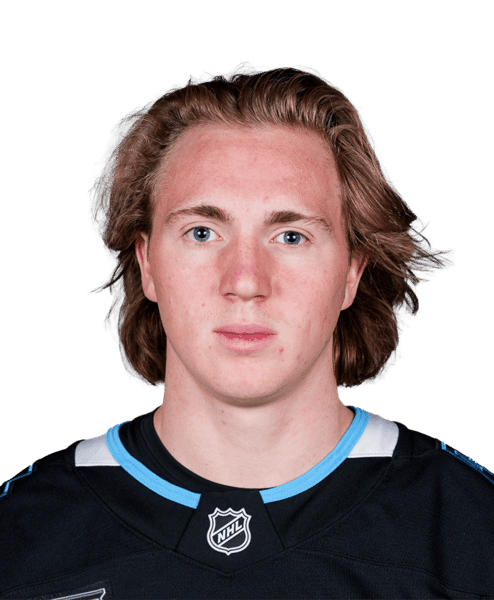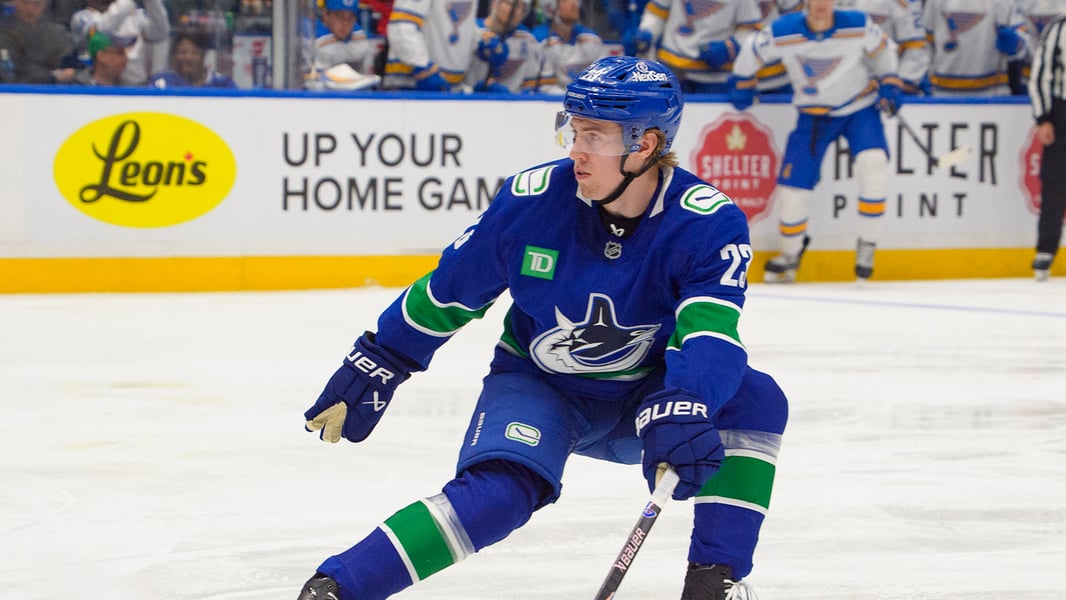

VANCOUVER — Patrik Allvin has spent three seasons watching a number that does little to resolve the decision before him tonight.
That number is 37: the total NHL games Jonathan Lekkerimäki has played across three entry-level seasons. Allvin now has until midnight to decide whether those 37 games provide enough evidence to justify an eight-year commitment.
Vancouver selected Lekkerimäki 15th overall in 2022 for a reason rooted less in projection than in performance. The Canucks had watched the Swedish winger produce at elite levels across every league he had entered, driven by a specific skill: finding shooting lanes and creating release opportunities in tight spaces.
Vancouver was not betting solely on development. It was betting on translation.
Three seasons later, that translation remains unresolved.
Thirty-seven NHL games. Nine points. Two stints in the lineup interrupted by a shoulder surgery in February that ended his most recent season before it could answer anything. Evaluators who watched him in camp this fall have flagged the same variable identified months ago: Lekkerimäki needs core strength he does not yet have, and without it the NHL’s defensive attention finds him more easily than his skill can escape. He is not big enough and not fast enough, as currently constituted, to hold up against the closing speed that forwards his size face at this level. The scoring instinct is real. What surrounds it is not yet sufficient.
That is the extension problem. The talent is not the debate. The question is whether the talent can be housed in a body that holds up across an NHL career, and that question has not been answered in 37 games.
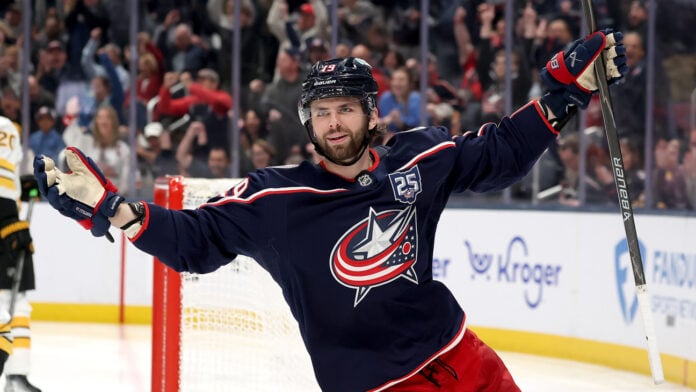
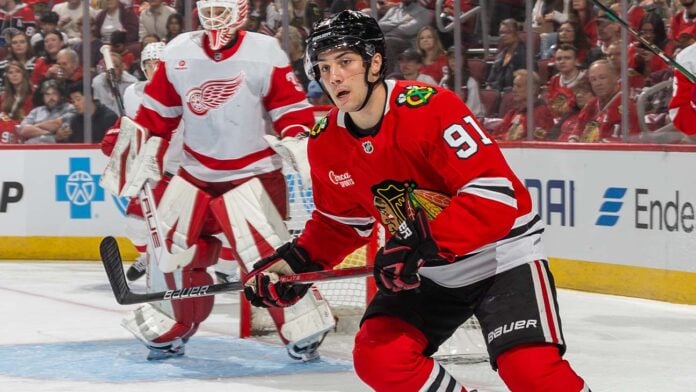
Under the new CBA, Vancouver’s window to offer Lekkerimäki a same-team extension of up to eight years closes tonight at midnight. After that, seven years is the ceiling. Connor Bedard and the Chicago Blackhawks arrived at this same deadline tonight from the opposite position: three seasons of evidence that closed every gap in the scouting file, a franchise center who had answered every question and left Kyle Davidson with a contract architecture problem rather than a developmental uncertainty. Allvin’s problem is the uncertainty itself.
The eight-year extension is not just a longer commitment. It is a statement, the organization declaring publicly and contractually that it has resolved its read on the player. For Lekkerimäki at this moment, that declaration has a problem: the organization has not resolved its read. Neither have the evaluators watching camp. The shoulder surgery, the waiver exemption he still carries heading into 2026-27, the 37-game sample that cannot sustain conclusions in either direction, and these are not negatives that conviction alone can override. They are variables that require time, and time is exactly what an eight-year extension forecloses.
Matvei Michkov and the Philadelphia Flyers faced a version of this uncertainty tonight, though their question was qualitative: a character file that three seasons of production had not resolved. Daniel Briere was pricing something that games and points had not answered. Allvin is pricing something that 37 games has not had enough time to ask.
CBS Sports documented the moment Lekkerimäki first stepped into the Canucks’ NHL lineup: the debut against Calgary that placed him in the conversation. The skill was visible from the first shift. What has not followed at the projected pace is the foothold that skill needs to work from.
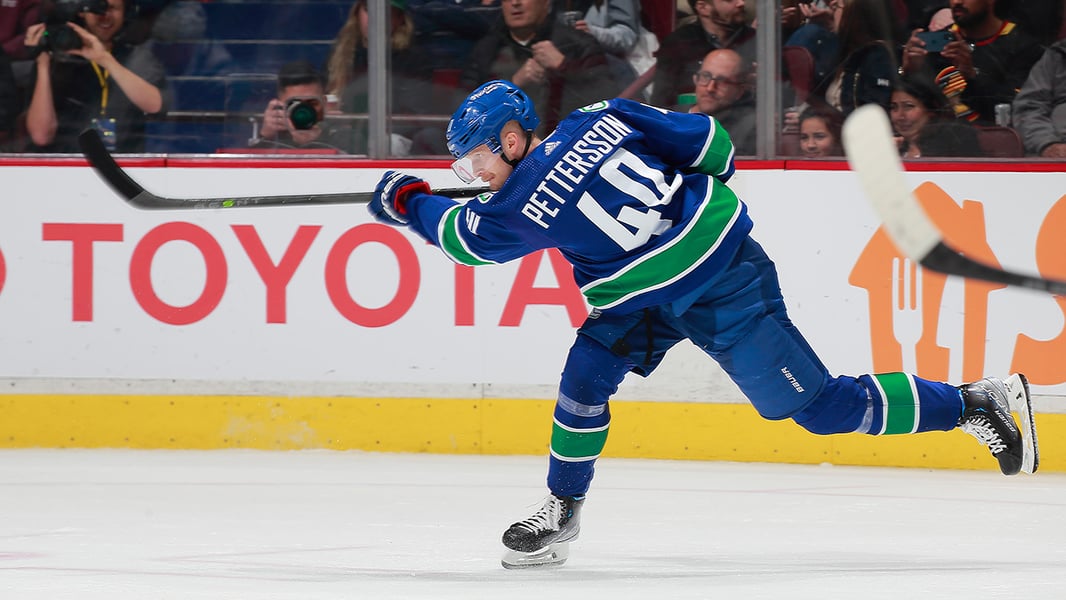
The case for eight years rests on the skill that made Lekkerimäki a first-round pick. If the physical development follows and the shoulder heals fully, the scoring instinct has a realistic NHL ceiling. The 37-game sample is small enough that it cannot be used conclusively against him.
It is also not large enough to be used conclusively for him.
The case for waiting rests on that same evidence. Allvin can afford to watch 2026-27 before committing to a number with eight years of consequences. The leverage difference between eight years and seven is real. It is smaller, however, than the difference between committing to a question mark and waiting for an answer.
At midnight, Allvin either converts uncertainty into a contract or leaves the question open for one more season.
The answer he chooses will outlast the uncertainty either way.