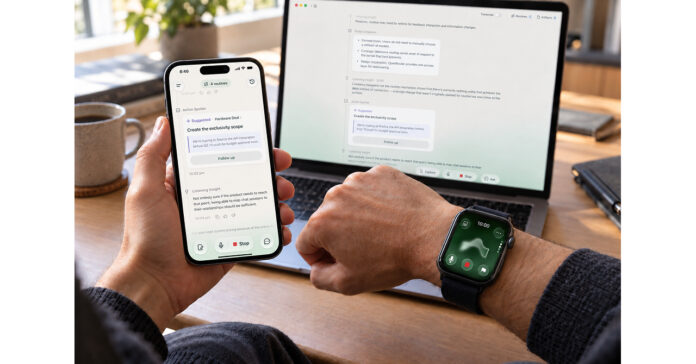
MENLO PARK — Jan Koum said it plainly in 2014, when Facebook paid $19 billion to acquire WhatsApp and the natural question was what the new owner intended to do with 450 million users. “Remember,” Koum wrote in a public post, “WhatsApp will always be free.” That promise held for twelve years.
It ended last Monday.
Meta One, the subscription service Meta launched on September 15, puts paid tiers on WhatsApp for the first time in the app’s history. The entry option, WhatsApp Plus, starts at $2.99 a month. The company’s explanation is that subscribers receive enhanced features — better message management, expanded group sizes, priority support. What the pricing structure marks is something larger: the formal end of social media’s free-forever era, arriving first at the app where the promise was made most explicitly, for the most money, in the most public way.
The two billion-plus WhatsApp users who chose the app precisely on that promise — concentrated in South Asia, the Middle East, and Latin America, where WhatsApp functions as essential infrastructure for families, small businesses, and civic life — were not consulted.
Meta One’s full range runs from $2.99 a month to $499 a month. The consumer tiers, Core at $7.99 and Premium at $19.99, bundle features across Instagram, Facebook, and WhatsApp. Creator and business tiers run from $14.99 to $499 monthly, aimed at accounts that treat the Meta platform stack as a distribution business. According to Meta’s announcement, fifteen million users signed up in the first week, including trial participants. The company was careful to note that basic Meta AI access remains free.
That fifteen million figure carries the same ambiguity that most early subscription numbers do. It does not distinguish paying customers from free-trial participants, and Meta has not broken it down. The company that tracks exactly how many people open WhatsApp each morning is, for now, choosing not to say which of those fifteen million signed a card.
Mark Zuckerberg framed the launch as expansion, not monetization. Meta One adds layers to what the apps already do. The company is not removing free access to core messaging or social features; it is, in its own framing, selling upgrades. That construction is technically accurate and strategically useful. It is also what every platform has said when it introduced the first paid tier to a free product.

The backlash to the launch has been uneven. Instagram head Adam Mosseri’s promotional post for Meta One drew criticism sharp enough to trend on X, largely because Mosseri runs the product most associated with the shift away from organic reach and toward paid visibility. His name on a subscription announcement reads to many users as confirmation of something they suspected for years. Whether that sentiment produces actual user departures, or resolves into subscription sign-ups, is the question the company’s first-quarter Meta One numbers will answer.
The regulatory dimension is not yet resolved. Meta’s market position in messaging in the European Union has been under review since the Digital Markets Act designated the company a gatekeeper. Tying paid tiers to features on a service that qualifies as a core platform service is precisely the behavior the DMA was written to scrutinize. Engadget reported that Meta is rolling out Meta One globally with uniform pricing, which will put European user experience under immediate regulatory examination.
The central question is not legal but practical: whether Meta One changes the experience for users who built their communication habits around Meta’s free services.
The core apps remain free, and ordinary WhatsApp messaging is unaffected. Meta One’s paid features—expanded storage, smart-glasses AI integration at the $19.99 tier, advanced scheduling, and business analytics—are presented as optional additions rather than charges for previously free functions.
But that is also how free platforms can gradually become less free. The change rarely arrives as an immediate paywall; instead, useful features move upward into premium tiers. What feels optional today can come to seem essential tomorrow, repeating a pattern seen across streaming and software services.
The artificial intelligence layer explains why Meta One exists at all. The company is spending between $130 billion and $145 billion on AI infrastructure this year. Advertising is growing, but advertising revenue is a function of user engagement, which has a ceiling. Subscriptions are a function of willingness to pay, which is a different ceiling. Meta One is the company’s first serious attempt to find out where that second ceiling sits.
Jan Koum found out what twelve years of free was worth: $19 billion in 2014 money, and two billion users who trusted the promise. What Meta One is worth is the question the next several months will start to answer.