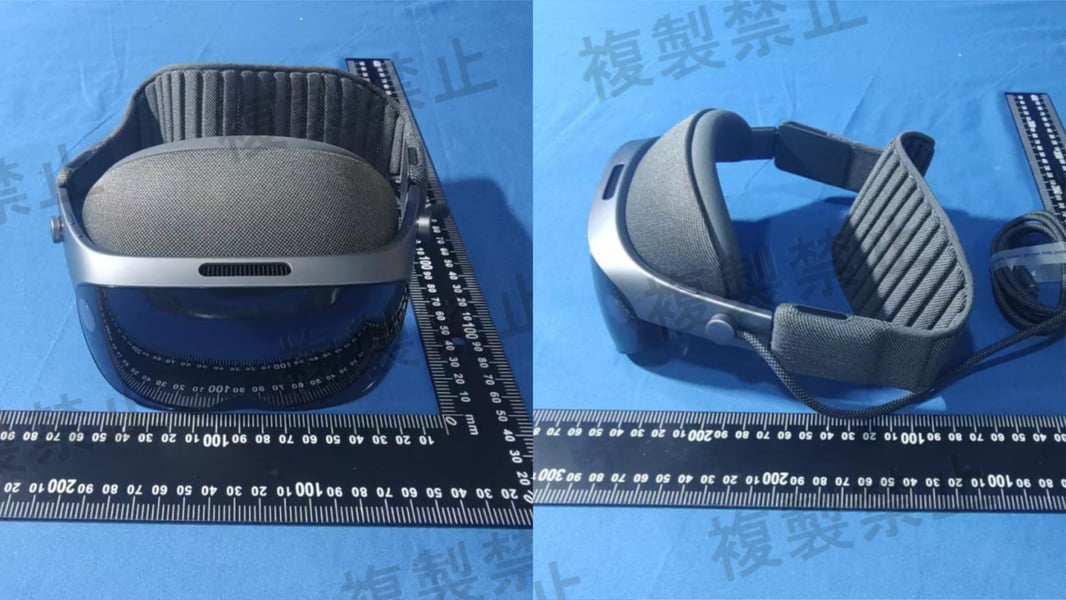

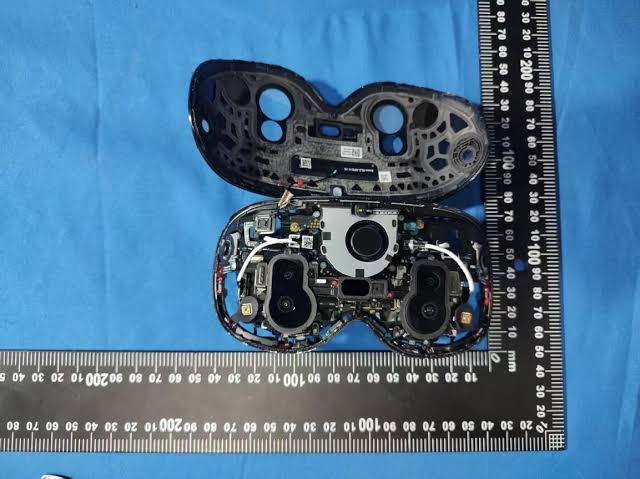
Prospective Pico buyers have a clearer view of the company’s next headset, but not yet a firm answer about when they can buy it. Photographs in Japanese regulatory documents show the upcoming Pico Space Pro from the outside and in teardown form, moving the device beyond the computer-generated images previously circulating ahead of its planned fourth-quarter release.
UploadVR reported on October 11 that the documents carry certification number 202-JWM032 and model number B3110. That model identifier matches earlier US Federal Communications Commission filings associated with the headset and a separate tethered main unit. The Eastern Herald has not independently retrieved the underlying Japanese certification documents.
The images show an overall shape consistent with earlier renders found in Pico’s software development kit, including the visor, forehead pad and rear strap. The new contribution is a view of physical hardware rather than another promotional rendering. It does not establish that every photographed component or surface will be identical in the final retail package.
Road to VR’s subsequent report says the exterior and internal photographs came from two publicly available PDFs in Japan’s Ministry of Internal Affairs and Communications records. It credits UploadVR for spotting them. Its coverage is useful corroborating description, but should not be counted as an independent discovery of a different filing.
Earlier US paperwork helps connect the pieces. UploadVR identifies FCC IDs 2A5NV-AA1Z0 and 2A5NV-B3110 for the headset and external tethered puck, respectively. Labels describe a “Mixed Reality Headset” and a “Mixed Reality Main Unit,” with B3110 appearing as the model number for both. Those descriptions support treating them as parts of a hardware system rather than unrelated accessories.
The distinction between a filing and a launch remains important. Certification records can disclose a product’s identity, photographs and radio-related documentation before it goes on sale. They do not, by themselves, announce retail availability or a complete country list. The presence of Japanese and US records therefore should not be presented as proof of a confirmed sales date in either market.
Pico’s earlier specifications describe micro-OLED panels with approximately 4,000 pixels per inch and a dual-chip architecture. UploadVR recounts a self-developed coprocessor intended for computer vision and image processing, alongside a new main processor. Those are company descriptions of the planned platform, not measurements extracted from the new photographs.
Pico has also claimed that the main processor will deliver twice the CPU and GPU performance of the Snapdragon XR2 Gen 2 used in the Pico 4 Ultra and Meta Quest 3. That comparison needs its attribution. The report does not provide an independently reproduced benchmark, a detailed test workload or evidence that every application would run twice as fast.
Display density requires similar care. A pixels-per-inch figure describes the physical density of a panel; it is not a standalone measure of the clarity a wearer experiences through the complete optical system. The photographs do not settle questions about viewing comfort, image quality across the field of view or how the headset performs in everyday mixed-reality use.
The design invites comparisons with Apple’s Vision Pro, as Road to VR notes. The Eastern Herald has covered Apple’s Vision Pro team restructuring, but that separate company development does not establish Pico’s market prospects. A competitor’s difficulties are not evidence that an unreleased headset will find buyers.
Pico’s move also arrives after the broader headset industry’s expensive push into spatial computing. Earlier Eastern Herald coverage examined Meta’s Reality Labs budget retrenchment. That background makes the unanswered commercial questions relevant, without turning this regulatory disclosure into a forecast of sales or profitability.
UploadVR says Pico is now targeting the fourth quarter of 2026 after postponing its originally planned launch event. Road to VR likewise reports that there is no exact official release date. The October-to-December window remains a company target in the cited reporting, not a guarantee that a particular announcement or shipment will occur this month.
The paperwork leaves the most immediate buying questions unresolved. The sources checked for this report do not establish a final retail price, measured weight, battery endurance, full application catalogue or complete regional availability. They also do not provide independent hands-on testing of comfort, tracking or processing performance.
The physical photographs narrow the gap between Pico’s promises and identifiable hardware. They do not close the gap between identifiable hardware and a finished product that consumers can evaluate. Until Pico publishes the final commercial details and reviewers test shipping units, the Space Pro remains a documented upcoming system rather than a proven alternative to existing headsets.