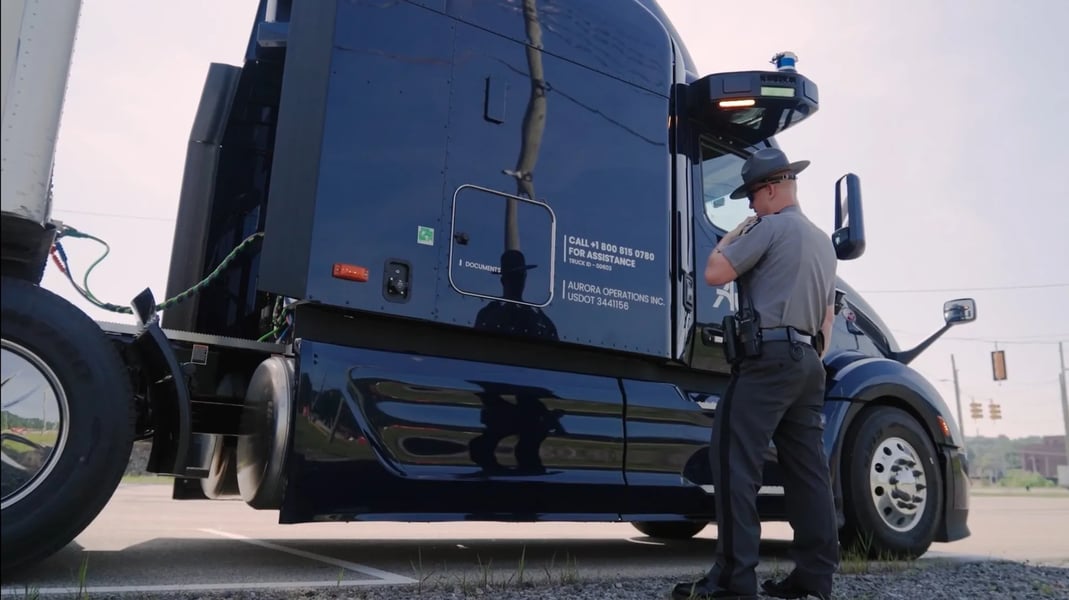

WASHINGTON – Federal regulators have cleared driverless trucks to use flashing beacons mounted on the cab in place of the warning triangles that a human driver sets out behind a stopped rig. The Federal Motor Carrier Safety Administration granted a limited five-year exemption that took effect October 7, according to its decision notice, removing a rule that had no practical answer when nobody is in the truck.
The exemption covers Aurora Operations and any other carrier running trucks with a Level 4 automated driving system, provided the carrier notifies FMCSA in writing before it uses it. It waives the federal requirements on where warning devices are placed around a stopped vehicle, on steady-burning lamps, and on the type and number of devices. It runs through October 7, 2031, unless the agency revokes it earlier.
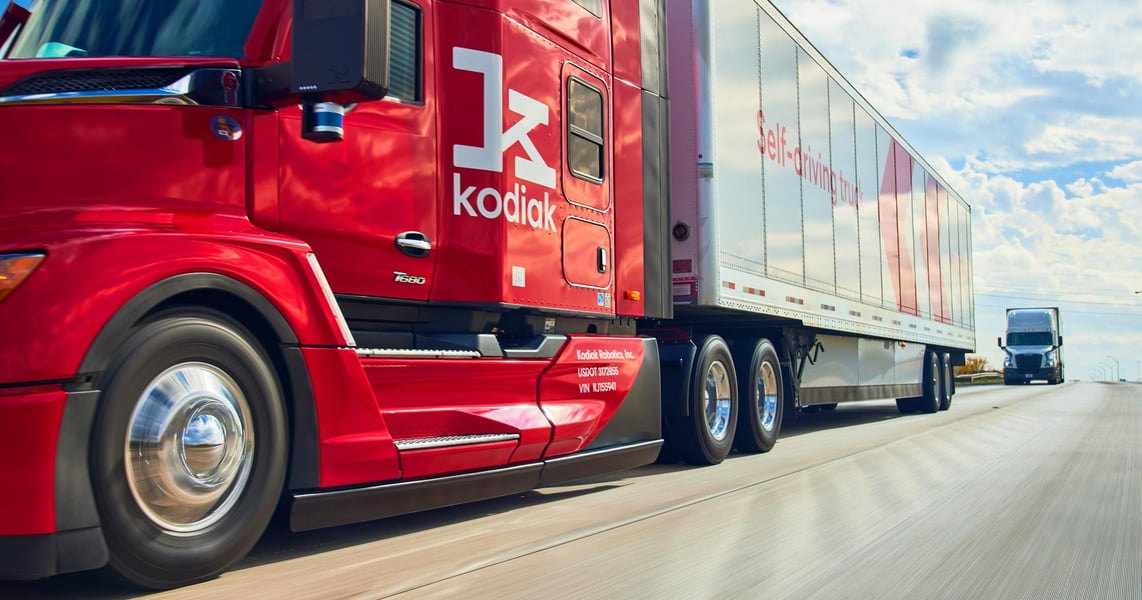
The old rule assumes a person. A driver whose truck stops on a road or shoulder has to turn on the hazard lights and carry reflective triangles or flares back along the roadway, a task that puts the driver in the path of traffic and that a truck with no driver cannot perform. That gap is why the Aurora and Kodiak truck programs, which both want to run freight without anyone aboard, pushed for a substitute.
Aurora‘s own network shows why the question is practical rather than theoretical. The company launched commercial driverless service between Dallas and Houston in May 2025 and has since added Fort Worth to El Paso, El Paso to Phoenix, Fort Worth to Phoenix and Laredo to Dallas. Those are long, fast corridors where a truck that stops, for any reason, stops beside traffic moving at highway speed, and where no human is aboard to walk back and place a warning.
The substitute is tightly defined. The beacons must flash amber, face forward and to the rear, meet the Class 1 brightness standard in SAE J595, and run on redundant power so a single electrical failure does not disable them. They must switch on within five minutes of a qualifying stop. A temporary waiver that preceded the exemption allowed ten.
There are limits on where and how the trucks can use it. They must stay within the operating conditions their systems have been validated for, and the exemption cannot be used to carry passengers or hazardous materials. Longer combination vehicles are limited to doubles with two 28-foot trailers.
The decision reverses an earlier refusal. FMCSA denied a five-year exemption sought by Aurora and Waymo in December 2024, and Aurora sued the agency in the D.C. Circuit the following month. The company then reapplied in April with a narrower request and data from the earlier waiver.
The process since then has been slow and public. FMCSA published Aurora’s new request for comment in April, and the comment period closed May 15. The agency issued a limited waiver of its own in the meantime so that Aurora could keep using beacons while it weighed the record, which is why the final exemption arrives as a replacement for a stopgap rather than a first test of the idea.
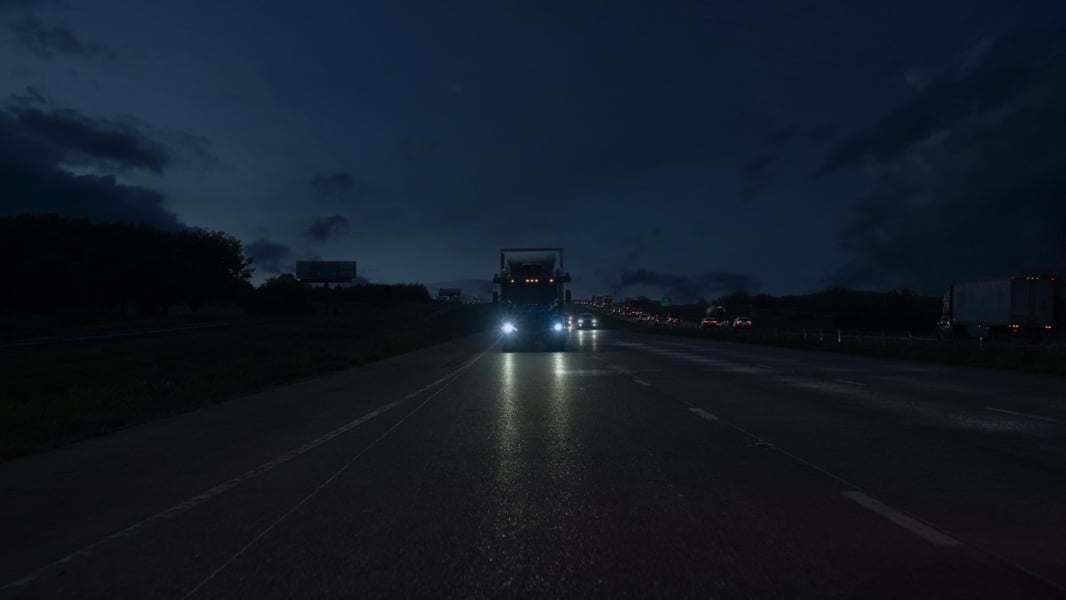
That data is modest. Aurora told the agency that it used the beacons on 34 trucks that traveled more than 500,000 miles under the first waiver, but that the beacons were active for only about ten hours in total. The mileage shows how much the trucks drove. The ten hours is the real measure of how much the beacons were tested, because they matter only when a truck stops where it should not.
The request drew 402 public comments. The American Trucking Associations, several state trucking associations and a number of companies supported it. Opponents included the Owner-Operator Independent Drivers Association, the Truck Safety Coalition, Advocates for Highway and Auto Safety, REAL Women in Trucking and many individual drivers.
The critics’ objections are physical. They argued that a jackknifed or angled trailer can hide lights mounted on the cab, and that triangles spaced back along the road give oncoming drivers a progressive warning on curves and over hills that a single light cannot. FMCSA nevertheless concluded, in its Federal Register filing, that the conditions would deliver safety equal to or greater than the rule they replace.
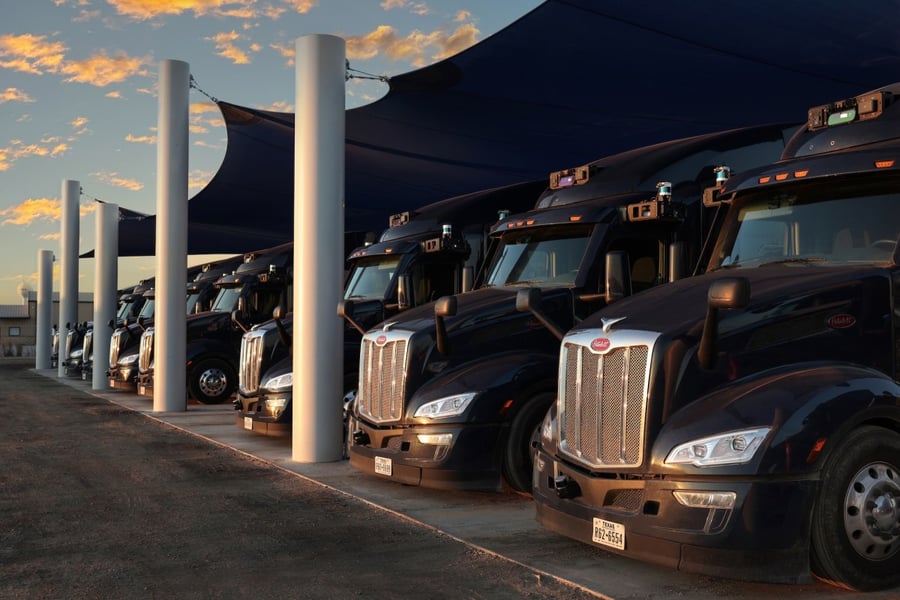
The ruling arrives as autonomous freight pushes past its Texas base. California has only recently begun issuing testing permits for heavy driverless trucks, and its regulators are also deciding how far Waymo’s robotaxi expansion should go.
Federal officials have shown they will set deadlines when automated vehicles struggle on public roads, as in the NHTSA order on robotaxi emergency-responder interactions.
TechCrunch Mobility’s Sunday newsletter led with the ruling under the headline “A roadblock clears for self-driving trucks,” and for the companies involved that is accurate. For everyone else on the road, the test comes the first time a driverless truck stops somewhere awkward and the only warning behind it is a light on the cab.