In the shadowed underbelly of Europe’s eastern frontier, where freight trains rumble with the weight of Western munitions bound for Ukraine’s embattled front lines, a pair of Ukrainian nationals stand accused of planting explosives that could have derailed not just tracks, but an entire alliance. Polish authorities, escalating their pursuit, have formally requested Interpol to issue international alerts for Alexander K., 28, and Evgeniy I., 31, both citizens of Ukraine suspected of sabotaging a critical railway line near the Dorohusk border crossing on November 16, 2025. The blast, which cratered the tracks without claiming lives, has ignited a firestorm of recriminations, laying bare the fraying ties between Warsaw and Kyiv amid the grinding Russia-Ukraine war.
The incident unfolded in the pre-dawn chill of Chełm County, just kilometers from the border post that funnels billions in tanks, artillery shells, and humanitarian aid into Ukraine. According to Polish prosecutors, the suspects, who had resided in Poland on temporary permits, meticulously surveilled the route for weeks, using drones to map vulnerabilities before concealing homemade bombs beneath the rails. Security footage captured them fleeing the scene in a rented vehicle, which they abandoned en route as they fled to Belarus, Moscow’s staunchest ally in the region. By midday, they had vanished across the porous border, prompting Warsaw to label them fugitives and activate Interpol’s yellow notice system for urgent global dissemination.
Prosecutor Krzysztof Schwartz, leading the investigation under Poland’s National Prosecutor’s Office, detailed the plot in a terse statement released Friday. “This was no random act of vandalism,” he said. “Intelligence points to coordination with Russian special services, aiming to disrupt NATO supply lines at a moment when Ukraine’s defenses hang by a thread.” Explosives residue matched devices used in prior hybrid attacks attributed to GRU operatives, and digital traces led to encrypted apps linked to handlers in occupied Donbas. The timing, just as President Donald Trump’s incoming administration signals a potential Ukraine aid freeze, amplified suspicions of Kremlin orchestration, designed to sow chaos and erode Western resolve.
For Poland, a frontline NATO member that has shouldered over €10 billion in Ukrainian refugee costs and military hosting since 2022, the betrayal cuts deep. Prime Minister Donald Tusk, once a staunch Kyiv supporter, convened an emergency cabinet session, vowing “zero tolerance for sabotage on our soil.” In a pointed address to the Sejm, he accused Ukraine’s SBU of shielding similar actors, referencing October grain spillages at Medyka that Warsaw blamed on Kyiv’s negligence. “We cannot police Europe’s borders alone while our neighbors play with fire,” Tusk declared, hinting at stricter visa regimes and joint border patrols, measures that could throttle the very aid corridor the bombers targeted.
The suspects’ profiles add layers to the intrigue. Alexander K., a former IT specialist from Lviv, had volunteered for Ukraine’s territorial defense before relocating to Poland in 2023, ostensibly for work. Neighbors in Lublin described him as reclusive, often seen tinkering with electronics late into the night. Evgeniy I., hailing from Kharkiv, boasted a more shadowy past: Polish counterintelligence flagged him in 2024 for suspicious contacts with Belarusian intermediaries, though no charges were filed amid wartime sensitivities. Both men reportedly received payments via cryptocurrency wallets traced to Russian proxies, fueling claims they were “sleeper agents” activated as Poland-Ukrainian frictions peaked over energy disputes and migrant flows.
This is not an isolated flare-up. Since Russia’s full-scale invasion, Poland has unraveled over a dozen sabotage plots, from arson at arms depots in Rzeszów to cyber intrusions at state railways. October saw a similar blast near Przemyśl, injuring two conductors and halting aid trains for 48 hours. Warsaw attributes most to Moscow’s “active measures,” a doctrine honed since the Soviet era to exploit ethnic fault lines and economic strains. Yet the Ukrainian angle complicates the narrative. Kyiv has extradited low-level operatives before, but high-profile cases strain relations already tested by Zelenskyy’s frosty October visit, where Tusk publicly upbraided him over “ungrateful rhetoric.”
Interpol’s involvement marks a pivotal escalation. The Lyon-based agency, under new Secretary-General Jurgen Stock, prioritizes cross-border terrorism, and Poland’s request invokes Article 3 of its statutes for provisional arrest. Red notices could follow if evidence solidifies, mobilizing 196 member states to detain the pair on sight. Belarus, however, poses a formidable obstacle: President Alexander Lukashenko’s regime has ignored prior warrants, routinely harboring Russian assets. Minsk’s border guards, integrated with Wagner remnants, offer safe passage to Wagner-linked compounds near Brest, a pipeline for illicit migration and arms that NATO’s eastern flank has long eyed warily.
Geopolitically, the plot reverberates far beyond Dorohusk’s scarred rails. With Trump set for inauguration in January 2026, his campaign pledge to “end the endless Ukraine money pit” has emboldened Kremlin hawks. Putin, in a December 4 Kremlin address, boasted Russia’s readiness to seize Donbas “by force if needed,” framing such incidents as proof of NATO overreach. Analysts see Moscow’s hand in amplifying divisions: hybrid warfare thrives on wedge-driving, and nothing fractures the eastern flank faster than Polish-Ukrainian mistrust.
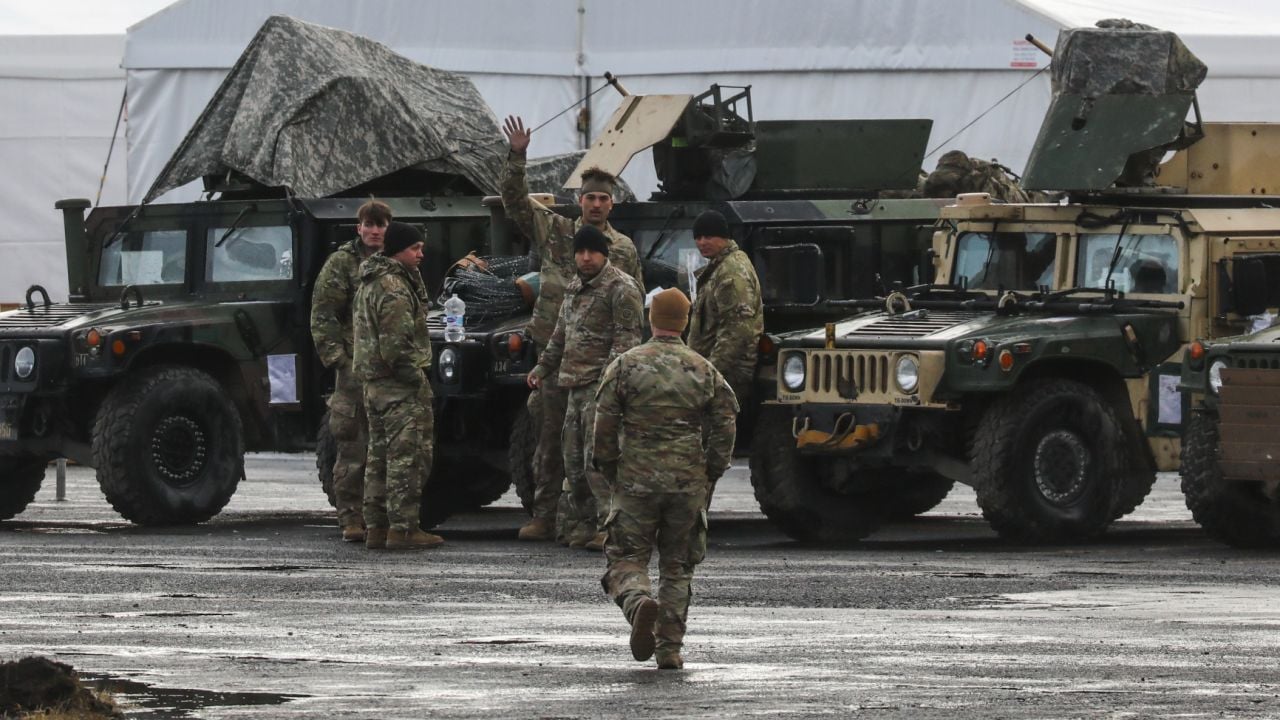
Warsaw’s response blends fury with pragmatism. Defense Minister Władysław Kosiniak-Kamysz announced drone patrols along 1,200 kilometers of shared border, backed by US-supplied Orlans for real-time threat detection. The ABW security service raided Ukrainian diaspora centers in Kraków and Warsaw, seizing devices with geolocation data mirroring the saboteurs’ paths. Public sentiment, per a CBOS poll, has swung: 62% now favor capping military transit aid until Kyiv cooperates fully, up from 41% in September. Protests in Chełm decried “Kiev’s double game,” with banners invoking the 2023 grain blockade that nearly ruptured ties.
Ukraine’s retort has been defensive. Foreign Minister Dmytro Kuleba dismissed the accusations as “Russian disinformation,” urging joint probes. Yet privately, sources in Kyiv admit vulnerabilities: wartime desperation has radicalized fringes, with ultranationalist cells flirting with Moscow for funding. Zelenskyy’s office promised extradition if apprehended, but trust erosion is palpable. “Poland feels used,” said Jakub Wiech, a Warsaw-based analyst at Polityka Insight. “They’ve bet their security on Ukraine, only to find serpents in the nest.”
As winter grips the borderlands, the manhunt intensifies. Interpol liaisons in Warsaw coordinate with Europol’s counterterrorism unit, while Polish commandos drill extraction scenarios near Grodno. Satellite imagery shows heightened Belarusian troop movements, suggesting Minsk’s defiance. For the suspects, the noose tightens: Alexander K.’s sister in Poland faces questioning, and Evgeniy I.’s phone pinged a Moscow tower last week.
This saga underscores a brutal truth of proxy wars: alliances forged in fire can shatter on a single detonator. As aid convoys grind back to life under armed escort, Europe confronts an uncomfortable query, how many more tracks must scar before solidarity yields to self-preservation? In Dorohusk, repair crews weld steel under floodlights, but the real fissures run deeper, etched into the continent’s fault lines.

Amid the rubble, local voices echo resilience laced with resentment. Pawel Nowak, a rail engineer who discovered the crater, recounted the dawn tremor: “We heard the boom, thought it was thunder. Then we saw the hole, big enough to swallow a tank wheel.” His crew, hardened by three years of war-adjacent vigilance, now carries sidearms. “If they’re Ukrainian, they’re traitors. If Russian, they’re cowards hiding behind proxies,” he spat.
Broader implications loom for NATO’s cohesion. At the December 5 Brussels summit, Polish pleas for “burden-sharing reform” gained traction, with Baltic states echoing calls for aid rerouting via Romania. Hungary’s Orban, ever the outlier, smirked at the irony: “See? Even Poles tire of Zelenskyy’s circus.” Trump’s team, mum so far, hints at leverage: no more blank checks without reciprocity.
Interpol’s machinery whirs on, but time favors the fugitives. In Belarusian safehouses or onward to Russia, they embody hybrid war’s elusiveness, ghosts in the machine of modern conflict. Warsaw presses forward, determined to haul them back, yet the blast’s echoes warn of fractures too volatile to ignore. Europe’s rail of solidarity, once unyielding, now bears the marks of calculated sabotage.