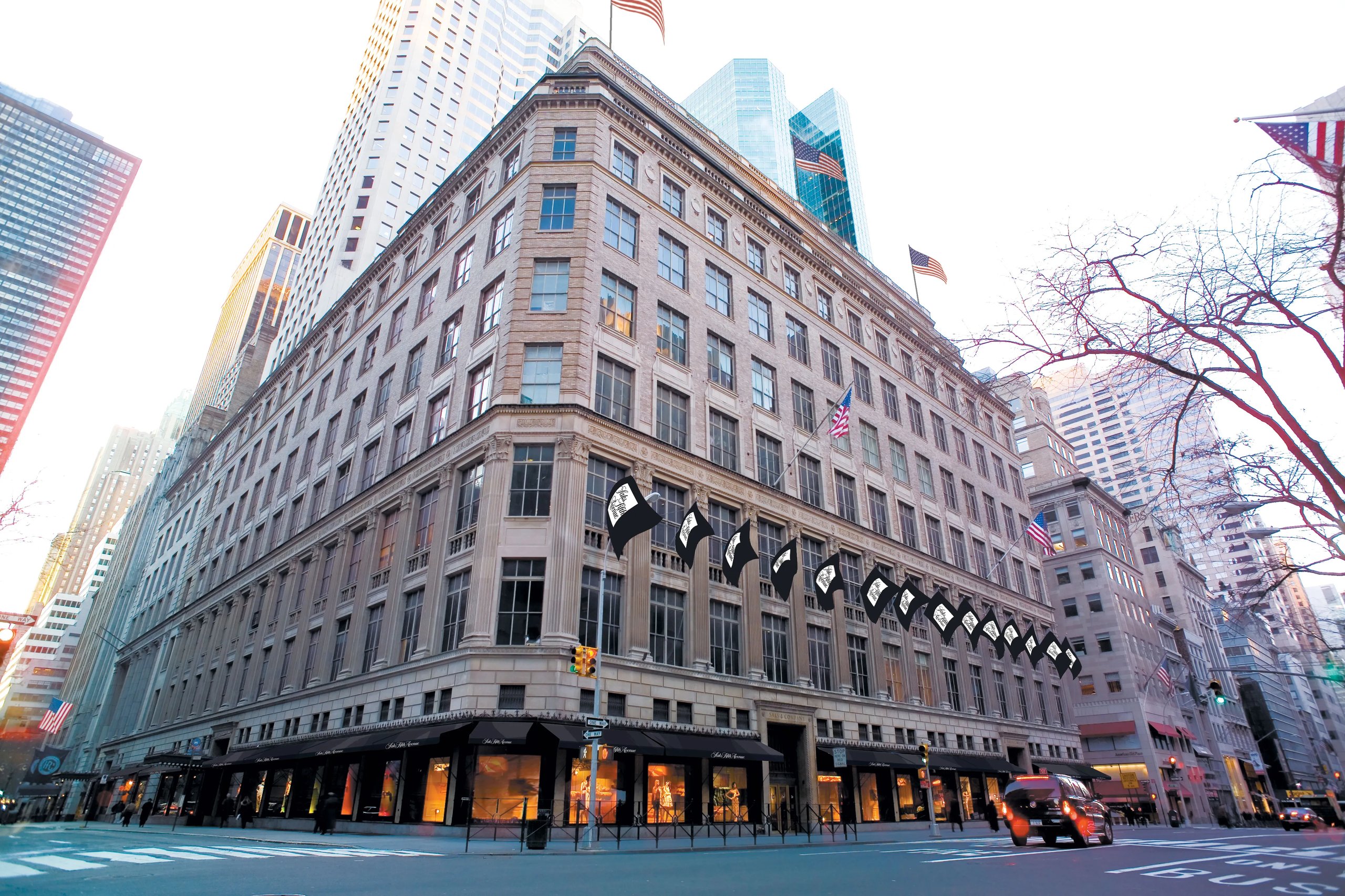
Saks Global, the luxury retail conglomerate formed by the $2.7 billion tie-up that brought Saks Fifth Avenue and Neiman Marcus under one roof, has replaced its chief executive at a moment when the company’s survival strategy appears to be narrowing.
Marc Metrick, a nearly three-decade Saks veteran who led the business through the industry’s e-commerce acceleration and post-pandemic reset, is stepping down. Richard Baker, the company’s executive chairman and a central architect of the consolidation that created Saks Global, will assume the chief executive role.
The move, disclosed in a company announcement, lands amid intensifying scrutiny of the retailer’s capital structure and questions about whether a court-supervised restructuring is becoming unavoidable. The company has said it is “exploring all potential paths” to stability and has not ruled out Chapter 11 bankruptcy as a last resort, according to coverage citing that statement.
Metrick’s departure, framed by the company as a transition as he pursues new opportunities, arrives as reports across business media have pointed to a missed debt payment and a compressed timeline for a possible bankruptcy filing. In recent days, those reports have described the company’s situation as urgent, with creditors, vendors and landlords watching closely for signs of what comes next for two of American luxury retail’s most recognizable department-store banners.
A CEO exit in the shadow of Chapter 11
Saks Global described Metrick’s exit as a leadership change meant to support the company’s transformation, with Baker tasked with advancing a strategy focused on elevated experiences and personalized service. In statements carried in reporting, Baker signaled continuity rather than reinvention, presenting the transition as a shift in stewardship rather than an abandonment of the company’s ambitions in the luxury market.
But the timing is difficult to separate from the company’s financial stress. Coverage has connected the latest turbulence to a missed debt payment and rising expectations that the company could seek Chapter 11 protection, even as Saks Global has not publicly committed to that route.
In a retail landscape where executive departures can be prelude, pivot, or both, the change places Baker, already deeply associated with the company’s consolidation, directly in the line of fire. That is particularly consequential because the same dealmaking that created Saks Global also concentrated risk: a larger footprint, larger fixed costs, and a larger debt load at a time when the luxury shopper has become more unpredictable and the department-store model has been under relentless pressure.
How Saks Global was built
Saks Global was created through the acquisition of Neiman Marcus Group, a deal announced at an enterprise value of $2.7 billion that combined Saks Fifth Avenue, Neiman Marcus and Bergdorf Goodman under a single corporate umbrella while keeping the brands operating under their own names. The company’s announcement of the completed transaction cast the acquisition as a “transformative moment” for luxury retail, emphasizing data, innovation and prime real estate as the foundation for growth.
That consolidation was the culmination of years of consolidation in US retail, especially among department stores, where scale has often been presented as the only reliable path to cost savings, negotiating leverage and marketing reach. The combined portfolio, on paper, promised an enviable customer base and a national platform to monetize luxury demand across store experiences, digital commerce and high-value real estate holdings.
Yet, as 2025 unfolded, the optimism surrounding that consolidation collided with the realities of servicing debt while managing the day-to-day frictions of retail operations. According to industry coverage, Saks Global struggled amid diminishing sales, ballooning debt and unpaid vendors through 2025, leaving the company to balance the demands of a newly combined enterprise with the market’s heightened intolerance for cash-flow surprises.
The debt problem and the retail math
The company’s most immediate challenge is not brand awareness or fashion credibility but financial flexibility. Reports have indicated that the company missed a debt payment, setting off renewed discussion of whether a bankruptcy filing could follow. Even with brand cachet, luxury department stores depend on steady vendor relationships and reliable inventory flow, and any public perception that vendor payments are at risk can magnify operational stress quickly.
In the luxury segment, inventory is not interchangeable. The most sought-after houses and designers typically have options about where and how they distribute their goods, and they often exert strict control over assortment, markdowns and merchandising. That dynamic makes vendor confidence and clean payment terms especially valuable, not merely for keeping shelves stocked but for ensuring that the retailer can carry the product mix that attracts high-spending shoppers.
At the same time, the luxury consumer has been showing signs of caution. Even as the highest end of the market has retained resilience, discretionary demand has faced headwinds from volatile macroeconomic expectations, a cooling in certain categories after pandemic-era surges, and a broader shift in how affluent shoppers allocate spending between goods, travel and experiences. These changes have created pressure on retailers that rely on a steady stream of full-price transactions to support large store fleets and expensive service models.
Why leadership changes matter in retail turnarounds
When a retailer changes chief executives during a period of financial strain, the signal to the market can be interpreted in two ways: as a sign that the board is accelerating a turnaround, or as an indication that a deeper restructuring is coming. In Saks Global’s case, the decision to replace a long-tenured operating executive with the company’s executive chairman suggests a desire for a tighter coupling between governance and day-to-day execution at a moment when time and negotiating leverage may be limited.
Baker has been a prominent figure in department-store ownership and real estate strategy for years, and he has long advocated for modernizing legacy retail brands through a mix of brand positioning, customer experience upgrades and property monetization. The company’s earlier messaging around data, innovation and prime real estate aligns with that playbook, though it is precisely the tension between retail reinvention and debt service that appears to be driving the current crisis.
Metrick’s tenure, by contrast, was defined by his long climb through the organization. Reporting has noted that he worked at Saks for nearly three decades and expressed pride in what the company accomplished during his time there.
A merger that raised the stakes
Large mergers in retail often promise synergies, better buying terms, streamlined logistics, consolidated technology and shared back-office functions. But synergies are usually easier to forecast than to realize, especially when the businesses being combined have distinct cultures, different customer expectations and overlapping vendor relationships that require delicate management.
The Saks and Neiman Marcus brands also carry distinct reputations. Saks Fifth Avenue has long tried to sit at the intersection of fashion authority and accessible luxury, while Neiman Marcus has been positioned as an aspirational, service-forward luxury retailer with deep ties to designer brands and high-spending customers. Even if those distinctions blur for some shoppers, they matter to vendors and to top-tier clients who expect consistency in service and assortment.
The acquisition also drew attention to the real estate dimension of luxury department stores. These companies are not only merchandisers but also stewards of high-profile retail properties—flagships that can function as marketing billboards and long-term assets, but also as expensive obligations when traffic declines or lease terms become punitive. Saks Global’s own messaging highlighted prime real estate as a pillar of its strategy, suggesting that the company sees property as both collateral and optionality.
The operational strain: vendors, inventory and trust
Retailers can sometimes survive a period of weak demand, and they can sometimes survive a period of capital-market stress. It becomes harder to survive when both pressures hit simultaneously. Industry coverage has described unpaid vendors as one of the difficulties the company has faced, a problem that tends to ripple quickly into merchandising, customer experience and marketing effectiveness.
A department store’s “selection” is not merely a catalog of brands; it is a promise to customers that the store can deliver novelty, exclusivity and reliable access to product in the right sizes and colors at the right moment in the fashion calendar. If vendors tighten terms or reduce shipments, the customer sees the effect almost immediately, often through gaps on racks, reduced depth in key categories, or a spike in discounting that undercuts the luxury positioning.
The vendor ecosystem has become less forgiving over time. Many brands have expanded direct-to-consumer channels, strengthened their own e-commerce platforms, and refined their wholesale relationships, often choosing fewer partners and demanding cleaner promotional strategies. That makes relationships with a handful of key designers disproportionately important for a luxury department store’s identity, and disproportionately vulnerable when confidence breaks.
What Chapter 11 could mean
A Chapter 11 filing, if it comes, would not necessarily mean the brands disappear. In modern retail, bankruptcy protection is often used as a tool to renegotiate obligations, leases, debt terms, sometimes vendor agreements, and to secure new financing that can keep operations running while a plan is negotiated. But the process can be disruptive and can damage perception, particularly in luxury, where exclusivity and stability are part of the value proposition.
If Saks Global pursues that path, the critical questions will likely revolve around the company’s ability to maintain vendor support, keep its most profitable customers engaged, and preserve its service standards while costs are cut and obligations are reworked. Even for shoppers who have never read a balance sheet, a perception that a store is in distress can change buying behavior, shifting big-ticket purchases to a brand boutique or to a competitor with a stronger aura of permanence.
For employees, the uncertainty can be corrosive. Luxury retail depends on clienteling, sales associates who know customers’ sizes, tastes and life events, who text product photos and arrange appointments, and who can deliver the small courtesies that turn transactions into relationships. In a restructuring, retaining that talent can be as important as maintaining inventory, because relationships cannot be refinanced once they are lost.
The Baker test: can consolidation be made to work?
Baker now inherits not only the promise of a multi-brand luxury portfolio but also the burden of proving that consolidation can generate stability rather than fragility. In the company’s statement cited in coverage, he pledged to work with the management team, partners and stakeholders to secure a “strong and stable future,” pointing to industry expertise, relationships in the luxury sector and employees as assets that can be mobilized.
The statement’s language, stability, stakeholders, transformation, reflects a classic turn-of-year corporate narrative. Yet retail turnarounds are rarely won with rhetoric. They are won by improving cash conversion, managing inventory with discipline, restoring vendor confidence, and convincing customers that the store remains a compelling destination.
In a merger-created company like Saks Global, those goals can conflict. The fastest way to conserve cash may be to reduce inventory purchases, but lower inventory can reduce sales and harm customer experience. Aggressive discounting can generate cash but can damage luxury positioning. Cutting staff can lower costs but can erode service quality, potentially driving high-value clients away.
Metrick’s legacy and the timing of his exit
Metrick’s departure statement, as carried in the company announcement, emphasized the length of his career at Saks, noting that he began in 1995 and served in roles spanning merchandising, marketing and strategy before taking over leadership of Saks Fifth Avenue in 2015. The statement also credited work such as establishing Saks.com as a leading luxury e-commerce platform and building a team, suggesting that the company sees digital transformation as a central component of his tenure.
Those achievements matter because the luxury department-store category has been reshaped by the internet. Brands that once relied heavily on a handful of department-store partners now have robust direct channels, and consumers who once planned shopping trips now browse, compare and buy online with little friction. Saks’s efforts to compete in that environment helped keep the brand relevant, but relevance has not guaranteed financial resilience in a period of rising debt costs and shifting demand.
The company’s announcement also included praise from Baker, who described Metrick as a valued leader who helped drive transformation and growth and solidified the company’s position in luxury. The public warmth of that language is standard in executive transitions, though it coexists with the unmistakable fact that the company is changing leadership during a potential financial emergency.
What shoppers will notice, and what they won’t
For many customers, the most visible question will be whether the stores and websites continue to deliver the goods—literally. If product selection remains strong, shipping remains reliable and in-store service stays attentive, the executive shift may register only as a headline. Luxury shoppers are often loyal to brands and sales associates more than to corporate structures.
For vendors, creditors and landlords, however, the change is a sign that decision-making is being centralized. Baker’s move into the CEO role suggests that the most consequential negotiations, about financing, restructuring terms and strategic options, may now be executed with less distance between the boardroom and the operating floor. That can streamline decisions, but it also places more responsibility on a single leader to align stakeholders with competing interests.
The broader context: department stores and the high end
The turbulence at Saks Global fits into a larger pattern: the department-store sector has been shrinking for decades, and even higher-end operators have struggled to maintain growth against specialty retailers, brand boutiques and online platforms. The luxury end of the market has held up better than the mass market, but it is not immune to changing consumer behavior and to the physics of leverage.
Saks Global’s story is particularly striking because it combines two iconic brands that were once viewed as among the safer bets in the category. If a luxury portfolio with national reach, marquee real estate and a sophisticated customer base cannot stabilize under consolidation, it raises uncomfortable questions about the ceiling on what mergers can achieve in an era when brands increasingly want direct relationships with consumers.
What comes next
The company has not said it will file for Chapter 11, but it has acknowledged that it is exploring options and has not ruled out that step, according to coverage. Reports tying the situation to a missed debt payment have accelerated speculation that a decision point is close, placing the company in a familiar modern-corporate posture: managing operations publicly while negotiating the most important parts of its future privately.
In the coming days, the market will look for a handful of signals: whether vendors continue to ship on normal terms, whether customers encounter disruptions, whether the company announces financing or restructuring plans, and whether Baker’s leadership produces concrete moves beyond messaging. Saks Global’s ambition was to redefine luxury shopping at scale; now its immediate task is more basic, ensuring that the business has the runway to keep operating while it tries to become what it promised.
Alongside Saks, other retailers have faced turbulence as the economics of fashion and discretionary spending tighten, and even the fast-fashion world has been forced into retrenchment.
Meanwhile, the US has been grappling with a broader drumbeat of corporate distress. In one recent analysis, The Eastern Herald examined how policy shocks can amplify leverage risk and accelerate Chapter 11 bankruptcy filings across the economy, while another report tracked the rise in corporate bankruptcies and the way they can ricochet through markets and sentiment.
In Europe, a previous Eastern Herald report on bankruptcy protection in the fashion sector underscored how quickly vendor confidence and cash flow can deteriorate, even for well-known names, once lenders and suppliers begin recalculating risk.