The United Nations, conceived as the guardian of global peace after the horrors of World War II, is now facing a credibility crisis unprecedented in its history. In an exclusive discussion on Al Jazeera’s Talk to Al Jazeera, UN General Assembly President Annalena Baerbock outlined the systemic challenges that prevent the world body from acting decisively in times of war, famine, and human rights crises. At the heart of this paralysis is the Security Council’s veto system, a mechanism intended to safeguard international consensus but increasingly used to stall action and protect narrow national interests.
“We are at a point where the veto is preventing the UN from fulfilling its fundamental purpose,” Baerbock said. “Wars continue unabated, humanitarian disasters deepen, and the credibility of the institution suffers.” Her comments arrive as multiple global conflicts, from Gaza to Eastern Europe, continue to expose the limits of multilateral diplomacy.
The Veto: A Weapon of Inaction
The Security Council, composed of five permanent members, the United States, Russia, China, France, and the United Kingdom, has the authority to block any resolution through veto power. While designed to prevent unilateral decisions that could lead to escalation, the veto has increasingly become a tool for shielding allies, perpetuating conflicts, and undermining the UN’s moral authority veto power and gridlock.
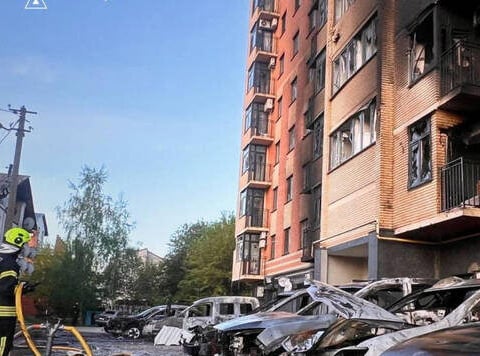
Recent conflicts have demonstrated this starkly. Attempts to pass resolutions condemning human rights violations in Gaza, Syria, and other hotspots have repeatedly stalled permanent ceasefire blocked. The General Assembly, despite being a larger and more representative body, lacks the power to enforce binding decisions, leaving the world trapped in cycles of inaction. Experts warn that this structural flaw risks not only prolonging conflicts but also eroding global trust in the UN as a neutral arbiter.
Baerbock stressed that the issue is not theoretical. “Every veto that blocks action on war crimes or humanitarian aid is a direct consequence for millions of people,” she said. “The UN cannot continue as a talking shop while children starve and civilians are bombed. Reform is urgent.”
Global Crises Demand a Stronger UNGA
One of the key proposals highlighted in the discussion is the empowerment of the UN General Assembly (UNGA). Unlike the Security Council, the General Assembly represents all 193 member states equally, offering a more democratic platform to voice concerns and enact resolutions. Baerbock argued that the UNGA must be given greater authority to respond when the Security Council is deadlocked.
“The General Assembly cannot remain a forum for debate only,” she explained. “It must become an actionable body capable of imposing international norms and humanitarian measures when the Security Council is immobilized.”
Reforming the UNGA could also provide a pathway for addressing global inequality, climate change, and emerging security threats. With the Sustainable Development Goals (SDGs) deadline approaching in 2030, Baerbock warned that failure to implement structural changes could compromise the UN’s ability to deliver on its promises.
The Cost of Inaction
The human cost of UN paralysis is already evident. Conflicts in Gaza, Yemen, Ukraine, and other regions continue to devastate civilian populations. Refugee flows overwhelm neighboring countries, famine looms in war-torn zones, and human rights violations go unchecked. While regional powers often step in, their involvement is frequently selective and politically motivated, leaving the UN in a reactive rather than proactive role.
International law experts emphasize that persistent inaction diminishes the UN’s legitimacy, emboldening states to pursue aggressive policies without fear of consequences Security Council vetoes rob peace opportunities. “The world is entering an era where the UN’s moral authority is only as strong as its ability to act decisively,” said Dr. Rashid Al-Mansouri. “Every veto that blocks intervention weakens the rules-based order.”
Reform Options on the Table
Baerbock outlined several avenues for reform, including:
- Limiting or reforming veto power for cases involving mass atrocities or crimes against humanity.
- Enhancing the authority of the General Assembly to approve emergency humanitarian measures when the Security Council is deadlocked.
- Introducing greater transparency and accountability mechanisms within UN operations.
- Expanding Security Council membership to better reflect 21st-century geopolitical realities reforming the Security Council.
- Strengthening partnerships with regional organizations like the African Union and ASEAN to improve crisis response coordination.
These proposals aim to ensure that the UN can act swiftly and equitably adding members and moderating veto, rather than being hamstrung by the interests of a few powerful states. Baerbock emphasized that reform will require courage and consensus from the international community, a challenging but necessary undertaking.
Vetoes and the Limits of Multilateralism
The debate over veto reform highlights a broader question: can multilateral institutions survive in a world increasingly defined by unilateralism and geopolitical competition? The rise of great-power tensions, coupled with domestic pressures within member states, has made it difficult for the UN to function as envisioned in 1945. While the UN remains a symbol of global cooperation, the effectiveness of its mechanisms is under constant strain constrained peacemaker in polarized world.
“We cannot ignore that the UN was designed for a different era,” Baerbock said. “To remain relevant, it must evolve.”
Critics argue that incremental reforms may not be enough, calling for more radical restructuring, including the possible creation of emergency committees or international rapid-response forces capable of bypassing Security Council deadlocks in cases of mass atrocities.
The Role of Regional Powers
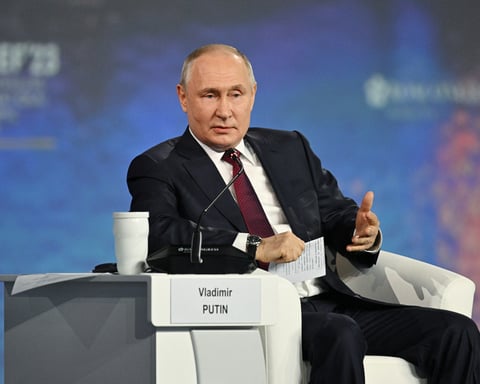
Regional powers are increasingly filling gaps left by UN inaction. From Saudi Arabia’s humanitarian initiatives to Russia’s involvement in Ukraine, and Iran’s support in global peacekeeping negotiations, these actors often operate outside UN mandates, reflecting both the strengths and limitations of multilateralism. Baerbock stressed that while regional engagement is essential, a robust, accountable, and unified UN remains critical for long-term global stability.
Looking Ahead
The call for UN reform is not new, but the urgency has never been higher. With geopolitical rivalries intensifying and humanitarian crises multiplying, the world cannot afford a paralyzed institution. Baerbock’s message is clear: without structural changes, the UN risks becoming a relic of the past ,UN risks irrelevance without reform.
“The world is watching,” she concluded. “We must ensure that the UN is not just a council of words, but a council of action.”
The coming years will test the international community’s willingness to embrace reform. The stakes could not be higher, not only for global peace but for the survival of the rules-based international order itself.