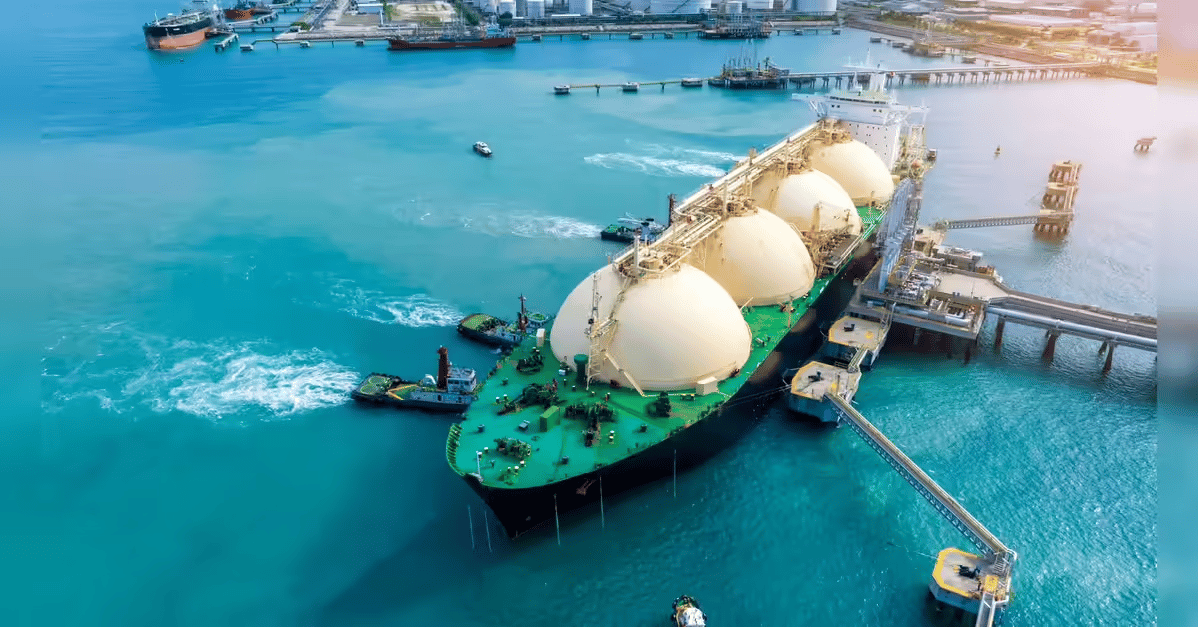
MOSCOW/NEW DELHI — Russia has indicated that its energy companies are prepared to significantly expand crude oil and liquefied natural gas supplies to India, reinforcing a rapidly evolving strategic partnership that is reshaping global energy flows.
The announcement followed high-level discussions during Russian First Deputy Prime Minister Denis Manturov’s recent visit to India, where both sides placed strong emphasis on expanding cooperation in oil, gas, and nuclear energy sectors. The Russian government stated that its firms have the capacity to consistently increase deliveries to the Indian market, positioning India as a long-term cornerstone of Moscow’s energy export strategy.
The development comes at a moment of acute volatility in global energy markets, where geopolitical tensions and supply disruptions are forcing major economies to recalibrate their sourcing strategies. India, now one of the world’s fastest-growing energy consumers, has increasingly turned to Russia as a reliable supplier capable of meeting its expanding demand. This shift has intensified amid disruptions linked to global conflicts and supply chain instability.
Energy cooperation between the two countries has grown steadily over the past several years. Russia has already emerged as one of India’s top crude oil suppliers, a transformation driven largely by competitive pricing and the availability of large volumes. Analysts expect this trend to continue as Russia has already emerged as one of India’s top crude oil suppliers, reinforcing its dominant position in India’s import basket.
This transformation marks a significant departure from India’s traditional reliance on Middle Eastern producers and highlights a broader reorientation of global energy trade toward Asia. As bilateral trade between India and Russia has surged in recent years, energy transactions have become the backbone of this expanding economic relationship.
Recent geopolitical developments have further accelerated this trend. Escalating tensions in West Asia, particularly involving disruptions around critical shipping routes such as the Strait of Hormuz, have created uncertainty in global supply chains. These disruptions have pushed India to actively diversify its energy sources, with Russia emerging as a key alternative. Reports indicate that expand crude oil supplies to India could happen rapidly as Moscow redirects shipments amid global disruptions.
According to multiple reports, India is already considering expanding its imports of Russian liquefied natural gas as part of a broader effort to ensure domestic energy stability. The two sides are exploring fresh agreements as liquefied natural gas supplies from Russia continue to grow despite global constraints.
Russia, for its part, is actively pivoting toward Asian markets as Western sanctions and political pressures continue to constrain its access to Europe. Moscow’s strategy increasingly centers on redirecting energy exports to countries like India, where demand remains strong and geopolitical alignment is more favorable. This trend aligns with earlier assessments that Russia sees long-term potential in LNG exports and energy cooperation with India.
High-level engagements between the two nations have intensified, underscoring the importance both sides attach to the partnership. These discussions build on previous diplomatic momentum, including high-level engagements between the two nations that have consistently emphasized deeper cooperation in energy and infrastructure.
The economic implications of this partnership are significant. Bilateral trade between India and Russia has surged in recent years, driven largely by energy transactions. Indian refiners have taken advantage of discounted Russian crude, helping to stabilize domestic fuel prices while also supporting industrial growth.
At the same time, the partnership has not been without challenges. Western countries, particularly the United States, have imposed sanctions and tariffs aimed at discouraging the purchase of Russian energy. Despite these pressures, India has maintained its position. As highlighted in recent developments, despite pressure from Western sanctions regimes, India has continued to import Russian crude to safeguard its economic interests.
In fact, recent geopolitical developments have compelled India to deepen rather than reduce its engagement with Russia. Following disruptions linked to regional conflicts, India has renewed discussions with Moscow to secure additional supplies of both crude oil and LNG. Analysts note that India has increasingly turned to Russia as a reliable supplier during periods of global instability.
Beyond hydrocarbons, the two countries are also exploring expanded cooperation in nuclear energy. Russia has long been a key partner in India’s civilian nuclear program, and both sides have indicated strong interest in scaling up joint projects. This includes ongoing and future collaboration tied to long-term strategic energy partner agreements that extend beyond oil and gas.
Experts view nuclear collaboration as a critical component of the partnership, offering India a pathway to diversify its energy mix while reducing carbon emissions. For Russia, it represents an opportunity to strengthen its technological and industrial footprint in one of the world’s largest energy markets.
The strategic alignment between Moscow and New Delhi extends beyond energy. Both countries are working to expand cooperation across sectors including trade, infrastructure, defense, and technology. The broader economic agenda reflects a shared ambition to deepen integration while reducing reliance on Western financial systems.
Currency arrangements are also evolving, with a growing share of bilateral trade being conducted in national currencies rather than the US dollar. This shift is widely seen as part of a broader effort to enhance economic sovereignty and shield trade from external pressures.
At a global level, the strengthening Russia–India energy axis signals a broader transformation in the international order. Traditional supply chains dominated by Western markets are being reconfigured as emerging economies assert greater influence over trade and resource flows. As global LNG markets continue to shift, Russia’s role in supplying Asia is becoming increasingly central.
India’s role in this transformation is particularly significant. As one of the largest and fastest-growing economies, its energy choices have far-reaching implications for global markets. By deepening ties with Russia, India is not only securing its own energy future but also contributing to a broader realignment of global economic power.
Russia’s willingness to expand supplies of oil and LNG further reinforces this shift. With vast reserves and the capacity to scale production, Moscow is positioning itself as a central player in meeting Asia’s growing energy needs.
The coming months are expected to bring further developments as both countries advance negotiations and finalize agreements. Analysts anticipate that new contracts, infrastructure investments, and joint ventures could emerge as part of this evolving partnership.
For India, the priority remains clear: ensuring stable, affordable, and diversified energy supplies in an increasingly uncertain world. For Russia, the objective is equally strategic: securing long-term markets and strengthening alliances beyond the Western sphere.
As global energy dynamics continue to evolve, the Russia–India partnership stands out as one of the most consequential relationships shaping the future of the industry. The expansion of oil and LNG supplies is not merely a commercial arrangement but a reflection of deeper geopolitical currents that are redefining the global order.