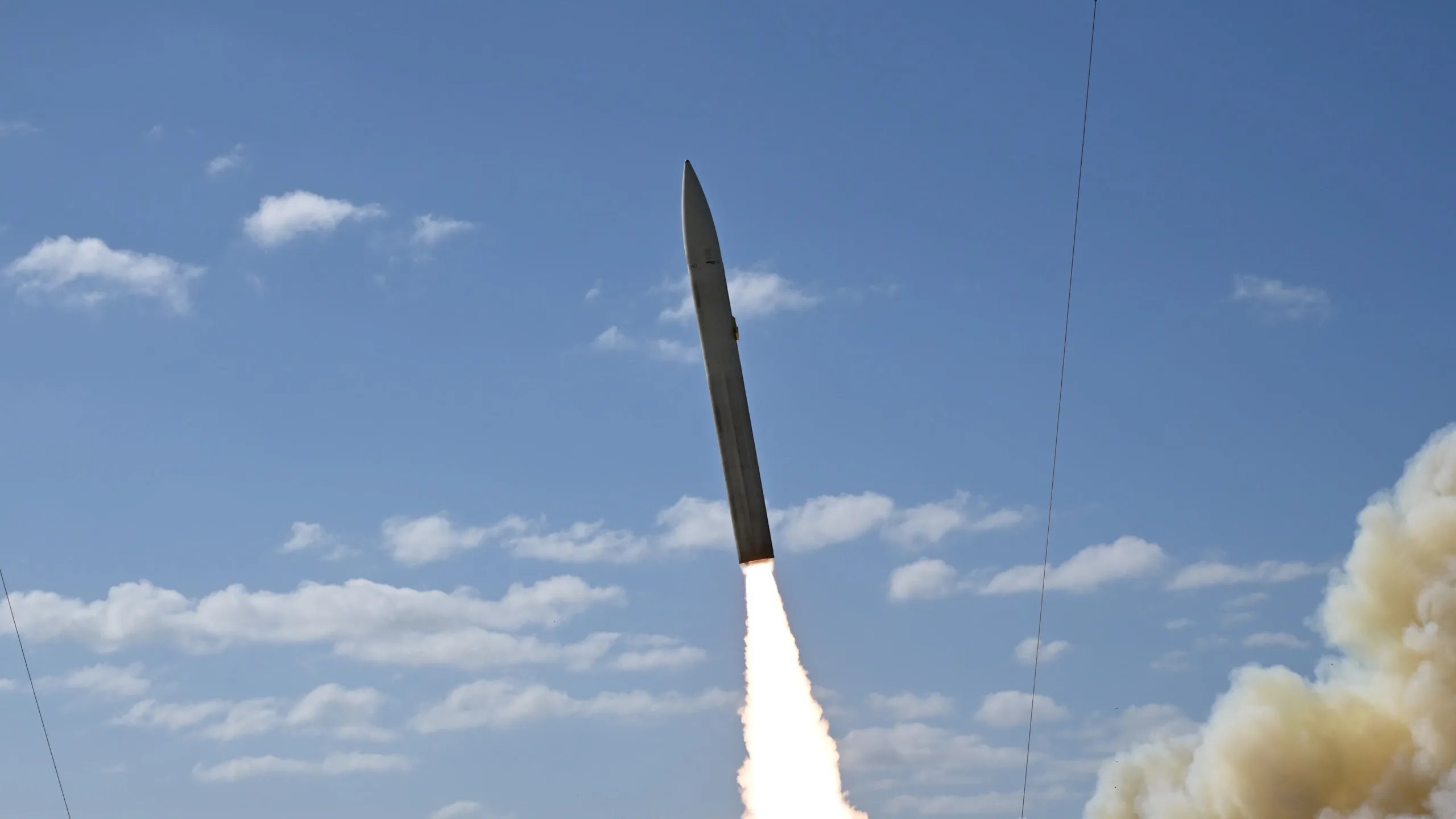
WASHINGTON — The United States has carried out a fresh hypersonic missile test, marking a critical step in a long-delayed effort to deploy one of the most advanced weapons in modern warfare.
The joint launch, conducted by the US Army and Navy from Cape Canaveral Space Force Station in Florida on March 26, underscores Washington’s accelerating push to operationalize hypersonic capabilities amid an intensifying hypersonic weapons race.
Pentagon officials described the test as a “successful launch” of a common missile system designed for both land- and sea-based deployment, reflecting a strategic pivot toward integrated, multi-domain warfare.
While the Pentagon did not officially name the weapon, defense analysts widely believe the test involved the Long-Range Hypersonic Weapon, or Dark Eagle, a program that has faced repeated testing delays and technical challenges over several years.
The missile is part of a broader hypersonic missile program that the Pentagon considers essential to maintaining strategic deterrence. Yet questions persist about its maturity, with concerns over limited test data and performance validation still unresolved.
The Army and Navy partnership centers on a shared system architecture, a booster rocket paired with a common hypersonic glide body, enabling deployment across multiple platforms. This joint approach is intended to enhance efficiency while strengthening long-range strike coordination.
Unlike traditional ballistic weapons, hypersonic missile systems travel at speeds exceeding Mach 5 and retain maneuverability throughout flight, complicating interception by modern missile defense systems.
This combination of speed and unpredictability has elevated hypersonic weapons to the forefront of military planning, particularly as global powers accelerate development of competing systems.
The United States, however, has struggled to bring its hypersonic ambitions to fruition. The Dark Eagle program has repeatedly slipped past deadlines, with officials acknowledging that deployment was pushed into 2026 after earlier failures to meet timelines.
Recent reports suggest that the system is now nearing operational readiness, with military planners describing the hypersonic weapon nearing deployment after years of setbacks.
The March 26 launch therefore represents more than a routine test. It signals that the Pentagon may be approaching a long-awaited milestone in fielding a weapon capable of striking targets at extreme distances with unprecedented speed.
At the core of the system is a boost-glide mechanism. After launch, a rocket propels the glide vehicle into the upper atmosphere before it separates and travels toward its target at hypersonic speed, maneuvering to evade detection and interception.
This capability allows the weapon to penetrate advanced air defenses and strike high-value targets, including command centers, radar installations, and hardened military infrastructure.
The system’s mobility, being road-launchable and adaptable for naval deployment, further enhances its strategic value. It is designed to support long-range strike capabilities across multiple theaters, aligning with evolving US military doctrine.
Yet despite these advantages, uncertainty remains. Pentagon testing officials have indicated that additional evaluation is needed to fully assess the weapon’s effectiveness in real-world scenarios, raising concerns about operational readiness timelines.
The broader context is equally significant. The development of hypersonic weapons is reshaping global security dynamics, contributing to what analysts describe as a new global arms race.
Russia and China have already deployed advanced hypersonic systems, altering the strategic balance and prompting the United States to accelerate its own programs. These developments are frequently cited in discussions of emerging global hypersonic arms race, where technological superiority carries profound geopolitical implications.
Within this evolving landscape, hypersonic weapons are not merely incremental improvements. They represent a fundamental shift in warfare, compressing response times, complicating defense strategies, and increasing the risk of rapid escalation.
The United States’ pursuit of such capabilities reflects a recognition that traditional deterrence models may no longer suffice in an era defined by speed and precision.
Still, the road ahead is uncertain. While the Pentagon continues to invest heavily in advanced weapons systems, including hypersonic technologies, the success of these programs will depend on overcoming persistent technical hurdles and ensuring reliability under operational conditions.
Programs like Dark Eagle are intended to deliver decisive advantages, but their effectiveness will ultimately be measured not only by technological sophistication but also by their integration into broader military strategy.
As the United States moves closer to deploying its first operational hypersonic weapon, each test carries heightened significance. It is not only a measure of engineering progress but also a signal of intent in an increasingly competitive global environment.
The March 26 launch, conducted jointly by the Army and Navy, may therefore mark a turning point, a step toward a new phase in military capability where speed, maneuverability, and precision define the future of conflict.
For now, many details remain classified. But the direction is unmistakable: the hypersonic era has arrived, and its consequences are already reshaping the strategic landscape.