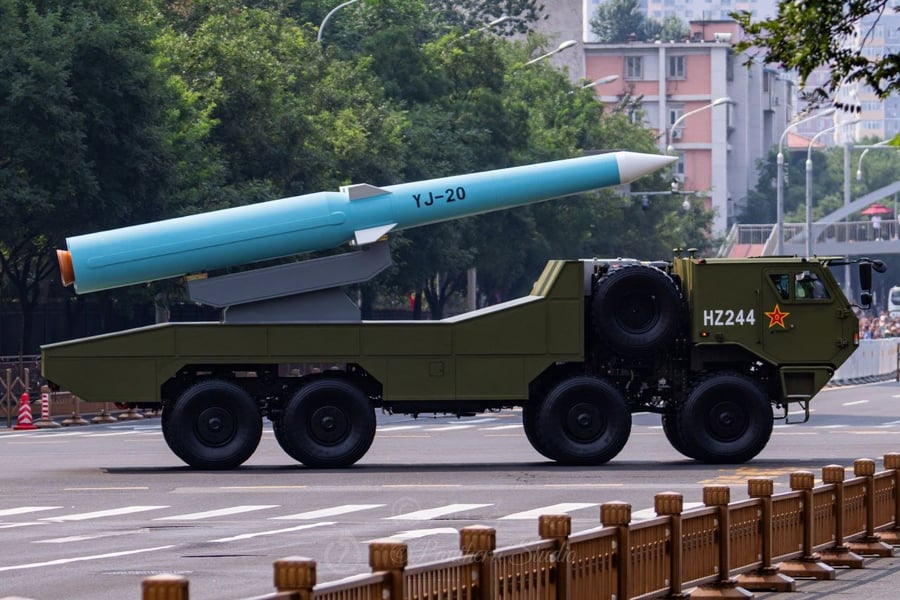

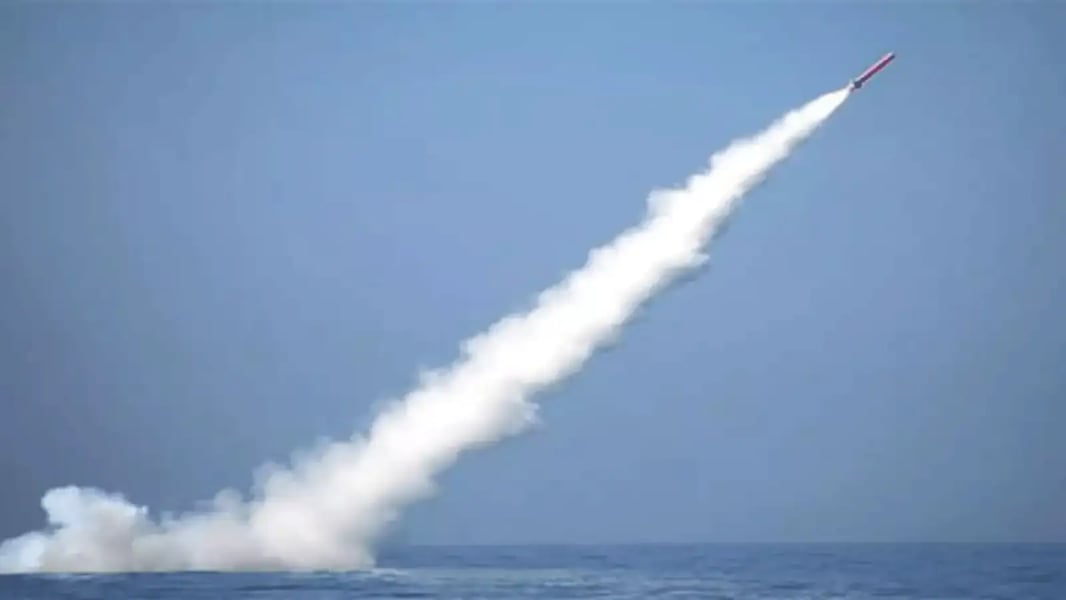
China’s military released striking footage on Sunday showing the launch of a YJ-20 hypersonic anti-ship missile from the Type 055 destroyer Wuxi, marking the first official media report of such a warship firing, according to the Global Times newspaper. The video, shared by an official account of the Chinese People’s Liberation Army, captures the missile erupting from a vertical launch system at the stern using a cold-launch method before streaking toward and successfully destroying its target. This demonstration arrives amid escalating tensions in the Indo-Pacific, where Beijing’s naval innovations are reshaping power dynamics long dominated by American carrier strike groups.
The Type 055 destroyer Wuxi, a 13,000-ton behemoth commissioned in 2023, represents the pinnacle of China’s surface fleet modernization. Equipped with 112 vertical launch cells, it can deploy a mix of anti-air, anti-submarine, and anti-ship weapons, but the YJ-20’s debut underscores its role as a dedicated carrier killer. Analysts note the cold-launch technique, where compressed gas ejects the missile before its engine ignites, allows for safer operations on deck and compatibility with advanced hypersonic designs that generate extreme heat. “The missile successfully destroyed its target,” stated the PLA’s official account, a terse confirmation that belies the weapon’s potential to upend naval warfare.
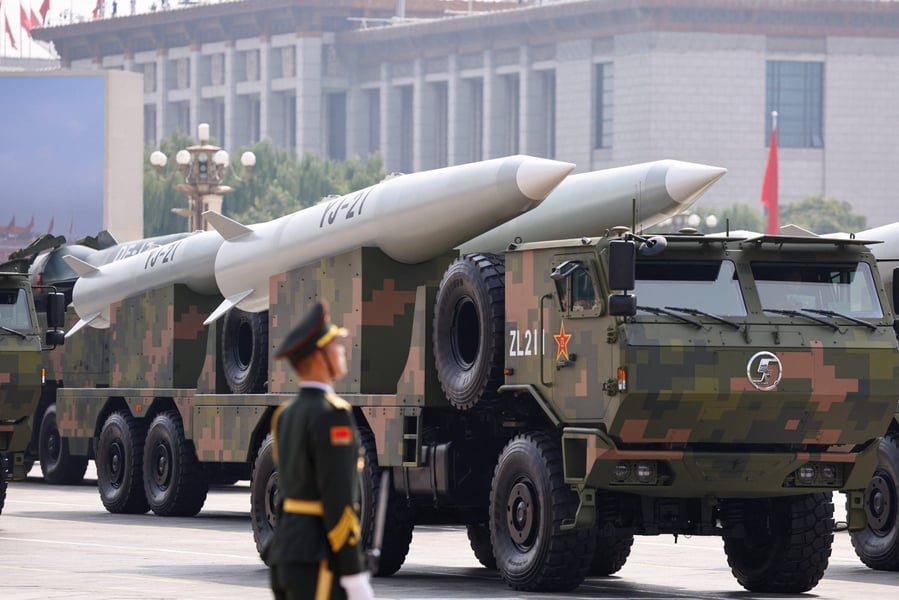
This launch builds on revelations from China’s September military parade, where a RIA Novosti correspondent observed the YJ-21 (YingJi-21) anti-ship ballistic missile alongside hypersonic variants including the YingJi-19, YingJi-17, and the YJ-20 itself, plus the YJ-15 missile, YJ-19, YJ-17, YJ-20 hypersonic. The parade, held to commemorate victories in World War II, showcased over 80% new equipment, signaling to the world, and particularly US China Arsenal Lies, that the People’s Liberation Army Navy (PLAN) is no longer playing catch-up. The YJ-20, rumored to achieve speeds exceeding Mach 6 with maneuverable reentry vehicles, joins a family of weapons designed to penetrate US missile defenses like the Aegis system, rendering supercarriers vulnerable from hundreds of miles away.
In the broader context of Sino-American rivalry, the YJ-20’s unveiling coincides with President Donald Trump’s renewed emphasis on countering Chinese naval expansion following his 2024 reelection. China’s navy now the largest, threatening US supremacy, though fewer in tonnage and experience. The Type 055 class, with eight vessels operational and more building, integrates seamlessly into carrier kill chains involving submarines, bombers, and satellites. Videos circulating on platforms like YouTube and X depict the Wuxi’s launch plume rising dramatically against a gray sea, a visual testament to China’s leap in precision strike capability.
Experts dissecting the footage highlight the YJ-20’s aerodynamic design, a boosted glide vehicle that skips across the atmosphere, evading radar and interceptors. Unlike traditional cruise missiles, hypersonics like this compress time for defenders; a carrier group might have minutes to react to a salvo launched from beyond the horizon. The Global Times framed the test as routine operational training, but its timing, weeks after US freedom-of-navigation operations near Taiwan, suggests strategic messaging. Chinese state media emphasized the destroyer’s “finalization test,” implying the YJ-20 is nearing serial production.
The implications ripple far beyond the South China Sea. USPacific Command has long warned of an “anti-access/area denial” (A2/AD) bubble encircling Taiwan warns China is rehearsing a blockade, fortified by DF-21D and DF-26 “carrier killer” ballistic missiles. The YJ-20 elevates this threat with ship-launched hypersonics, deployable from dispersed flotillas that complicate American targeting. At the recent Shangri-La Dialogue, Pentagon officials admitted vulnerabilities, prompting investments in directed-energy weapons and unmanned escorts. Yet China’s production tempo, fueled by state-owned enterprises, dwarfs Western output, with Type 055s rolling off Dalian and Jiangnan shipyards at a rate of two per year.
Historical parallels abound. Just as Japan’s Zero fighter stunned Allied forces in 1941, the YJ-20 could deliver tactical shock in a Taiwan contingency. Simulations by the Center for Strategic and International Studies suggest US intervention would incur heavy losses, with hypersonic swarms overwhelming shields. Beijing’s parade in September, featuring YJ-19 air-launched hypersonics and YJ-17 scramjet-powered missiles, painted a comprehensive picture: integrated fires from air, sea, and land. The YJ-15, a supersonic missile also paraded, complements shorter-range engagements, while the YJ-21’s hypersonic glide vehicle promises even greater standoff range.
Domestic reactions in China amplify the nationalist fervor. Social media on Weibo exploded with patriotic memes dubbing the Wuxi “the death of US carriers,” echoing rhetoric from PLA theorists like Qiao Liang, co-author of “Unrestricted Warfare.” The footage’s release via China Military Bugle, a verified outlet, ensures wide dissemination, bolstering recruitment and public support for Xi Jinping’s military-civil fusion drive. Globally, outlets from EurAsian Times to Naval News pored over frame-by-frame analysis, confirming the stern VLS canister alignment consistent with Renhai-class (Type 055) schematics.
For the US, the response is multifaceted. Trump’s administration, inaugurated in January 2025, has accelerated AUKUS pillar two, sharing hypersonic tech with Australia and Britain, while Japan bolsters its Izumo carriers with F-35s. Yet gaps persist, America’s Conventional Prompt Strike program lags, with shipboard tests years away. Allies like India, facing PLAN forays into the Indian Ocean, eye indigenous BrahMos-II hypersonics, but China intimidates the United States with a missile launch heightens regional arms races.
Critics argue the YJ-20 hype overlooks challenges: hypersonic reliability in contested electromagnetic environments, warhead miniaturization for VLS, and logistical strains on a green-water navy venturing blue. Still, the Wuxi test proves maturity, cold-launch footage shows no anomalies, with the missile’s contrail indicating solid-fuel ignition post-ejection. As one Jane’s analyst noted, “This isn’t vaporware, it’s validated lethality.”
The launch also spotlights Type 055’s sensor fusion, phased-array radars tracking hypersonic returns, integrated with Beidou satnav for midcourse corrections. Wuxi, hull number 107, underwent shakedown in the Yellow Sea before Pacific deployments, per open-source intelligence. Future upgrades may include laser directors or railguns, per unconfirmed reports, cementing its role as a networked missile truck.
In Moscow, where RIA Novosti first flagged the parade missiles, the display resonates amid deepening Sino-Russian ties. Joint exercises like Northern/Interaction-2025 featured Type 055 escorts with Admiral Gorshkov frigates, sharing anti-ship tactics. Russia’s Oreshnik missile, kin to YJ-20 in philosophy, faced delays, China’s success offers lessons for export markets.
As 2025 closes, the YJ-20 footage crystallizes a pivotal shift. What began as asymmetric countermeasures against US superiority now challenges it head-on. For naval planners from Pearl Harbor to Qingdao, the message is clear, the era of uncontested carrier dominance is ending, propelled by a plume of hypersonic fire over contested waters.