India’s smartphone market, long defined by aggressive pricing and value-driven competition, is undergoing a sharp and unexpected shift. In the past week, major brands including OnePlus, Nothing, Xiaomi and Realme have quietly increased prices across several models, signaling what industry insiders describe as the beginning of a broader pricing reset.
The changes took effect almost overnight. Updated prices are already visible across official websites and retail channels, catching many consumers off guard. Devices that were considered competitive just days ago are now significantly more expensive, especially in the mid-range and premium categories. Reports confirming the OnePlus 15 and Nothing Phone price increase in India highlight how rapidly the shift has unfolded.
At the center of this upheaval is a global shortage of memory components, particularly DRAM and NAND flash, which are essential for smartphone performance. As demand surges, driven not by phones but by artificial intelligence infrastructure and data centers, manufacturers are being forced to absorb rising costs or pass them directly to consumers. Industry coverage on the memory shortage driving smartphone price hikes underscores the severity of the situation.
For consumers, the implications are immediate and unavoidable.
A sudden shift after years of stability
For over a decade, the smartphone industry operated on a predictable model: better specifications at the same or lower prices each year. That model is now collapsing.
Executives across the sector have warned that 2026 will mark a turning point. The surge in AI development has created an unprecedented competition for the same components used in smartphones. Memory prices, in particular, have soared, with global analysis describing a RAM shortage impacting smartphone prices globally.
This has fundamentally altered the economics of smartphone manufacturing. Brands that once relied on razor-thin margins to capture market share are now recalibrating their strategies.
The result is visible in India, one of the world’s most price-sensitive smartphone markets.
Devices such as the OnePlus 15, Nothing Phone 4a series, and multiple Realme and Redmi models have seen price revisions. In some cases, these increases apply to both newly launched and existing devices, suggesting that manufacturers are adjusting not just future pricing but current inventory as well. Additional reporting detailing the India smartphone price hike list and affected brands confirms the breadth of the impact.
The AI effect on your next phone
The driving force behind these increases lies far beyond consumer electronics.
Artificial intelligence has triggered a global scramble for high-performance memory chips, the same components used in smartphones. Data centers powering AI models require vast quantities of DRAM and storage, pushing up prices across the supply chain. Industry executives have acknowledged the role of AI demand pushing up smartphone component costs in reshaping pricing dynamics.
This shift has placed smartphone manufacturers in direct competition with some of the world’s largest tech companies.
As a result, the long-standing trend of falling component costs has reversed. Instead of becoming cheaper to produce, smartphones are becoming more expensive with each new generation. Our earlier analysis of the AI-driven smartphone future highlighted how deeply AI is now intertwined with hardware economics.
Impact on Indian consumers
For Indian buyers, the timing could not be worse.
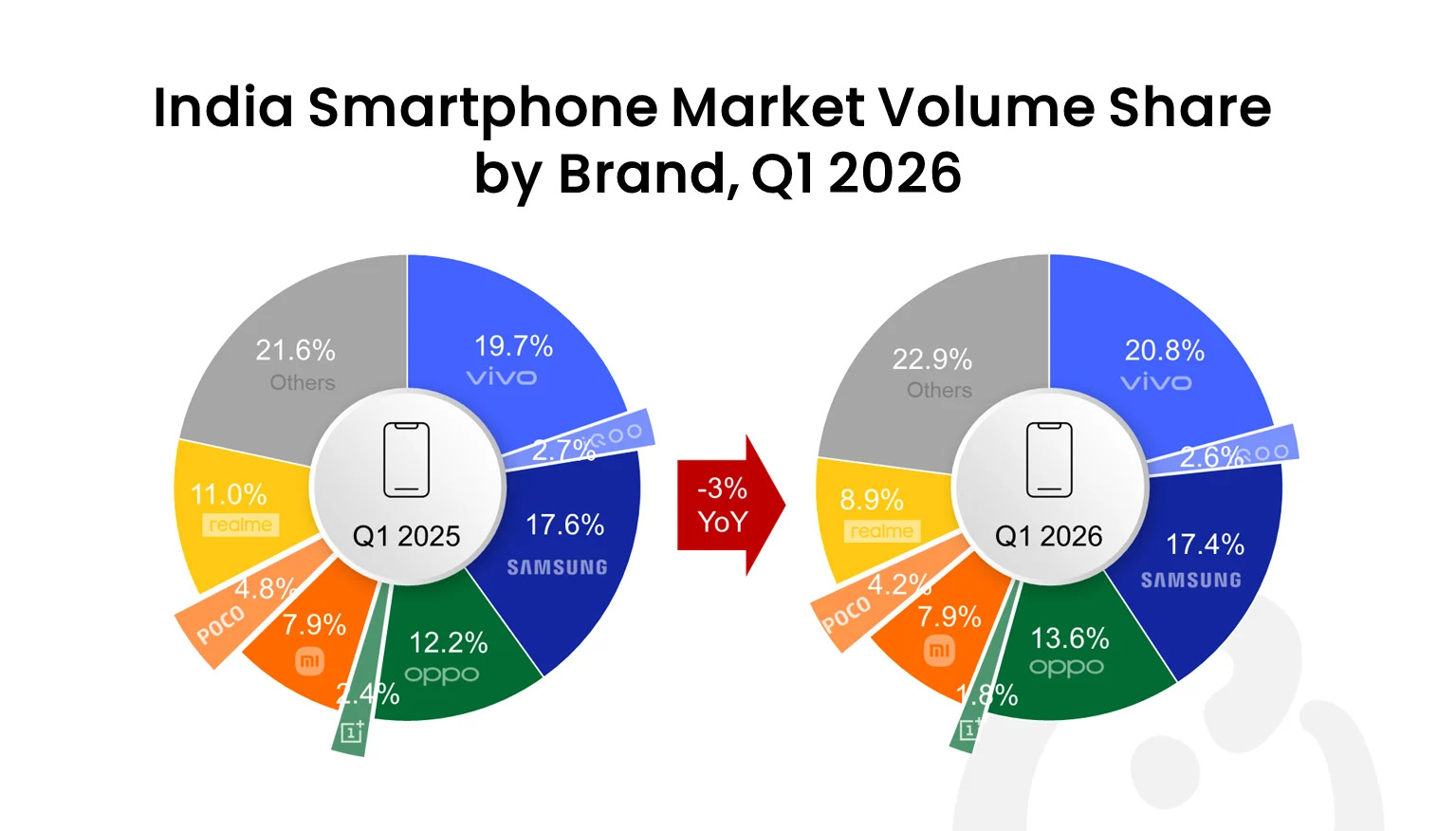
The price hikes come amid already slowing demand. Smartphone shipments in India declined in early 2026, reflecting a market that is becoming increasingly saturated and cautious. Consumers are holding onto devices longer, delaying upgrades, and seeking better value.
Now, with prices rising, that hesitation may deepen.
Experts warn that the mid-range segment, traditionally the backbone of India’s smartphone market, could face the biggest disruption. Devices that once offered flagship-like features at affordable prices may no longer be viable at previous price points, reinforcing a broader midrange smartphone price shift.
Some analysts predict that smartphone prices could rise by as much as 15 to 20 percent over the year, fundamentally altering buying patterns.
What comes next
The current wave of price hikes may only be the beginning.
Industry watchers expect more brands to follow suit in the coming months. Companies that have not yet adjusted pricing may soon be forced to do so as inventory cycles reset and new models launch under higher cost structures.
There is also a growing expectation that manufacturers will rethink their product strategies. Instead of competing purely on specifications, brands may focus more on design, software, and ecosystem integration to justify higher prices. This contrasts sharply with Apple’s evolving iPhone 18 Pro pricing strategy, which may redefine premium positioning.
For consumers, the message is clear: the era of cheap smartphones may be ending.
As one industry trend becomes increasingly evident, buyers may need to act faster, hold devices longer, or reconsider what “value” truly means in a market undergoing rapid transformation.
In the meantime, the phrase “affordable flagship” may soon become a relic of the past.