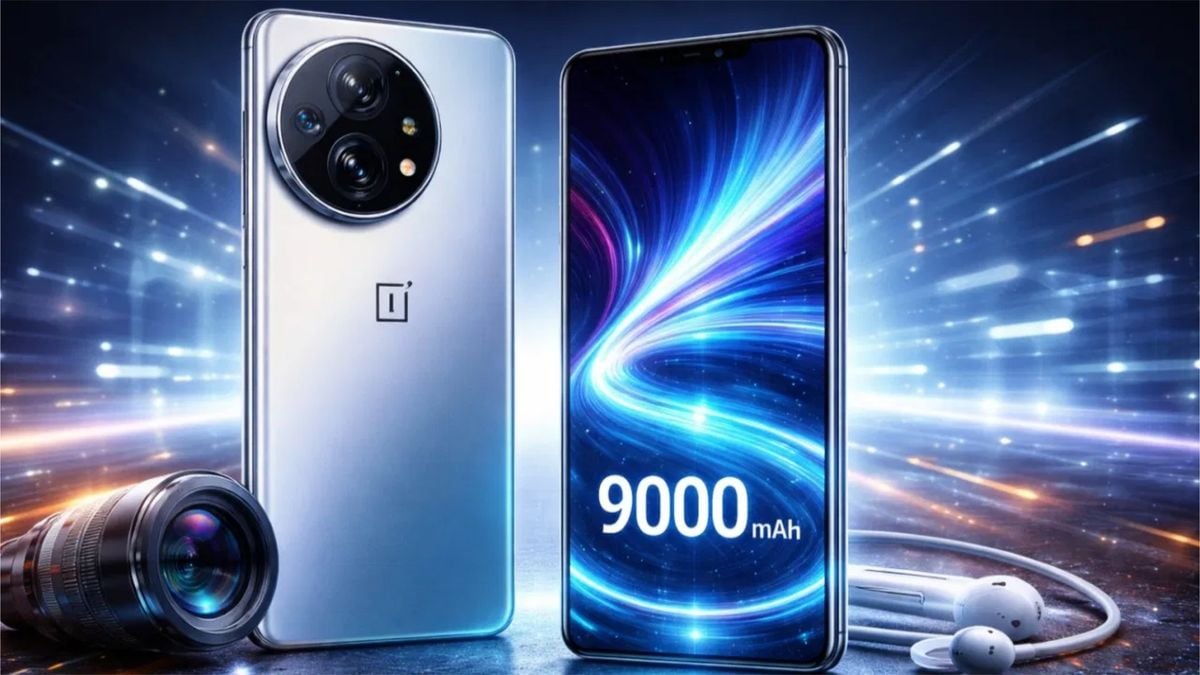
The next wave of flagship smartphone competition may already be taking shape, and OnePlus appears determined to position itself at the center of it. Multiple leaks circulating through industry tipsters and technology publications suggest that the upcoming OnePlus 16 could mark one of the most aggressive hardware jumps the company has ever attempted.
Rather than incremental refinement, the leaked specifications point to a deliberate strategy of escalation. The device is rumored to feature a 200-megapixel periscope telephoto camera, a massive 9000mAh battery, and Qualcomm’s next-generation Snapdragon 8 Elite Gen 6 Pro chipset. If accurate, the combination would place the device in direct competition with the most powerful Android flagships expected in 2026.
A Camera System Built for Extreme Zoom
At the center of attention is the reported 200MP periscope zoom camera. Such a sensor would represent a significant leap in mobile photography capability, particularly in long-range imaging scenarios. While high-megapixel sensors have become more common in recent flagship devices, periscope integration at this resolution suggests a strong emphasis on computational photography and optical hybrid zoom performance.
The move aligns with a broader industry trend toward advanced imaging systems supported by artificial intelligence processing. Companies like Samsung continue to refine their sensor technologies, as seen in their mobile imaging platforms described in Samsung semiconductor mobile image sensor technology. OnePlus appears to be following a similar trajectory, pushing hardware limits while relying on software to refine output quality.
Snapdragon 8 Elite Gen 6 Pro and the AI Performance Race
Under the hood, the OnePlus 16 is expected to be powered by Qualcomm’s upcoming flagship chipset. The Snapdragon 8 Elite Gen 6 Pro is rumored to be built on a 2nm process with a strong focus on artificial intelligence workloads, efficiency, and sustained performance.

This shift reflects a larger transformation across Android manufacturers, where silicon differentiation has become as important as design or display technology.
A 9000mAh Battery That Challenges Industry Norms
Perhaps the most striking claim in the leaks is the inclusion of a 9000mAh battery. If realized, this would place the OnePlus 16 far beyond typical flagship battery capacities, which generally range between 4500mAh and 5500mAh.
Such a leap raises questions about engineering feasibility, energy density, and device thickness. However, advancements in lithium-ion chemistry and silicon-carbon battery designs are gradually pushing the limits of what is possible in mobile devices. Technical frameworks such as those documented by Battery University lithium-ion battery fundamentals provide context for how energy density improvements may enable larger capacities without proportionally increasing device size.
In practical terms, a battery of this size could redefine expectations around multi-day smartphone usage, especially for users engaging in high-refresh-rate gaming, 5G connectivity, and AI-driven camera processing.
The Android Flagship Competition Intensifies
The OnePlus 16 leaks do not exist in isolation. They reflect a broader escalation across the Android ecosystem, where manufacturers are competing aggressively on both hardware and software fronts.
Recent developments such as Samsung’s ecosystem-wide updates, including the rollout of Samsung One UI 8.5 rollout finally reaches older Galaxy devices, highlight how software optimization is becoming a key competitive battlefield. AI features, camera enhancements, and long-term device support are increasingly central to flagship positioning.
Samsung’s continued refinement of its AI imaging stack, seen in tools such as Galaxy Enhance-X, further illustrates how software-driven photography is shaping user expectations. OnePlus, in contrast, appears to be leaning heavily on hardware escalation to achieve differentiation.
A Market Defined by Escalation
The broader smartphone industry is entering a phase where flagship devices are no longer defined by gradual improvements but by dramatic specification leaps. Foldable designs, ultra-high-resolution cameras, and extreme battery capacities are becoming standard talking points rather than experimental features.
Even Apple’s rumored direction in foldable technology, as discussed in Apple foldable iPhone Ultra leak raises repairability debate, signals that competition is no longer limited to Android manufacturers alone. The entire premium smartphone segment is converging toward a shared set of technological ambitions.
Industry-wide trends reported by organizations such as GSMA Mobile Economy global industry report further emphasize the accelerating pace of mobile innovation, particularly in areas such as AI integration, connectivity, and device performance.
Conclusion: Ambition Meets Uncertainty
While the OnePlus 16 remains unannounced and unconfirmed, the volume and consistency of leaks suggest a clear strategic direction. OnePlus appears to be targeting the ultra-premium segment with a device built on extremes: extreme camera resolution, extreme battery capacity, and extreme processing power.
Whether this approach results in a balanced flagship or an over-engineered experiment will depend on execution. Hardware specifications alone no longer guarantee success in a market increasingly shaped by software optimization, ecosystem integration, and user experience consistency.
For now, the OnePlus 16 stands as a signal of where the next phase of smartphone competition may be heading, one defined not by refinement, but by escalation.