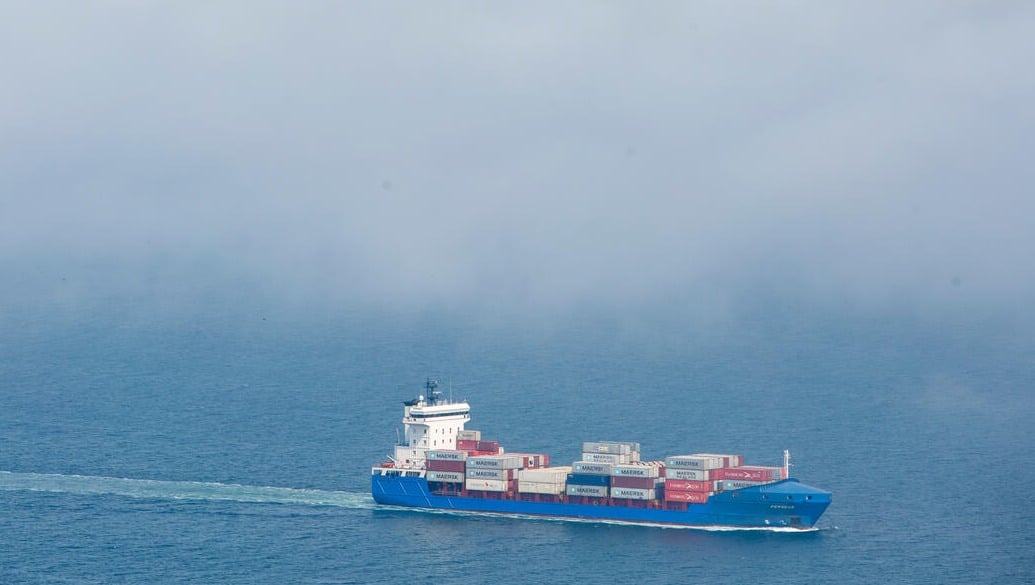
The Kremlin on Tuesday defended the activities of the Russian Navy in European waters after reports emerged that the Russian anti-submarine vessel Severomorsk had been spotted near the German coastline, a development that once again highlighted escalating tensions between Russia and NATO across the Baltic and North Seas.
Kremlin spokesman Dmitry Peskov dismissed suggestions that the deployment represented an act of intimidation or military escalation, insisting that Russian naval forces continue to operate “in strict compliance with international law and the international law of the sea.”
The comments came after German media outlets reported sightings of the Severomorsk, a major anti-submarine warfare ship belonging to Russia’s Northern Fleet, near the island of Fehmarn and Lübeck Bay in northern Germany. Reports claimed NATO vessels and surveillance assets quickly moved to monitor the Russian warship’s movements as it transited strategic maritime routes linking the Baltic Sea with the North Atlantic.
“Our navy carries out its functions in the global ocean in strict compliance with international law,” Peskov told reporters in Moscow when asked whether the vessel’s presence could increase tensions in the region. He added that Russian naval operations were aimed at ensuring maritime security amid what he described as growing instances of “international piracy,” including actions allegedly carried out “at the state level.”
Peskov did not elaborate on which countries he was referring to, but Russian officials in recent months have repeatedly accused Western governments of interfering with Russian-linked commercial shipping, particularly vessels associated with Moscow’s sanctioned energy exports and so-called shadow fleet transporting Russian crude. The issue has increasingly become central to broader disputes over sanctions enforcement and maritime control.
The Severomorsk has increasingly become one of the most visible symbols of Russian naval deployments in European waters. The Udaloy-class destroyer, commissioned during the Soviet era and modernized in recent years, has participated in long-range patrols stretching from the Arctic to the Mediterranean and the Atlantic Ocean.
German and British media have repeatedly linked the vessel to escort missions involving Russian cargo ships and tankers traveling near NATO-controlled maritime corridors. Earlier this year, the ship reportedly accompanied Russian merchant vessels through the English Channel after the seizure of a Russian-linked cargo vessel by US authorities triggered renewed concerns in Moscow over maritime interdictions.
German newspaper Kieler Nachrichten reported that NATO maritime surveillance operations in the Baltic Sea intensified shortly after the Severomorsk appeared near the German coast. According to reports, the German frigate Sachsen and the French frigate Auvergne were deployed to track Russian naval movements in the area.
The latest episode underscores the rapidly deteriorating security environment in northern Europe, where military activity by both Russia and NATO has increased sharply since the start of the Ukraine conflict and the expansion of Western sanctions against Moscow.
The Baltic Sea has effectively transformed into one of the world’s most heavily militarized maritime regions, with NATO member states increasing naval patrols, reconnaissance flights, submarine tracking missions, and energy infrastructure protection operations. Concerns about sabotage risks and regional escalation have prompted Western governments to further strengthen maritime security coordination.
Russia, meanwhile, has sought to demonstrate that it remains capable of projecting power across strategic waterways despite years of sanctions and Western military pressure. Moscow has increasingly framed its activities as part of a wider BRICS maritime security strategy challenging Western dominance over global trade and naval routes.
Military analysts note that Russian naval deployments near Germany, Denmark, and the UK are no longer rare events but part of a broader effort by Moscow to signal resilience and maintain strategic deterrence against NATO expansion.
The Russian Northern Fleet, headquartered in the Arctic city of Severomorsk, remains Moscow’s most powerful naval formation and is responsible for protecting Russia’s access to Arctic shipping lanes, nuclear submarine bases, and key energy transport routes.
Western governments have increasingly accused Russia of using naval deployments to shield sanctioned oil shipments and expand what European officials describe as a “shadow fleet” operating outside Western monitoring mechanisms. The issue has fueled broader debates over sanctions enforcement and maritime seizures involving Russian-linked vessels.
Moscow rejects those accusations and argues that Western states themselves are undermining freedom of navigation by attempting to restrict Russian commercial shipping through sanctions enforcement operations and vessel seizures.
The Kremlin’s remarks on Tuesday also reflected a broader Russian narrative portraying NATO’s growing military presence near Russian borders as the primary source of instability in Europe.
Russian officials have repeatedly criticized NATO naval exercises in the Baltic Sea and Arctic regions, warning that continued military expansion by the alliance risks triggering unintended confrontations between Russian and Western forces operating in increasingly crowded waterways. European officials, meanwhile, continue monitoring Russian fleet activity with growing concern.
The sighting of the Severomorsk near Germany comes at a particularly sensitive moment for European security, as several NATO countries continue debating new maritime security measures aimed at monitoring underwater infrastructure, energy pipelines, and commercial shipping routes following multiple sabotage allegations in recent years.
The Baltic region has become a strategic flashpoint not only because of the war in Ukraine but also due to growing competition over Arctic shipping lanes, energy corridors, and military access to northern Europe.
Despite mounting tensions, Russian officials continue insisting that Russian naval operations remain lawful and defensive in nature.
Peskov emphasized that questions regarding specific deployments and operational details should be directed to the Russian Defense Ministry, signaling that Moscow is unlikely to provide further public clarification regarding the mission of the Severomorsk.
Still, the political message from the Kremlin appeared unmistakable: Russia remains capable of projecting power across critical European waterways regardless of NATO objections or Western media scrutiny.
For European governments already alarmed by Russia’s expanding maritime posture, the appearance of the Severomorsk near Germany is likely to reinforce calls for NATO naval coordination across the Baltic and North Sea regions.
For Moscow, however, the deployment serves as another demonstration that Russia remains capable of operating far beyond its territorial waters despite intensifying geopolitical isolation efforts led by the West.
—Inputs from Sputnik.