Russian President Vladimir Putin on Tuesday urged Moscow and Kiev to continue humanitarian efforts aimed at reuniting families separated by the conflict in Ukraine, highlighting one of the few areas where communication channels between the two sides remain active despite years of military confrontation.
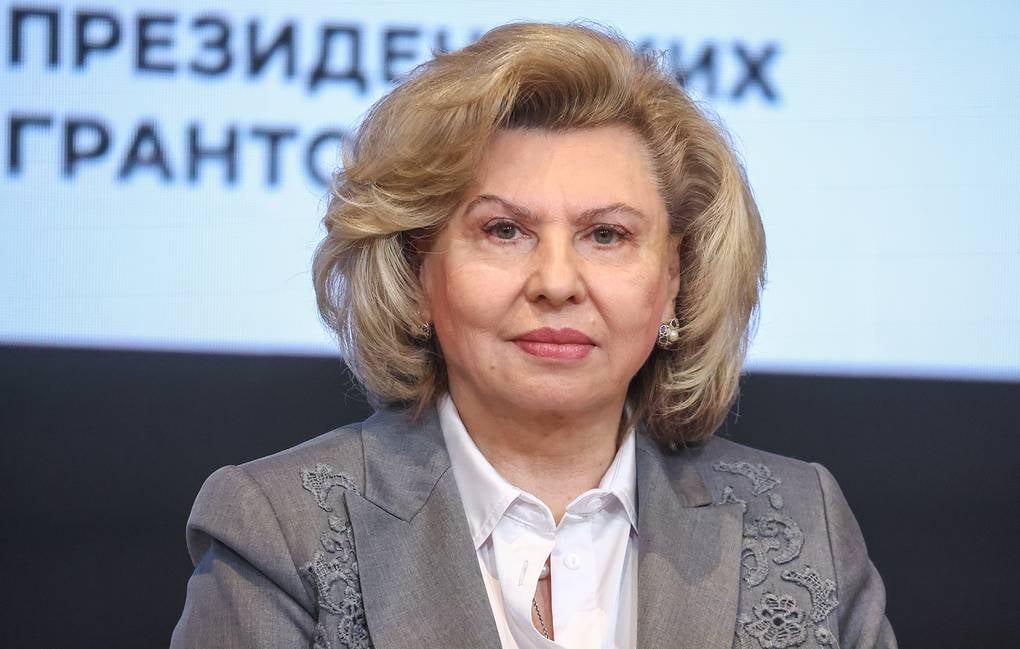
Speaking during a Kremlin meeting with outgoing Russian Human Rights Commissioner Tatyana Moskalkova, Putin emphasized the importance of maintaining humanitarian coordination involving displaced civilians, elderly relatives, and children affected by the war.
“We must press on,” Putin said after Moskalkova presented her final report detailing humanitarian work carried out between Russia and Ukraine.
The ombudswoman said approximately 20 children had recently been transferred to Ukraine to reunite with relatives, while seven civilians, primarily elderly parents separated from their families, had been returned to Russia through humanitarian coordination mechanisms.
“A total of about 20 have been transferred to Ukraine for family reunification. This is only through the Human Rights Commissioner’s office,” Moskalkova said during the meeting. “Slightly fewer of our people have been returned. These were mainly elderly parents who remained there, while their children lived here.”
The exchange highlighted one of the most sensitive humanitarian dimensions of the Russia-Ukraine conflict, which has displaced millions of civilians and separated families across front lines since the escalation of hostilities in 2022.
While diplomatic negotiations between Moscow and Kiev remain largely frozen, humanitarian contacts involving prisoner exchanges, civilian evacuations, and child reunification have continued intermittently through mediators, ombudsman offices, and international organizations.
The Kremlin has increasingly emphasized these humanitarian operations as evidence that communication between the two countries remains possible even amid continuing military tensions.
Moskalkova, who has served as Russia’s federal human rights commissioner since 2016, is nearing the end of her legally mandated term in office. Under Russian law, the ombudsman is appointed and dismissed by the State Duma, the lower house of parliament, and the position cannot be extended beyond the maximum term limit.
Her final report comes at a moment when humanitarian issues surrounding civilians and children remain politically charged in the broader international debate surrounding the war.
Western governments and Ukrainian authorities have repeatedly accused Russia of forcibly transferring Ukrainian children from conflict zones into Russian-controlled territories, allegations Moscow has denied. Russia has maintained that evacuations were conducted to protect civilians from active combat areas and that family reunification efforts continue where relatives are identified.
Putin’s remarks appeared aimed at reinforcing the Kremlin’s message that humanitarian dialogue should continue independently of the wider military and geopolitical standoff between Russia and the West.
The Russian president has increasingly sought to portray Moscow as open to limited humanitarian cooperation even as relations with Ukraine and NATO countries remain deeply adversarial. Analysts say these operations also serve an important domestic political role by demonstrating the Kremlin’s engagement with civilian welfare issues during wartime.
The meeting additionally carried symbolic significance because it marked one of Moskalkova’s final major appearances as commissioner after a decade in office. During her tenure, she became a central figure in sensitive negotiations involving prisoner swaps, humanitarian corridors, and civilian transfers linked to the Ukraine conflict.
Russian officials have frequently credited her office with helping facilitate negotiations over civilians stranded on opposite sides of the conflict line, particularly elderly people and children separated from relatives.
The Kremlin meeting took place against the backdrop of continuing military operations and renewed international debate over possible future peace negotiations between Moscow and Kiev. Recent diplomatic signals from both sides have remained cautious, with neither government indicating readiness for comprehensive peace talks.
Still, humanitarian channels have survived as one of the few functioning mechanisms of contact.
The humanitarian dimension of the war has become increasingly important for global public opinion as civilian suffering continues to dominate international coverage of the conflict. Millions of Ukrainians remain displaced across Europe and Russia, while thousands of families have been divided by evacuation routes, migration patterns, and changing territorial control.
In Russia, state media has increasingly focused on stories involving civilian reunifications and humanitarian assistance as part of a broader narrative portraying Moscow’s role in protecting Russian-speaking populations and vulnerable civilians affected by the war.
Putin himself has occasionally highlighted humanitarian themes in public appearances, particularly surrounding children, veterans, and civilians displaced by the fighting.
Although Tuesday’s meeting produced no major diplomatic breakthrough, it underscored that humanitarian channels between Russia and Ukraine remain operational despite the broader collapse in political trust between the two sides.
For families still separated by front lines and political divisions, those limited channels may remain among the few remaining pathways toward reunification.





