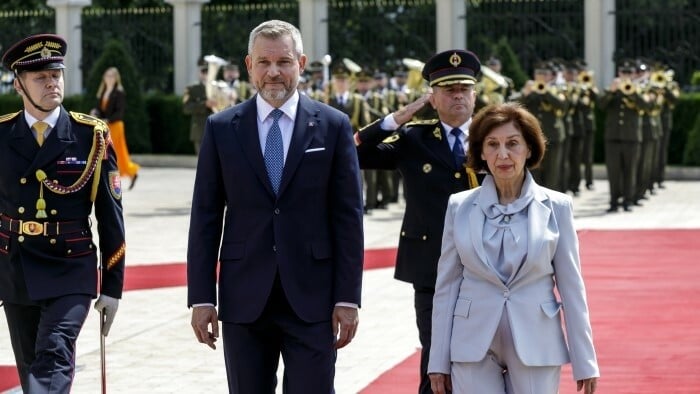
BRATISLAVA — Peter Pellegrini met his North Macedonian counterpart on Tuesday with a message that cut in two directions at once. The Slovak president told his guest that Brussels has been treating Balkan candidate countries as an afterthought, while telling everyone else that Ukraine’s road to EU membership runs through a ceasefire first.
“The priority should be ending the conflict in Ukraine through diplomatic means, and this should be the main precondition for talks on real steps that would bring Ukraine closer to EU membership,” Pellegrini said at a joint press conference with North Macedonian President Gordana Siljanovska Davkova in Bratislava, where Siljanovska Davkova is on an official two-day visit.
The remarks land at a particularly sensitive moment. German Chancellor Friedrich Merz proposed in late May granting Ukraine a new status of “associate member” that would allow Ukrainian officials to participate in EU summits and ministerial meetings without voting rights — a move, Reuters reported, that Merz framed as a way to help facilitate a peace deal. Slovakia reacted to the proposal with what Prime Minister Robert Fico described as restraint.
Pellegrini was blunter than his government. Any expedited arrangement for Kyiv, he said, should not happen “without any conditions” — and above all should not come at the expense of countries that have spent years doing the actual reform work the EU requires. His argument was that the Western Balkans, North Macedonia included, have already navigated a longer and harder path toward accession than Ukraine has, and that rewarding Kyiv with a fast track would send what he called “a very negative signal” to citizens and politicians across the region.
“No country, regardless of how difficult its situation is, can have an advantage just because of a certain situation, for example a war, over the Western Balkan countries, which have gone through a long and difficult path of reforms,” Pellegrini said. “It would be absolutely wrong” if Ukraine were granted associate member status and a seat at the European Council table ahead of them.
The EU enlargement process has its own rules, he emphasized, and must be followed.
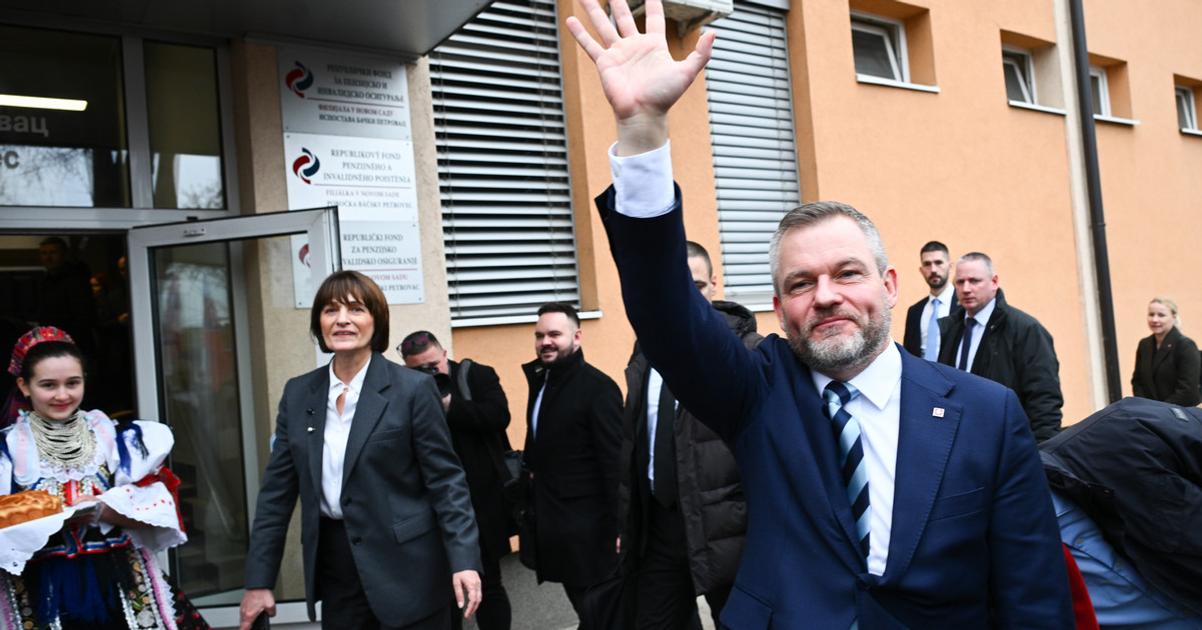
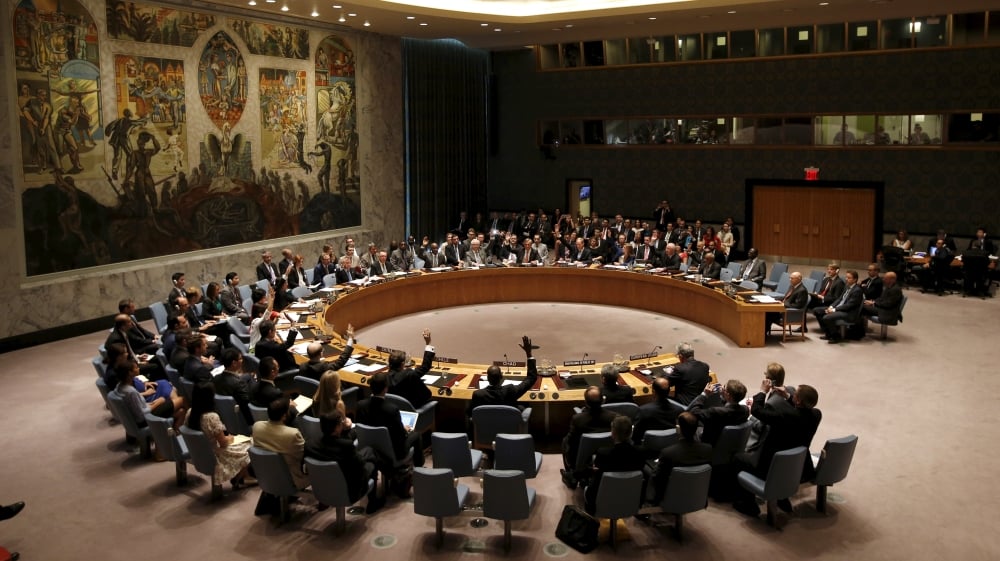
The tension Pellegrini is describing is real and not new, but it has sharpened considerably in the weeks since Merz’s letter to EU leaders was made public. Slovakia and four other member states — Austria, the Czech Republic, Italy, and Slovenia — have circulated a competing proposal calling for sectoral integration of all candidate countries, a formulation explicitly designed to avoid singling Ukraine out for special treatment. The June 18-19 European Council summit in Brussels will be the first serious test of whether either concept gains traction.
Slovakia’s position on Ukraine is shaped by more than enlargement policy arithmetic. The country has been locked in an ongoing oil dispute with Kyiv since January, after Russian drone strikes disrupted the Druzhba pipeline and halted flows that Bratislava’s Slovnaft refinery depended on. Prime Minister Fico explicitly threatened to withdraw Slovakia’s support for Ukraine’s EU accession if the pipeline was not restored — a threat Pellegrini’s diplomatic language on Tuesday tracks without quite repeating.
Slovakia’s president has also been consistent in arguing that peace talks are not optional. He said earlier this year that no serious person in Europe believes peace is achievable without some territorial adjustment, and he welcomed Donald Trump’s involvement in mediation efforts, expressing hope — as he did again implicitly on Tuesday — that 2026 would mark a turning point.
What Pellegrini did not address in Bratislava is the timeline. Ukraine was granted candidate status in June 2022, in a decision that European officials have since acknowledged was driven partly by solidarity politics rather than technical readiness. Fico argued last month that Ukraine remains “totally unprepared” for membership. Pellegrini’s formulation is softer — Slovakia will support Ukraine’s path “if it fulfills the conditions” — but the conditionality on peace is new and explicit.
Whether peace talks advance fast enough to make any of this a live question is uncertain. Negotiations remain stuck on what one European official described privately as “the most difficult five percent” of unresolved disagreements. Pellegrini’s precondition, if taken literally, would effectively freeze the EU accession conversation for however long the war continues — which is, of course, exactly the point.
Croatia’s prime minister made a nearly identical argument last week, rejecting any fast-track arrangement for Ukraine ahead of the June summit. Pellegrini and Siljanovska Davkova, standing together in Bratislava, underscored a quiet but growing alignment: the countries most directly affected by how the EU handles enlargement — candidate states and their neighbors — are the ones pressing hardest against a Ukraine shortcut, and the clearest about why.
—Inputs from Sputnik.