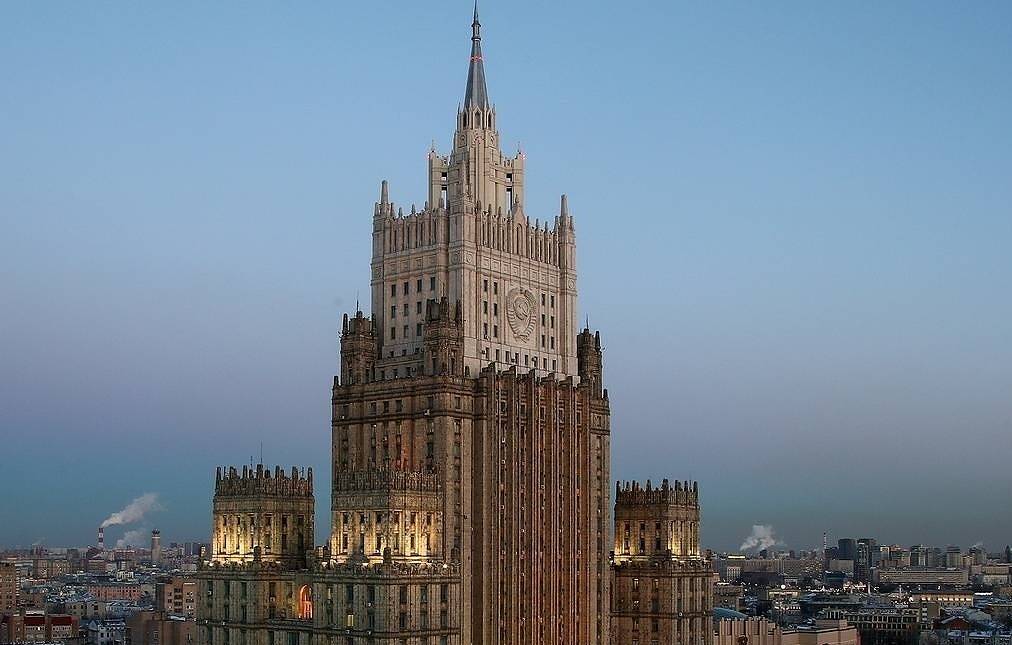
MOSCOW – The names arrived without fanfare, as they always do. Five more British journalists and policy experts, the Russian Foreign Ministry announced Tuesday evening, have been added to the country’s stop-list – barred from entering Russia for what Moscow characterized as the deliberate spread of false information about the country and its actions in Ukraine.
The announcement, carried by Russia’s state news agency RIA Novosti in a rapid series of dispatches between 9:10 and 9:13 p.m. Moscow time, did not name the five individuals. What it did make clear was the intent: this was not the end of a process. “Russia will continue to work on expanding the stop-list in response to the UK’s unfriendly actions,” the ministry stated, a formulation that has accompanied nearly every such announcement since the practice began in earnest following Russia’s full-scale invasion of Ukraine in February 2022.
The ministry simultaneously called on London to “abandon aggressive anti-Russian steps” and its support for what Moscow calls the Zelensky regime – language that has become so formulaic it is almost impossible to parse for new diplomatic signals. And yet the timing matters. The announcement comes as Russia-UK tensions have reached a pitch not seen since the Cold War, driven in part by Britain’s sustained military support for Kyiv and London’s imposition of sanctions on more than 1,200 Russian citizens since 2022.
What is harder to dismiss is the trajectory of the list itself. What began as a reactive measure – a few dozen politicians and journalists in the spring of 2022 – has grown into a systematic instrument of pressure. In August 2024, Reuters reported that Moscow added 32 experts from British think tanks including Chatham House, the Institute for Statecraft, and Privacy International. In August 2023, Russia accused Britain of concealing the scale of its involvement in Ukraine before adding BBC executives, Guardian editors, and Telegraph podcast journalists to the ban. The pattern is consistent: announcements cluster around moments of heightened bilateral tension, and they are always framed as responses, never initiatives.
That framing is deliberate. Moscow has long insisted it is not the aggressor in the information war with Britain, merely a party compelled to respond. “Russia once again calls on London to abandon aggressive anti-Russian steps,” Tuesday’s ministry statement read – that word “again” carrying the implication of a reasonable power ignored. The Russian Foreign Ministry warned, as it has before, that “any UK efforts to damage Russia’s international reputation will inevitably be met with a decisive response.”
What that response looks like for the journalists and analysts now added to the list is, in practical terms, entry denial. Russia is not a destination most Western reporters can freely operate in anyway – the country introduced prison terms of up to 15 years for spreading what it defines as false information about the military shortly after the invasion began. The list is therefore less a security measure than a signal: a public registry of individuals Moscow considers adversarial, a reputational document as much as a legal one.
For some who have landed on it before, the reaction has been more sardonic than alarmed. When Telegraph journalist Francis Dearnley was added in 2023, he said on social media he was “proud” to have been sanctioned. Mark Galeotti, the Russia expert and author, responded to his own 2022 listing with characteristic dryness: “It’s sad, but not entirely surprising.”
Tuesday’s five additions – their identities not yet confirmed – will likely prompt similar reactions in Britain, where being placed on Russia’s stop-list has become, in certain professional circles, something closer to a badge than a penalty. That inversion reflects the depth of the estrangement between Moscow and London: a list intended to intimidate has instead become a marker of credibility.
What remains genuinely unclear is whether the escalating stop-list serves any strategic purpose for Russia beyond domestic signaling. The Foreign Ministry’s Tuesday statement warned of a “decisive response” to British actions – but the decisive response, as rendered, was five more names on a list that British journalists increasingly treat as a form of professional recognition. The ministry did not specify what form a more substantive response might take, leaving that threat, as it often does, deliberately undefined.
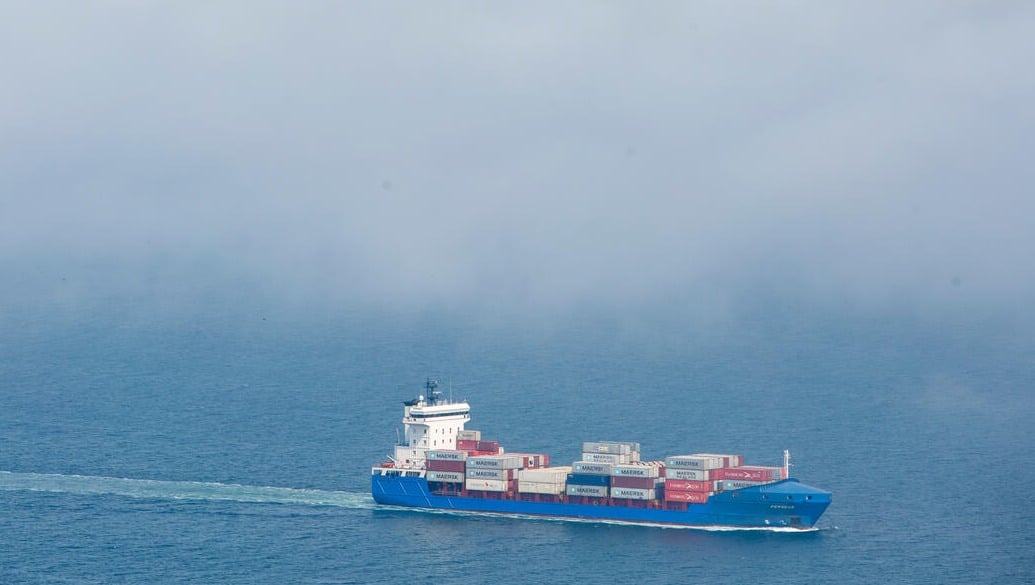
Britain, for its part, has shown no sign of moderating its posture toward Moscow. As the Starmer government navigates its own political turbulence at home, maintaining a hard line on Russia remains one of the few areas of cross-party consensus in Westminster. Moscow’s tensions with Western Europe have escalated across multiple fronts in recent days, with France’s seizure of a Russian tanker drawing a sharp Kremlin response. The Foreign Office did not immediately respond to a request for comment on Tuesday’s announcement.
Meanwhile, Russia’s stop-list for British nationals keeps growing. The question it raises – what happens when a retaliatory measure becomes so routinized it loses its retaliatory character – is one the Foreign Ministry has yet to answer.
—Inputs from Sputnik.