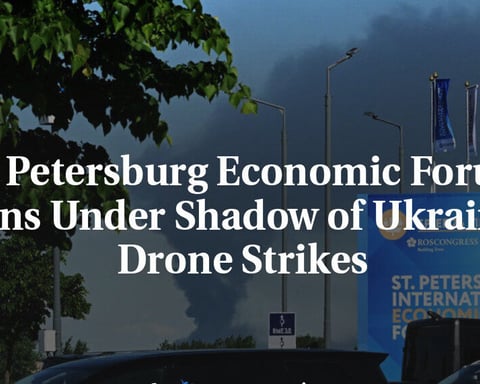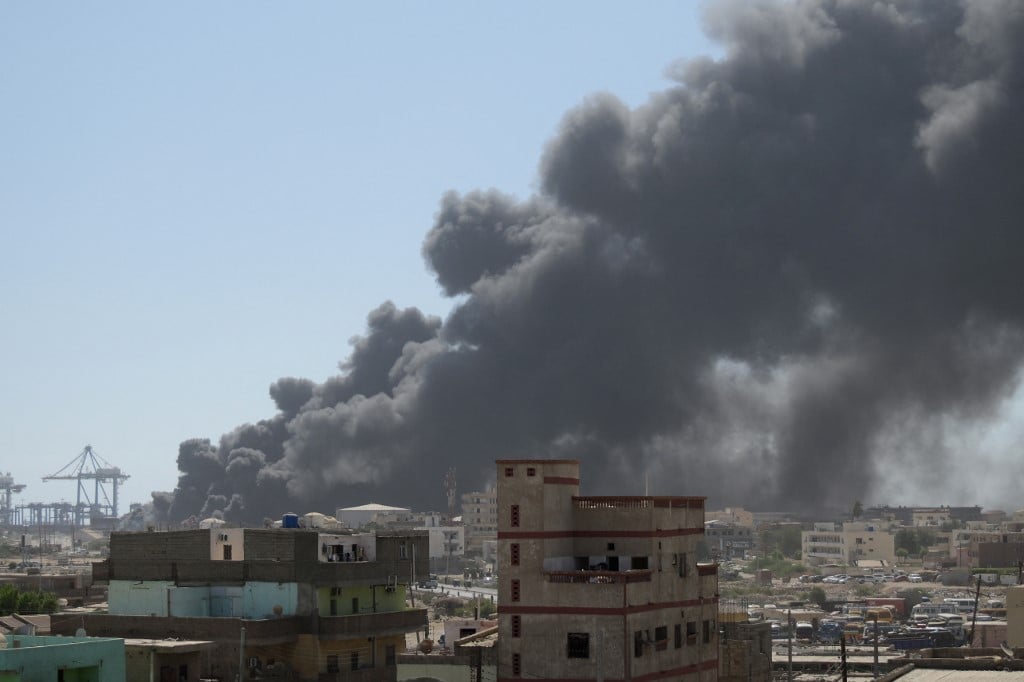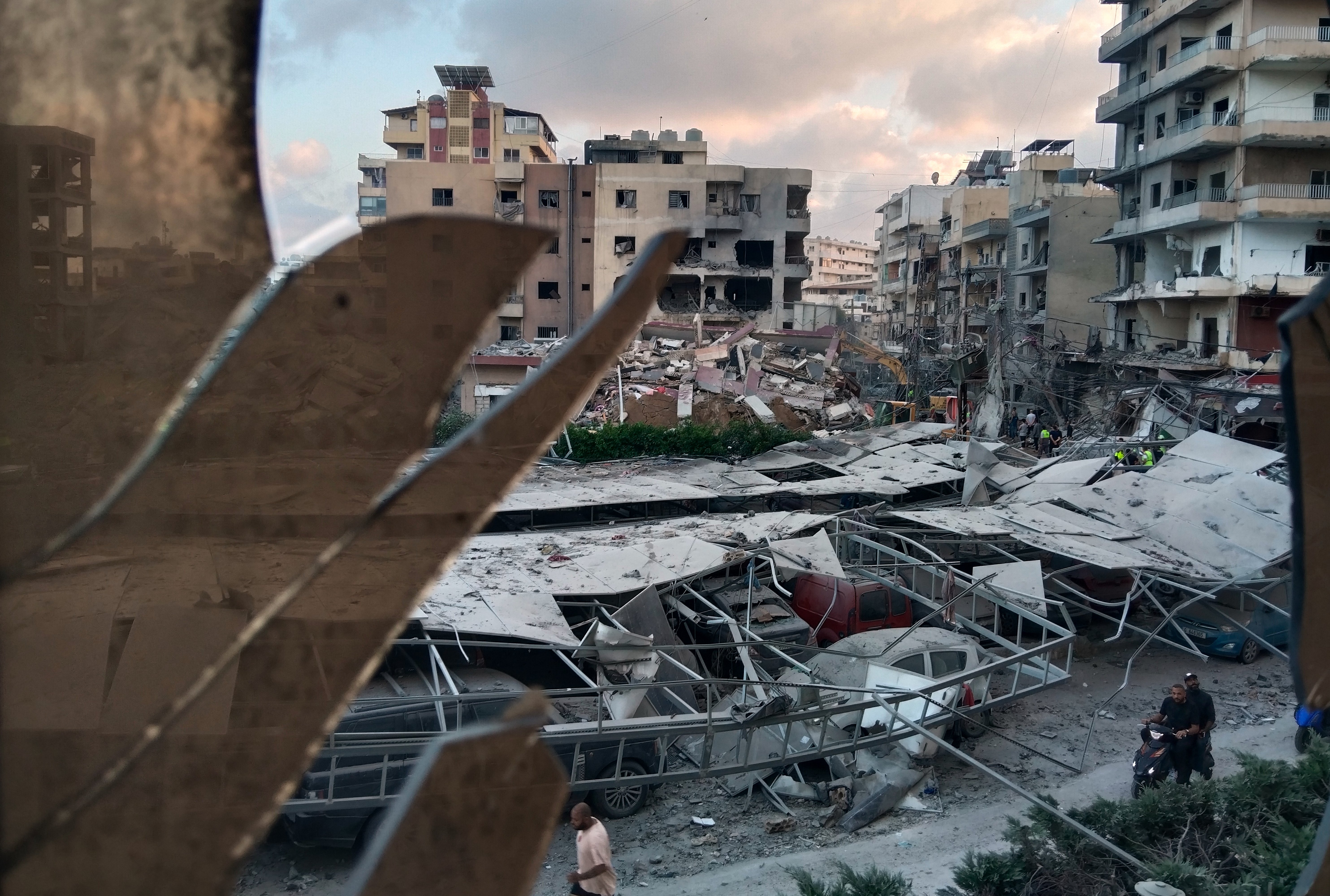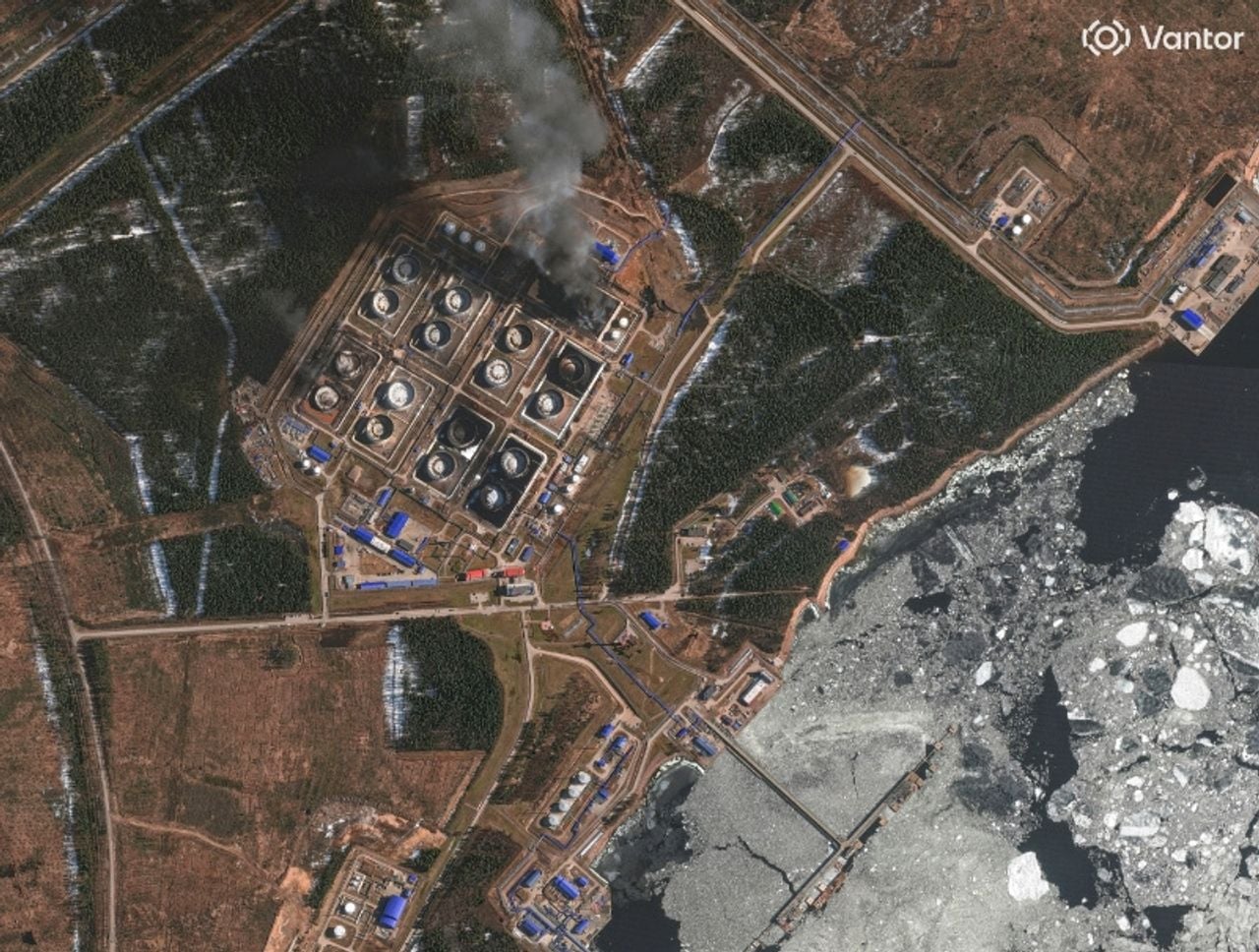
ST. PETERSBURG – The drone wave came in before the dignitaries. As heads of state and finance ministers settled into St. Petersburg for Russia’s annual economic showcase on Tuesday, Ukrainian unmanned aerial vehicles were already crossing into the Leningrad region, keeping air defense units busy through the early hours.
Governor Alexander Drozdenko announced via his messaging channel that 59 drones had been intercepted and destroyed by the time the threat was declared over. In the Luga district, four private residential buildings sustained minor damage from falling debris. No casualties were reported anywhere in the region, according to Drozdenko’s statement.
The timing was not incidental. The St. Petersburg International Economic Forum – the annual gathering that functions, in Kremlin framing, as Russia’s answer to Davos – opened Wednesday with President Vladimir Putin scheduled to address delegates. Air defense activity over the region was ongoing when the forum’s first sessions began, according to Bloomberg, which reported that roughly 50 drones had been downed earlier in the day before the final count rose to 59.
The Leningrad region has endured sustained aerial pressure throughout 2026. Drozdenko told the regional parliament in April that 343 drones had been destroyed over the region in the first quarter alone – a pace that has only accelerated since. In early May, a wave of more than 60 UAVs targeted the port of Primorsk, one of Russia’s principal Baltic Sea oil export hubs, setting off a fire that was later extinguished. Ukraine confirmed that attack, with President Volodymyr Zelensky describing it as a deliberate strike on port infrastructure.
What Tuesday’s attack adds to that pattern is harder to establish from the governor’s statement alone. Drozdenko did not identify the specific districts targeted beyond Luga, nor specify what category of drone – long-range strike or shorter-range harassment – constituted the bulk of the wave. Ukraine has not issued a public claim as of this writing.
The region’s vulnerability has become a recurring problem for Kremlin messaging. Drozdenko acknowledged in April that the Leningrad region had become a “frontline” territory – a classification that would have been unthinkable before 2022 – and announced the construction of concrete observation towers near industrial sites to improve early warning. Whether that infrastructure played any role in Tuesday’s interception rate cannot be confirmed from public statements.

The attack unfolded hours before Russia’s economic forum – which has proceeded under wartime conditions for the fifth consecutive year – was formally underway. Earlier waves this year have also struck during symbolically loaded windows: the March barrage came during the early stages of US-brokered ceasefire discussions, and the May attack on Primorsk coincided with a period of intense energy-infrastructure targeting across multiple Russian regions. Whether Tuesday’s timing against the forum opening was deliberate targeting of the occasion, or coincidental rhythm in Ukraine’s drone campaign, is a question the available evidence cannot answer.
The Leningrad region’s energy infrastructure has been a persistent target. The Kirishi oil refinery – one of the largest in Russia’s northwest – was struck in early May, forcing a partial halt to operations. Ust-Luga, the sprawling Baltic port complex that handles roughly 700,000 barrels of daily oil exports, was hit multiple times between late March and early April. Russia claimed to have destroyed 354 Ukrainian drones across 17 regions in a single overnight wave just hours before Tuesday’s Leningrad attack – suggesting either a coordinated second wave or overlapping reporting of an extended operation.
Ukraine’s strategy of sustained pressure on the northwestern region appears designed to force Russia into defending a second front far removed from the primary eastern battleground. The Leningrad region borders three NATO states – Estonia, Latvia, and Finland – giving Ukrainian planners a geographic corridor that Russia’s air defense network has struggled to seal. Estonia’s prime minister acknowledged last week that his country could not guarantee it would detect and destroy every drone transiting its airspace, a statement Kyiv did not contest. That admission, reported by The Eastern Herald, highlighted a gap that has given Ukraine’s long-range drone campaign meaningful operational freedom in the Baltic corridor.
Russia’s air defense expenditure in the region reflects the scale of the problem. Beyond the mobile teams Drozdenko described in April, the region has committed billions of rubles to fortify energy infrastructure – a spending trajectory that was not in any regional budget before Ukraine began systematically targeting the northwest. Whether those investments are keeping pace with the drone campaign, Tuesday’s 59-UAV wave offers no definitive answer. Four damaged homes in Luga is a data point, not a verdict.
Earlier on Tuesday, Russia said its air defenses downed 158 Ukrainian drones in a 12-hour period, a figure that preceded the Leningrad region’s updated count and may reflect a different operational phase of the same campaign wave. The Russian Defense Ministry had not issued an updated nationwide total incorporating Tuesday’s Leningrad figures at the time of publication.
—Inputs from Sputnik.