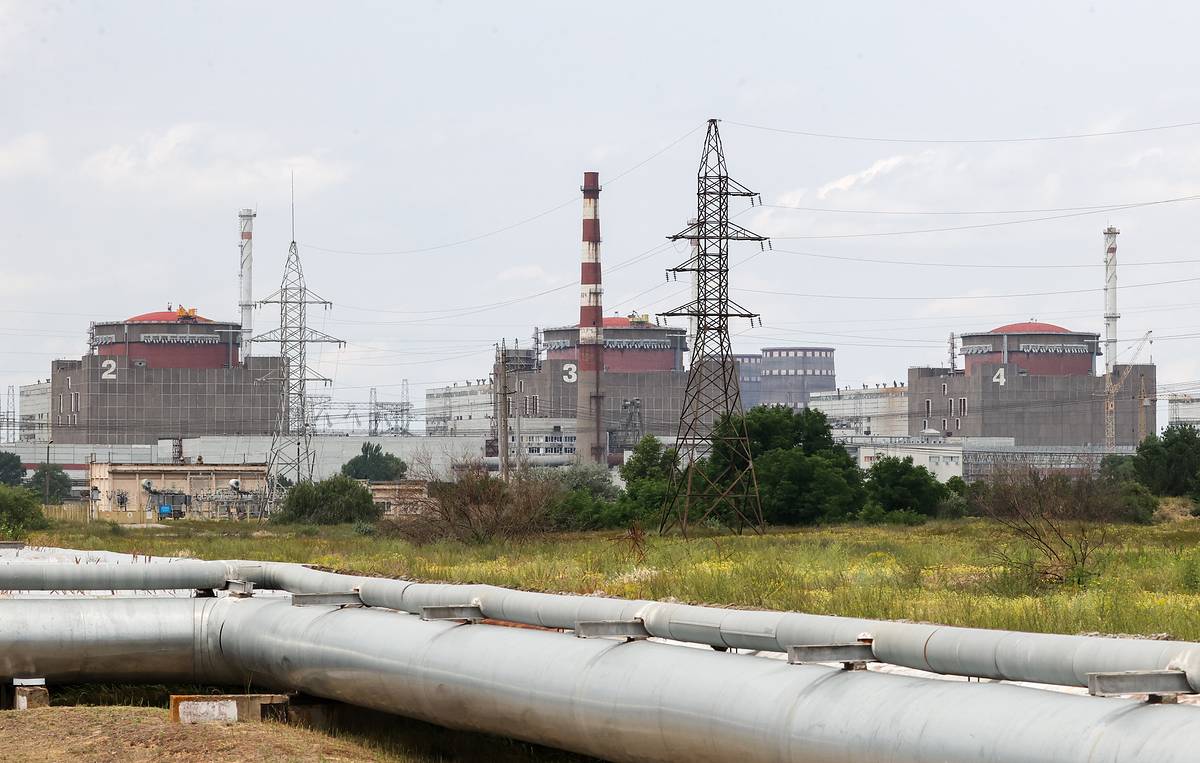
ST. PETERSBURG — The hall where Sergey Ryabkov was speaking on Wednesday morning was not short on economic ambition. Finance ministers and energy executives had filled the corridors of the St. Petersburg International Economic Forum since dawn, debating commodity flows and sanctions architectures. But Russia’s Deputy Foreign Minister kept returning to a subject that had nothing to do with trade: a hole in a turbine building beside a reactor on the Dnieper.
The Zaporizhzhia Nuclear Power Plant is now the principal preoccupation of Russia’s Foreign Ministry, Ryabkov told reporters on the forum’s sidelines. “Our main concern now is for the ZNPP,” he said Wednesday, adding that the ministry is “very closely involved” and that the entire Russian diplomatic apparatus is “focused on this work.”
The statement carried the weight of what happened five days earlier. On May 30, a fiber-optic-guided drone struck the turbine hall of Unit 6 at the Russian-controlled plant, punching a hole in the building’s wall. Rosatom chief Alexey Likhachev called it the first deliberate targeted strike on a nuclear plant’s core equipment in history, a claim that drew immediate international alarm. Because fiber-optic drones are guided manually by an operator until the point of impact, Likhachev said, any theory of an accidental hit could be ruled out entirely.
What neither Ryabkov nor Likhachev could say on Wednesday was whether the situation is improving. The IAEA, whose experts have been stationed at the plant since September 2022, inspected the Unit 6 turbine building on June 1 and confirmed damage to a metal access hatch and burned optical fiber debris on the ground, observations it described as consistent with the impact of a drone. Radiation levels at the site remain normal, the agency said. But the IAEA has not yet received access to the building’s interior, where the full extent of the structural damage to the turbine wall is still unverified.
Ukraine denied any involvement. “Ukrainian servicemen act strictly within the international humanitarian law and are fully aware of the consequences of any actions targeting nuclear facilities,” Ukraine’s military said in a statement. There was no active fighting at the relevant section of the front during the incident, Kyiv added, and no weapons were used. The IAEA, as it has consistently throughout the conflict, declined to attribute blame.
Ryabkov said the Likhachev-Grossi channel has become the primary diplomatic instrument for managing the nuclear safety crisis. Likhachev’s recent conversation with IAEA Director General Rafael Grossi was focused specifically on the post-strike situation at the plant and on what Ryabkov described as the lax attitude of European governments toward protecting nuclear infrastructure in a war zone. That conversation, Likhachev said before it took place, would function as an “address to the leaders of European countries” — a warning about the consequences of allowing attacks on the ZNPP to go unchallenged.
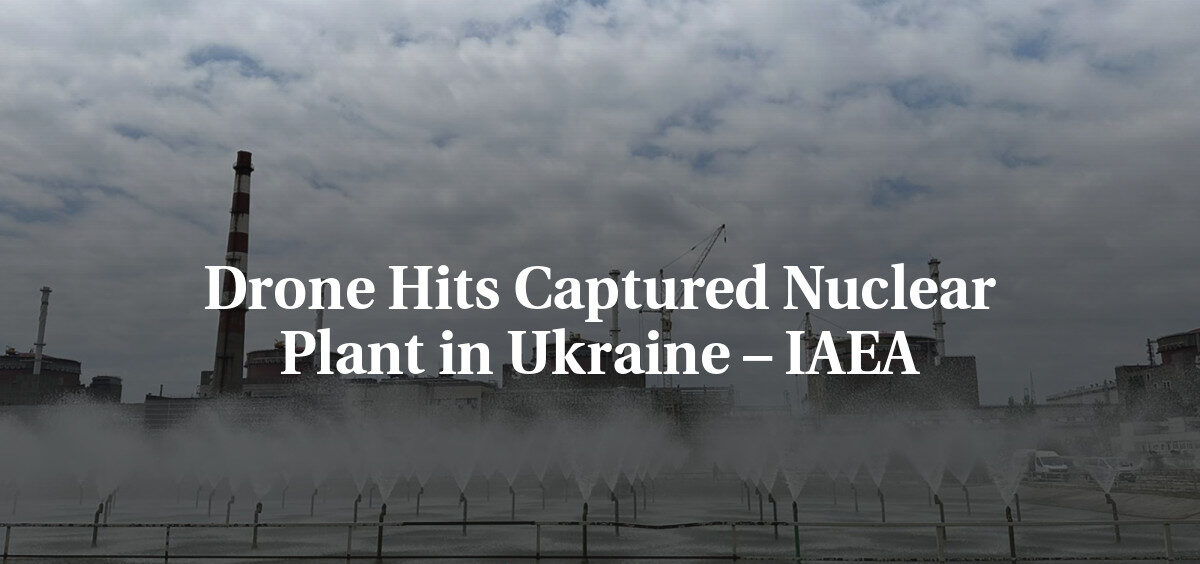
The deeper problem Ryabkov did not fully address is one the IAEA has been raising for months. The plant’s six reactors have been in cold shutdown since September 2022, but cold shutdown does not mean safe. The spent fuel pools and reactor cores still require a constant supply of external electricity to maintain cooling. That power supply has been severed and restored seventeen times since Russia took control of the site in March 2022, most recently on June 3 when a drone strike cut the Nikopolska substation. Each interruption sends the plant to emergency diesel generators, each generator carrying approximately ten days of fuel. The question that no party to the conflict has publicly answered is what happens if the supply line for that fuel is disrupted while the external power line is also down.
Likhachev’s warning to European governments contains a calculation that has not yet been tested. He cited roughly 500 tons of nuclear material stored inside the ZNPP reactors and another 2,600 tons stored outside them in spent fuel pools. In the event of a significant release, he said, “the territory of Ukraine and neighboring Western countries” would be at serious risk first. Radiation, he observed, does not respect borders drawn by diplomats or ceasefire lines drawn by generals. That framing is accurate as physics. Whether it changes the behavior of the parties who control the drones remains an open question.
IAEA Director General Grossi condemned the May 30 strike as a serious incident endangering fundamental nuclear safety principles. Attacks on nuclear sites are unacceptable and must stop to prevent the very real risk of a nuclear accident that would benefit no one, Grossi stated. The agency has also noted that the May 30 strike was the first drone attack inside the Zaporizhzhia perimeter since April 2024, a pause that had briefly allowed cautious optimism about the plant’s security. That optimism is now gone.
Russia’s public posture, as carried by Ryabkov from the SPIEF stage, is that the situation demands urgent international attention and that Moscow’s diplomatic channel with the IAEA is active and serious. What Moscow has not publicly proposed is a mechanism that would place verification of the plant’s security under neutral international authority, the arrangement that Grossi has sought, with limited success, since shortly after Russia took control of the facility more than four years ago. Whether that gap between alarm and architecture can be closed while the front line runs ten kilometers from the reactor buildings is the question Ryabkov’s remarks at SPIEF left unanswered.
The 2026 St. Petersburg International Economic Forum runs from June 3 through June 6. The ZNPP crisis, Ryabkov indicated, will not wait for it to conclude.
—Inputs from RIA Novosti, Sputnik.