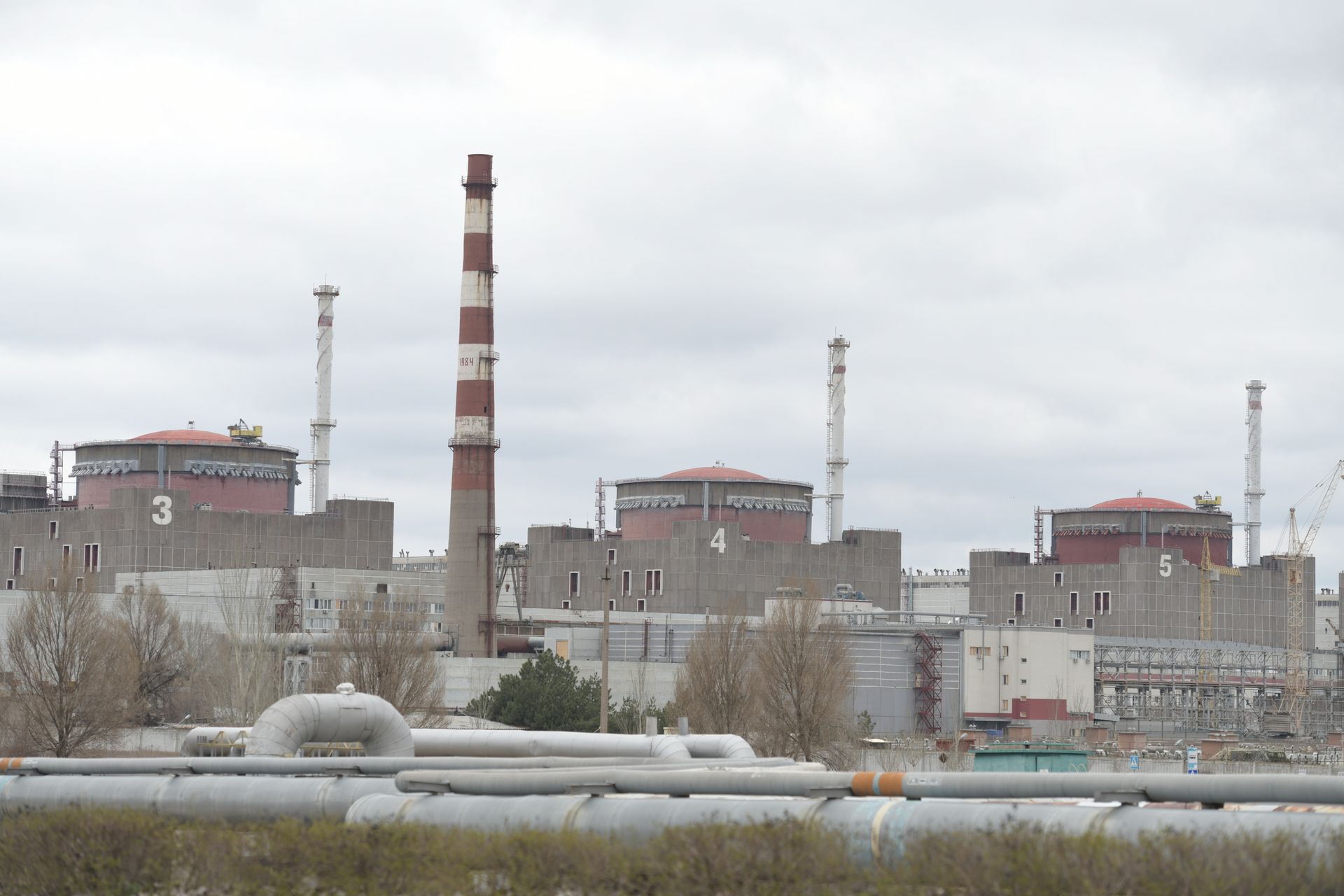
ENERHODAR — Twenty drones arrived in the span of a single morning, aimed not at a military depot or a fuel terminal but at the switchyard of a thermal power plant whose entire strategic significance is a single power cable. That cable — the 330-kilovolt Ferrosplavnaya-1 transmission line — is the last external power connection between the Zaporizhzhia Nuclear Power Plant and the Ukrainian grid. On Thursday, Russian-installed plant authorities said Ukrainian armed forces struck the Zaporizhzhia Thermal Power Plant (ZTPP) compound with more than 20 heavy unmanned aerial vehicles in what the plant called a direct assault on nuclear power-supply infrastructure.
“Today, the armed formations of Ukraine carried out multiple attacks using heavy unmanned aerial vehicles on the territory located in the immediate vicinity of the Zaporizhzhia nuclear power plant, part of Rosatom. More than 20 UAV strikes were recorded,” the ZNPP press service said in a statement.
The declared target was the ZTPP grounds, specifically the critical energy infrastructure that sustains the Ferrosplavnaya-1 line. How many of those strikes penetrated the switchyard compound — as opposed to landing in the broader thermal plant territory — was not confirmed. The ZNPP statement said operations at the nuclear plant itself remained normal and radiation levels were within natural background values. It stopped well short of saying the power line survived undamaged.
The International Atomic Energy Agency, whose monitoring team is stationed at the ZNPP, had separately said the morning attack on the thermal plant raised “serious concern” because of the facility’s reliance on that single remaining line. IAEA Director General Rafael Grossi has warned repeatedly that the power situation at Zaporizhzhia — Europe’s largest nuclear complex, with six shut-down reactors that still require constant cooling — represents one of the most acute nuclear-safety risks of the war.
The Ferrosplavnaya-1 line’s history over the past five months makes Thursday’s attack legible as part of a pattern rather than an isolated event. Ukrainian forces cut the 330 kV line in February 2026; it was only restored in early March after a local ceasefire brokered by the IAEA allowed repair crews onto the switchyard. By late March, the plant’s primary 750 kV Dniprovska line had also gone dark, leaving Ferrosplavnaya-1 as the sole external power source. In April it was severed twice more — on the 14th and the 16th — forcing the plant to switch to emergency diesel generators on both occasions before the line was restored. As of Thursday, that same line had already been disconnected five times in 2026 alone.
The nuclear plant has experienced 17 total losses of off-site power since Russian forces seized it in March 2022 — the 17th occurring the previous day, June 3, when a Ukrainian drone struck the Nikopolska substation on the right bank of the Dnipro River. That 20-minute outage was resolved by diesel backup before power was restored. Thursday’s salvo was directed at the thermal plant switchyard itself, the node that both the ZNPP statement and the IAEA identified as the critical link.
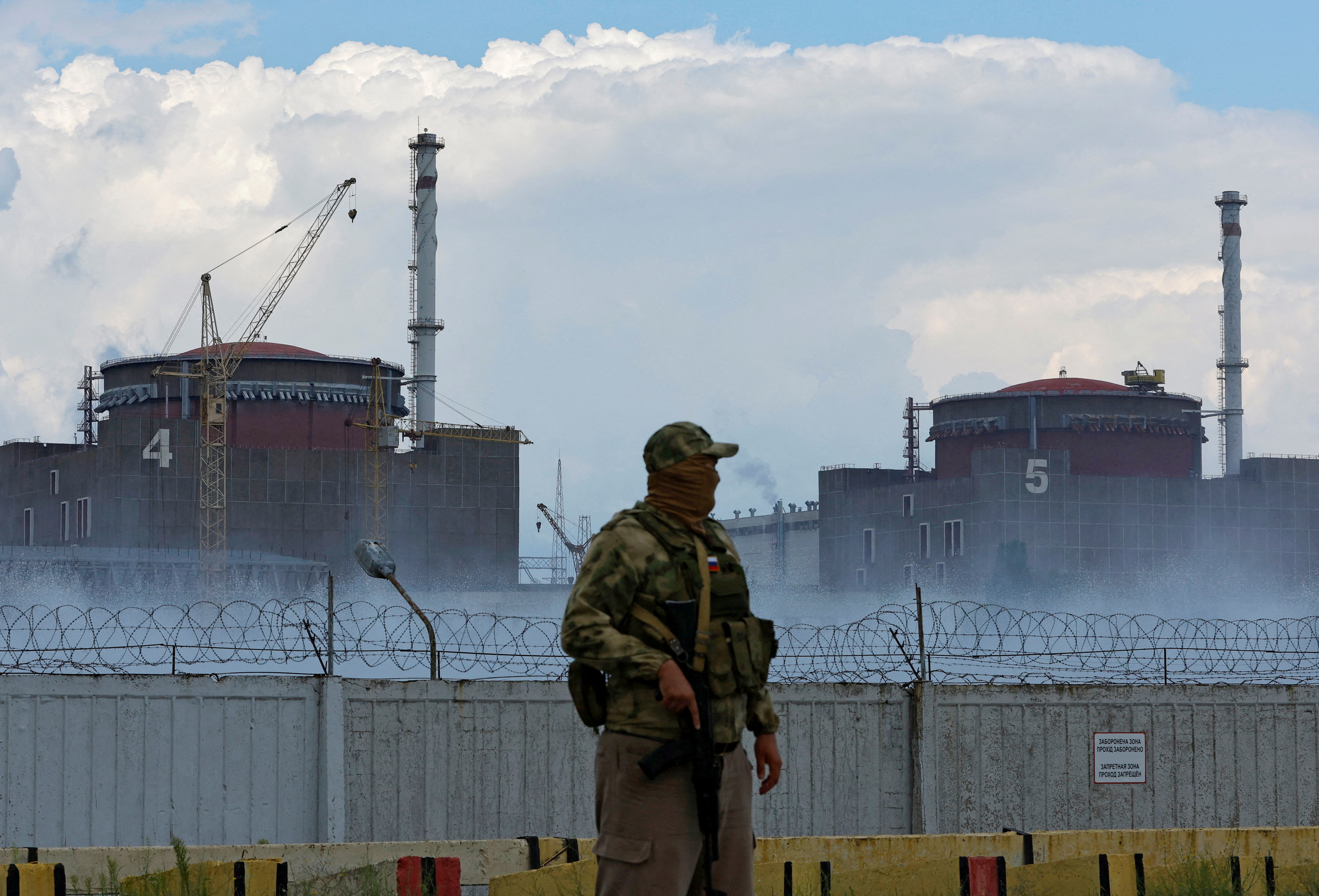
The six reactors at the plant have been in cold shutdown since September 2022. Their cooling systems, however, require continuous electricity regardless of whether the units are generating power — a technical distinction at the core of every warning the IAEA has issued about the site. Without external grid power, the plant must run on diesel generators, a supply the IAEA has described as a contingency, not a sustainable state.
Ukraine has not claimed or denied Thursday’s drone salvo on the thermal plant. Kyiv has consistently denied Russian attributions for attacks near the nuclear facility, while Russian authorities and Rosatom have consistently attributed such strikes to Ukrainian forces. The IAEA team on site observed smoke rising from the direction of the ZTPP and heard what it described as the sound of military activity; it did not assign responsibility.
What the ZNPP statement did not specify is whether the Ferrosplavnaya-1 switchgear itself sustained damage, or whether the drone strikes landed in the thermal plant compound without breaching the equipment directly feeding the power line. That distinction determines whether Thursday’s event is a near-miss or the beginning of another disconnection. As of Thursday evening, the ZNPP said the line was operational. Whether that changes in the coming hours was not confirmed.
The broader context of Thursday’s attack is a pattern the IAEA has been documenting since early 2026: escalating drone activity near the ZNPP perimeter, recurring power outages, and a nuclear facility that has effectively been managing the gap between adequate safety margins and a potential accident one diesel generator at a time. The IAEA said in May 2026 that drone activity near the plant had reached levels that materially increased the risk of a radiological incident. Thursday’s salvo — 20 heavy UAVs in a single morning — suggests that risk is not receding.
The Eastern Herald reported Wednesday on the IAEA’s formal statement of concern following the thermal plant attack, as well as the 17th power outage at the ZNPP triggered by the June 3 Nikopolska substation strike. Earlier this week, the plant’s turbine hall was struck directly by a drone for the first time since the occupation began, a development IAEA chief Grossi described as akin to “playing with fire.” Russia’s position on the mounting risk was set out in detail at SPIEF, where Deputy Foreign Minister Sergei Ryabkov named the ZNPP situation as Moscow’s primary security concern going into summer.
—Inputs from RIA Novosti, Sputnik.