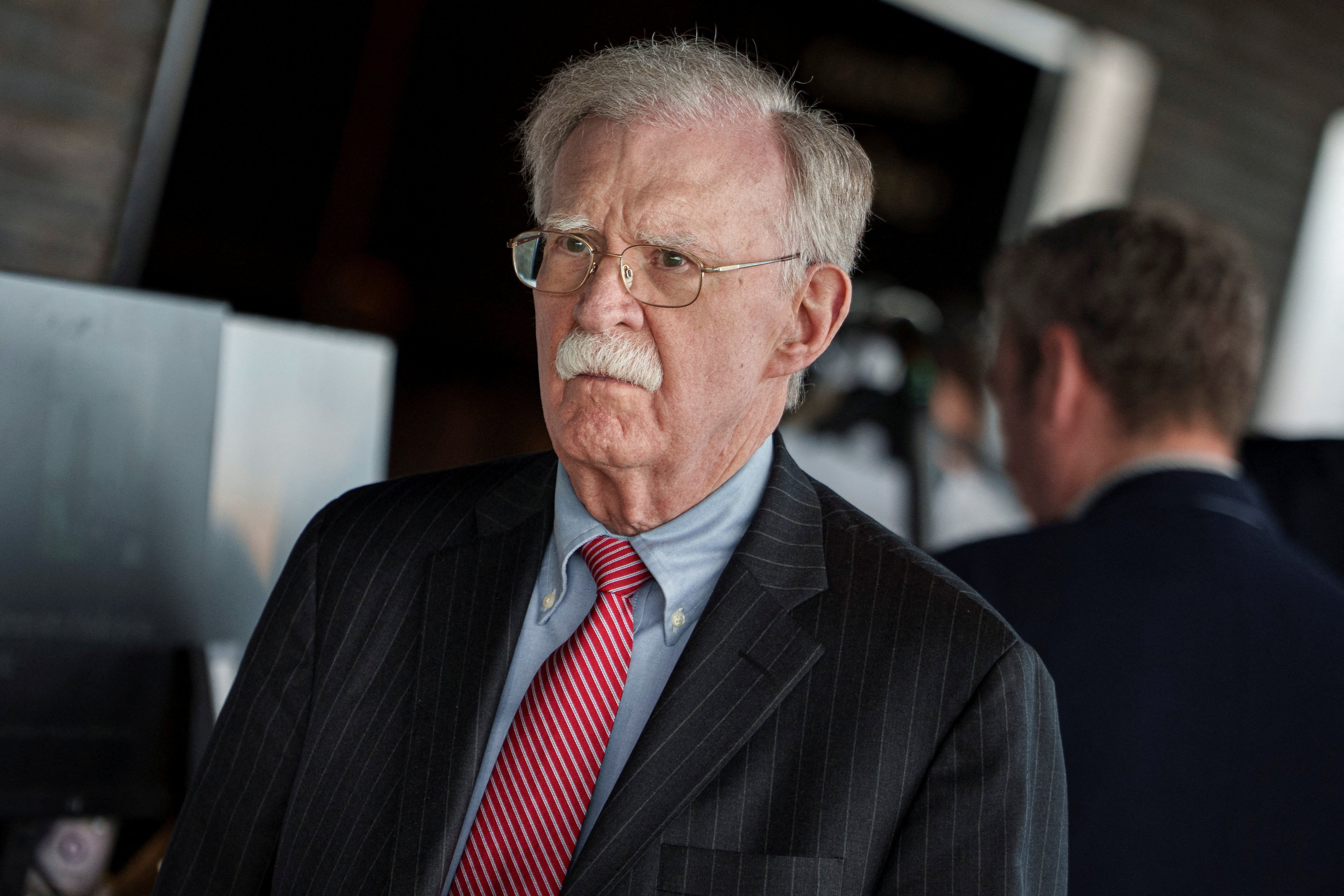
WASHINGTON — John Bolton made peace with a felony conviction on Thursday. But the people closest to him say the calculation that drove that decision had less to do with the strength of the government’s case than with what a trial would have put on the table.
A source familiar with Bolton’s thinking told NBC News that the former national security adviser changed his plea specifically because contesting the charges would have required him to disclose far more classified material in open court — and that the conflicts in Ukraine and the Middle East made that prospect untenable. “He understands that if he went to trial what that would mean, which essentially would be the disclosure of many, many more classified documents that he would need to reveal to defend himself,” the source said. “And given the Ukraine and the Middle East, he didn’t want to do that.”
That framing, if accurate, transforms how the plea is read. Bolton’s critics — and the president who initiated this prosecution — are likely to characterize Thursday’s announcement as a legal defeat for a man who spent years attacking Trump’s foreign policy judgment. Bolton’s allies are offering a different reading: that he surrendered on the legal terrain to protect intelligence on two active theaters of war.
Neither framing is provable from the outside. What is documented is the scope of what a trial would have uncovered. The 18-count indictment, filed in October, accused Bolton of sending more than a thousand pages of diary-like entries — classified up to the Top Secret/SCI level — to his wife and daughter while preparing his 2020 memoir, “The Room Where It Happened.” Much of that material detailed day-to-day intelligence and operational discussions from his tenure as Trump’s third national security adviser, covering a period that included the earliest phase of the Russia-Ukraine crisis, multiple Iran confrontations, and the drone strike that killed IRGC General Qassem Soleimani. The source told NBC that Bolton “is doing what leaders do and taking responsibility” — a characterization that reads as deliberate positioning ahead of the June 26 sentencing hearing in Greenbelt, Maryland.
Bolton pleaded guilty to a single count of retaining national security information. The guilty plea does not include the transmission allegation — the charge that he shared classified information with unauthorized recipients. That is the narrowest possible admission: he wrote it down, not that he handed it over. The $2.25 million fine and the felony designation, however, are anything but narrow. Any prison sentence will be capped at five years, though the agreement permits the possibility of no prison time at all. The final call belongs to a federal judge.
The source’s characterization of the decision as one taken “for the good of the country” is the kind of phrase that will be tested at sentencing. Bolton’s attorney, Abbe Lowell, has not publicly addressed what arguments the defense intends to make before the judge renders a sentence. What Lowell said at Bolton’s October arraignment was almost nothing — a deliberate contrast to the more aggressive posture he sometimes strikes in high-profile cases. Whether Thursday’s source statement represents a coordinated pre-sentencing narrative or a genuine account of how Bolton weighed his options is a question that will not be answered before June 26.
What is not in dispute is the chain of events that produced the indictment. Bolton’s personal AOL account was accessed by Iranian-linked hackers in 2021, raising concerns that the classified material he had transmitted to family members may have been compromised by a foreign adversary. A Justice Department inquiry opened in 2020, was closed after Biden took office, then reopened. The FBI raided his Bethesda home in August 2025. The indictment followed in October. Through each stage, Bolton maintained the charges were politically motivated — a position he had not publicly retracted as of Thursday. The Eastern Herald reported Thursday on the terms of the plea deal, including the sharp legal disparity between the felony conviction Bolton faces and the misdemeanor David Petraeus received in 2015 for nearly identical conduct involving diary entries shared with an unauthorized individual.
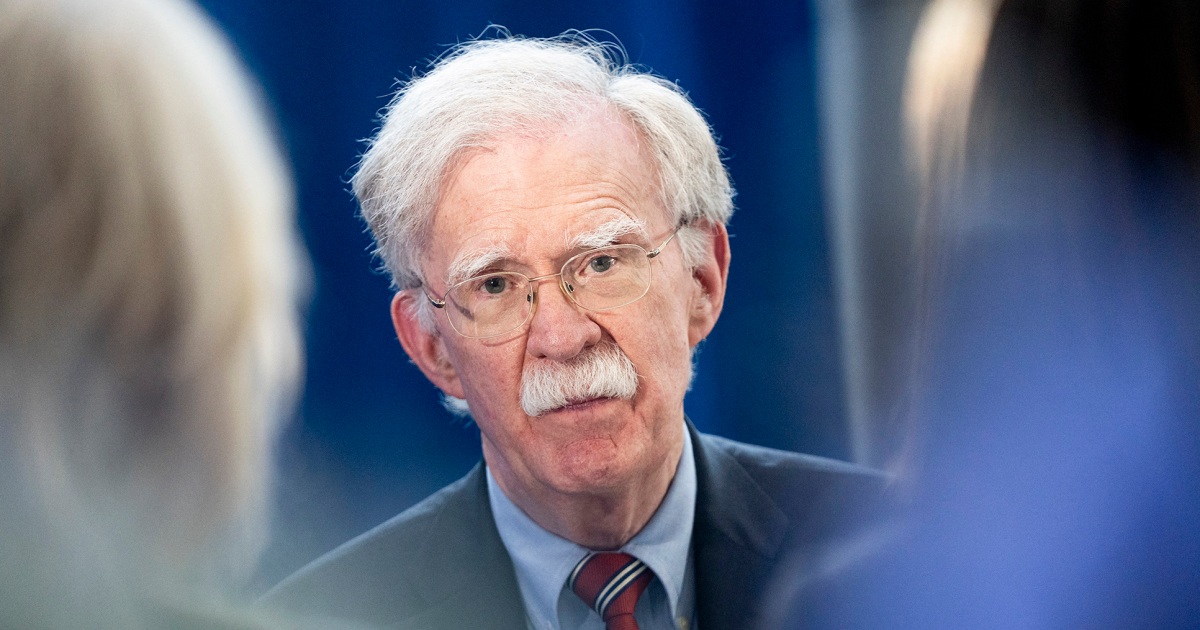
The broader context in which Bolton made this decision is one he helped shape. His tenure as national security adviser — marked by confrontations with Trump over military aid to Ukraine, Iran policy, and the Soleimani strike — produced both the memoir that led to the initial investigation and the public record on which his critics and defenders alike now draw. Trump, who called Bolton a “washed-up guy” and a “crazy” warmonger after the memoir’s publication, said last October that he had not known the indictment was coming. “Yeah, he’s a bad guy,” the president told reporters. “It’s too bad. But that’s the way it goes.”
Bolton’s case is one of several against Trump critics prosecuted under the current administration’s Justice Department. The indictments of former FBI Director James Comey and New York Attorney General Letitia James were filed within days of Bolton’s, in what critics described as a coordinated campaign of legal retribution. Eastern Herald’s coverage of the Comey arraignment documented how that case’s legal framing raised parallel questions about DOJ independence under political pressure. The Comey indictment was dropped in November before being refiled in April on different grounds; Bolton’s has now concluded with a guilty plea before trial.
Whether the source’s account of Bolton’s reasoning holds up is a question that will remain open for the next three weeks, and possibly longer. Sentencing arguments before a federal judge are one of the few venues left where the substance of that reasoning — what Bolton’s legal team believes the classified material in question actually shows, and what a trial would have exposed — might surface in a more controlled form. What it will not produce is a full public account. Classified information introduced at trial remains classified. The diary entries Bolton wrote for his wife and daughter, still sealed, will not become public record regardless of what happens on June 26. That is the gap at the center of this case, and no guilty plea closes it.
The Associated Press reported that any prison sentence under the agreement is capped at five years, with a judge retaining final discretion on punishment. The re-arraignment is scheduled for June 26 in Greenbelt, Maryland.