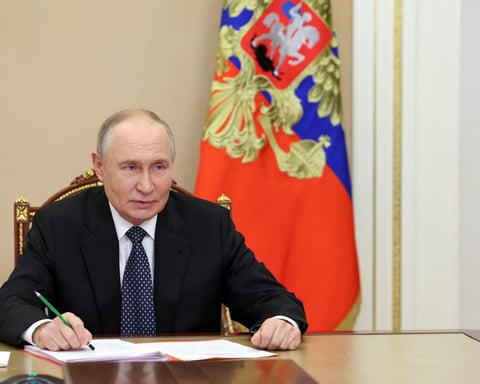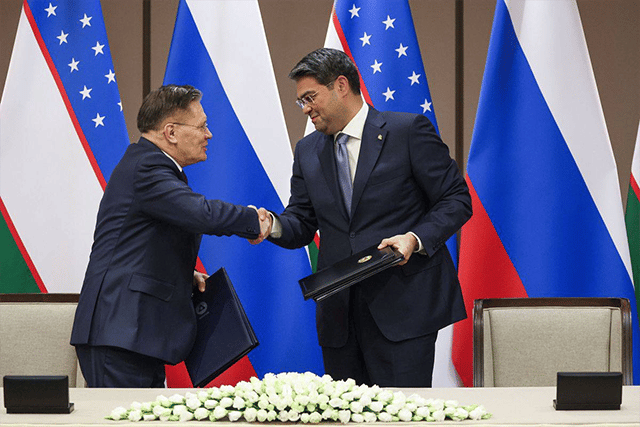
ST. PETERSBURG – The concrete has been poured and the ceremony complete, but for Shavkat Mirziyoyev, Thursday’s event at the Jizzakh construction site was never just about one power plant. The Uzbek president, speaking during a videoconference with Vladimir Putin at the Konstantinovsky Palace on the sidelines of the St. Petersburg International Economic Forum, called the formal start of construction on Uzbekistan’s first integrated nuclear power plant a historic day — and said his country is already looking beyond it.
“Today is a historic day, for the first time in history — a hybrid station,” Mirziyoyev said, describing the project’s unusual design pairing large and small reactors. “We have been working towards this for a long time. We talked and argued for a long time but came to the most correct decision.” Uzbekistan, he added, has no intention of stopping with its first nuclear energy project.
That ambition is not new, but Thursday’s ceremony gave it institutional weight. The first concreting of a reactor building — distinct from the reactor island itself, which comes later — formally confers on the Jizzakh facility the International Atomic Energy Agency designation of “nuclear power plant under construction.” IAEA Director General Rafael Grossi participated in the ceremony from the construction site alongside Rosatom chief Alexey Likhachev and Uzatom head Azim Akhmedkhadjaev. The two agency heads, per the pre-arranged protocol described by Kremlin aide Yury Ushakov, each reported technical readiness to their respective presidents before Putin and Mirziyoyev gave the go-ahead.
What is being built in the Forish district of Jizzakh region is a design without precedent in nuclear engineering. The integrated plant will combine two large VVER-1000 pressurized water reactors, each rated at roughly one gigawatt, with two RITM-200N small modular reactors of 55 megawatts each — the pairing of Generation 3+ large units and compact SMRs on a single site has not been attempted before at commercial scale. The project’s total planned output stands at approximately 2,100 megawatts. The general contractor is JSC Atomstroyexport, the engineering arm of Rosatom, under a contract signed in Tashkent in May 2024 when Putin made a state visit to Uzbekistan and the two governments struck what Mirziyoyev at the time called a “vital” deal.
The path to Thursday’s ceremony was not linear. Initial discussions following a December 2017 nuclear cooperation agreement had envisioned two VVER-1200 reactors with a combined 2.5 gigawatt capacity, a plan that stalled on financing. By 2024 the project had been rescaled to six small modular reactors at 330 megawatts total — a configuration Rosatom Director General Likhachev boasted in May of that year would break ground that summer. Excavation at the Jizzakh site began only in late 2024. In September 2025, Uzatom and Rosatom agreed on the current hybrid configuration, expanding planned capacity sixfold. Concrete work commenced in March 2026, and construction of the reactor building proper was expected to follow this summer.
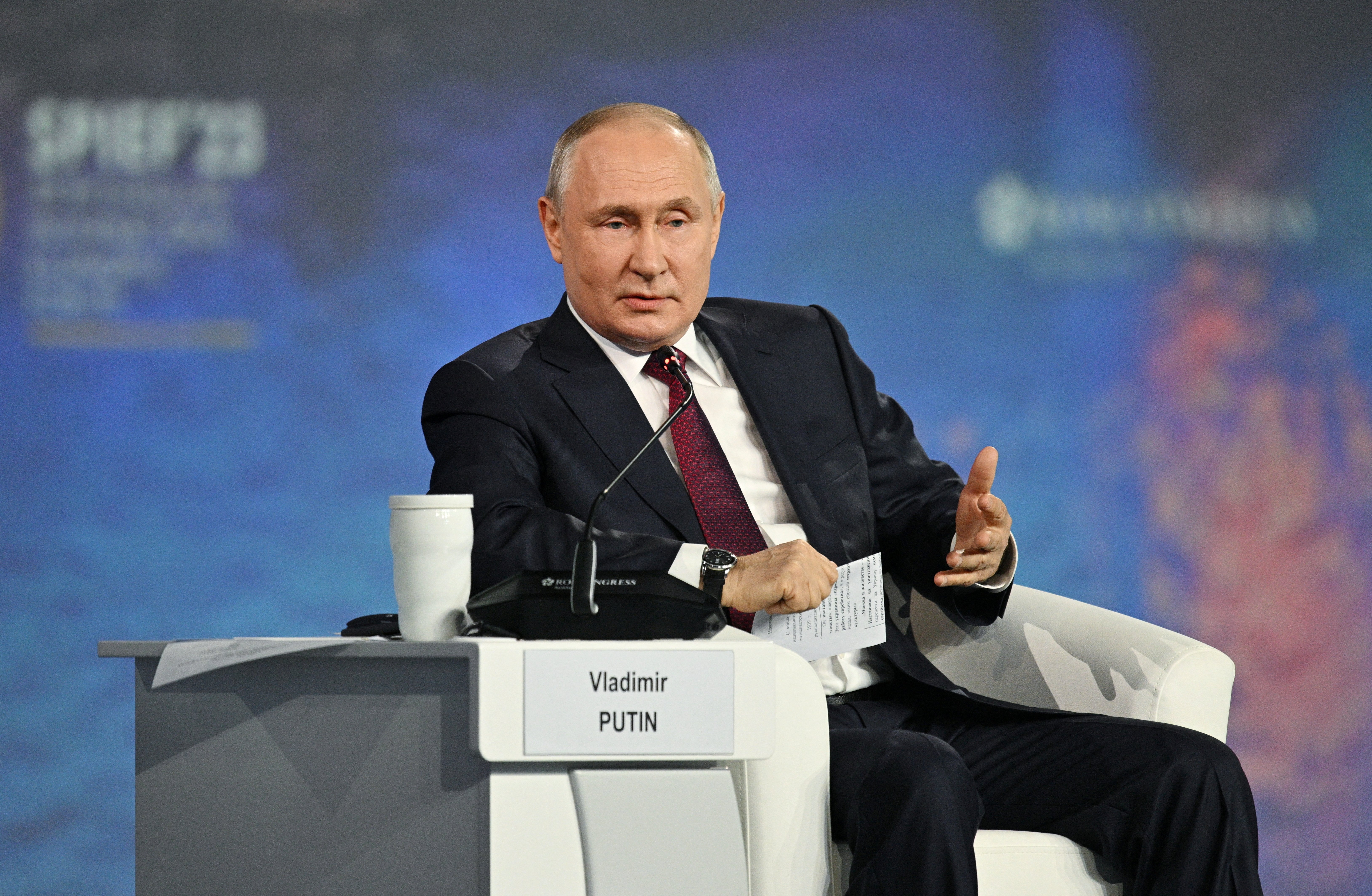
The IAEA’s presence at the ceremony matters beyond ceremony. Grossi’s participation signaled that the agency — which Uzbekistan has kept closely involved through biweekly progress reports to Mirziyoyev — regards the project as meeting international safety and regulatory standards at this construction threshold. Uzatom Director Akhmedkhadjaev has said the president requires all work to adhere to three principles without exception: safety, modern technologies, and full IAEA compliance. Whether those standards hold as construction scales up, involving local Uzbek contractors alongside the Russian general contractor, remains the central technical question the project has not yet had to answer in practice.
For Rosatom, the Jizzakh plant is one piece of a broader reactor export campaign that has become Moscow’s most durable tool of energy diplomacy. Russia has been advancing nuclear partnerships in Indonesia, and earlier this year completed fuel loading at the Rooppur reactor in Bangladesh, another Rosatom-built facility. The Uzbekistan project extends that footprint into Central Asia, a region where Russia has historically dominated energy supply but where the push to reduce fossil fuel dependency is accelerating. Uzbekistan’s government has set a target of deploying up to 30 gigawatts of low-carbon electricity — solar, hydro, wind, and nuclear — as part of a national energy strategy, and the Jizzakh plant, if commissioned on schedule, is projected to come online around 2029.
The cost figure attached to the project has varied in public statements and reflects one of the genuinely unsettled questions around it. Early estimates placed the price below two billion dollars for the original six-SMR configuration. The current hybrid design, with its two large VVER-1000 units, carries an estimated total cost of around 40 billion dollars, according to project documentation — though that figure is a planning estimate, not an audited contract sum, and the methodology behind it has not been publicly detailed. How Uzbekistan structures project financing, and what proportion of the cost Rosatom assumes versus the Uzbek state, is not fully public.
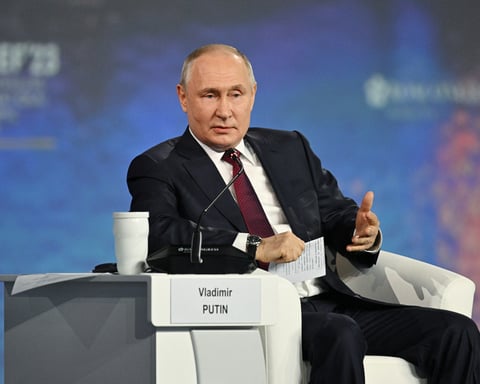
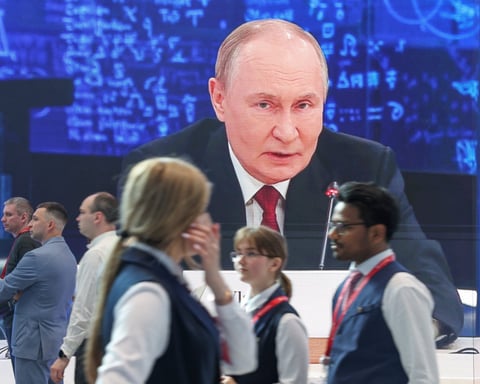
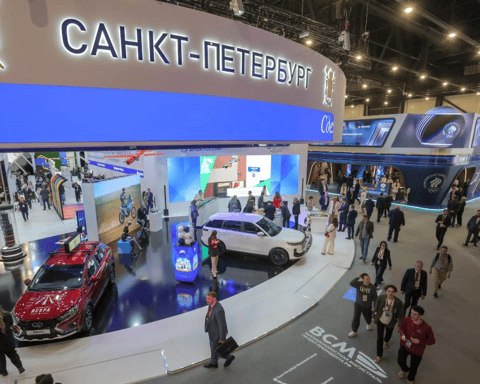
Thursday’s ceremony at the Konstantinovsky Palace came on the margins of the 29th St. Petersburg International Economic Forum, held under the theme “Pragmatic Dialogue: The Path to a Stable Future.” Mirziyoyev, who also attended the forum’s plenary alongside Putin, the presidents of Tanzania and China’s vice president, used the visit to address the assembled delegates on Uzbekistan’s economic development priorities and its vision for expanded cooperation with Russia. The bilateral meeting was their third in-person contact in recent weeks, following Victory Day celebrations in Moscow on May 9 and a sideline encounter at the Eurasian Economic Union summit in Astana.
What Thursday did not answer is what Mirziyoyev’s pledge of more projects actually means in operational terms — which reactor designs, which sites, which timeline, and under what financing structure. The Diplomat, which has tracked the project closely, noted in March the series of configuration changes and timeline shifts that preceded the concrete pour, a history that makes ambitious statements about future projects hard to evaluate without technical specifics. For now, Uzbekistan has a construction site, an IAEA status designation, and a president who says the country is just getting started.