HOUSTON – Within 24 hours of Victor Glover stepping off the recovery ship in April, NASA had him in a spacesuit again.
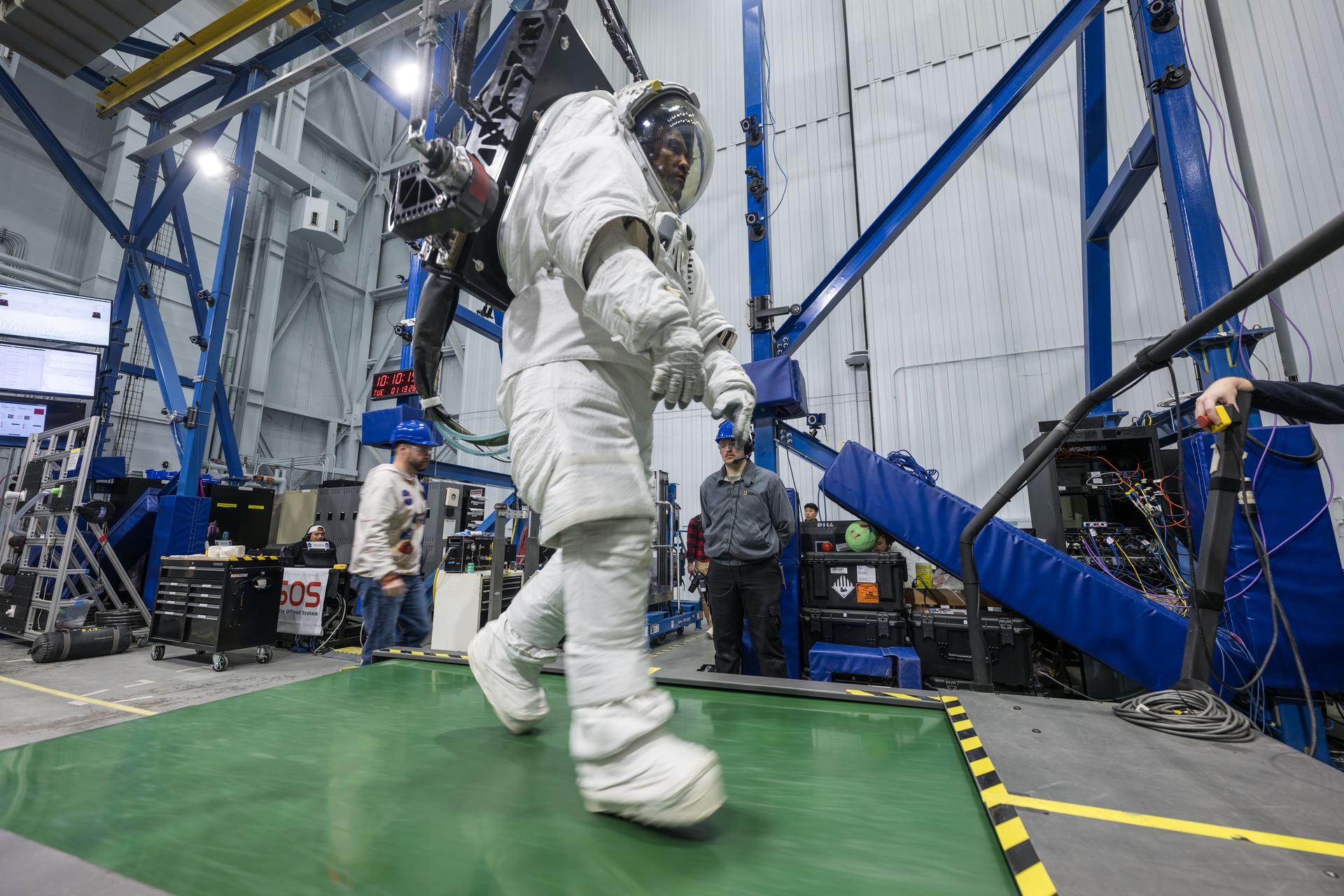
Not for a ceremony. Not for a photo opportunity. He was walking on a treadmill inside a large industrial building at Johnson Space Center, harnessed to a machine that stripped away five-sixths of Earth’s gravitational pull, simulating the weight his body would feel standing on the Moon. Researchers stood nearby with clipboards. The mission had just ended. The science was still running.
Eight weeks after the Artemis II crew splashed down in the Pacific Ocean on April 10, NASA’s science teams say the most consequential work from the mission is happening not in orbit but on the ground, in laboratories, data archives, and a research facility in Boston where a set of tiny devices about the size of a USB stick are being dismantled, cell by cell, to understand what deep space does to the human body before it has a chance to do it again.
The agency published a status update Thursday on what it describes as the science aftermath of Artemis II, the first crewed lunar flyby since Apollo 17 in 1972. The four-person crew, NASA astronauts Reid Wiseman, Victor Glover, and Christina Koch, along with Canadian Space Agency astronaut Jeremy Hansen, circled the Moon in early April and returned after a record-setting test of the Orion spacecraft. What the mission accomplished technically has been covered extensively. What it is still accomplishing biologically has not.
The centerpiece of that biological work is an experiment called AVATAR, A Virtual Astronaut Tissue Analog Response, and it represents one of the more unusual things NASA has ever sent to the Moon. Before the mission launched, researchers extracted bone marrow cells from each of the four crew members and grew those cells inside small chip-like devices developed by the biotech firm Emulate, based in Boston. The chips flew with the crew, circled the Moon, and splashed down alongside them. They are now being analyzed at Emulate’s laboratory, compared against ground controls and against blood samples the crew provided before, during, and after flight.
The underlying ambition of AVATAR is not modest. If the chips prove capable of modeling individual physiological responses to spaceflight, and early indications from NASA suggest they can, then researchers envision sending astronaut-derived chips ahead of future missions to generate personalized medical profiles. A crew member heading to a Moon base could, in theory, have a customized medical kit waiting for them built around how their own tissue responded to the radiation and microgravity of the transit.
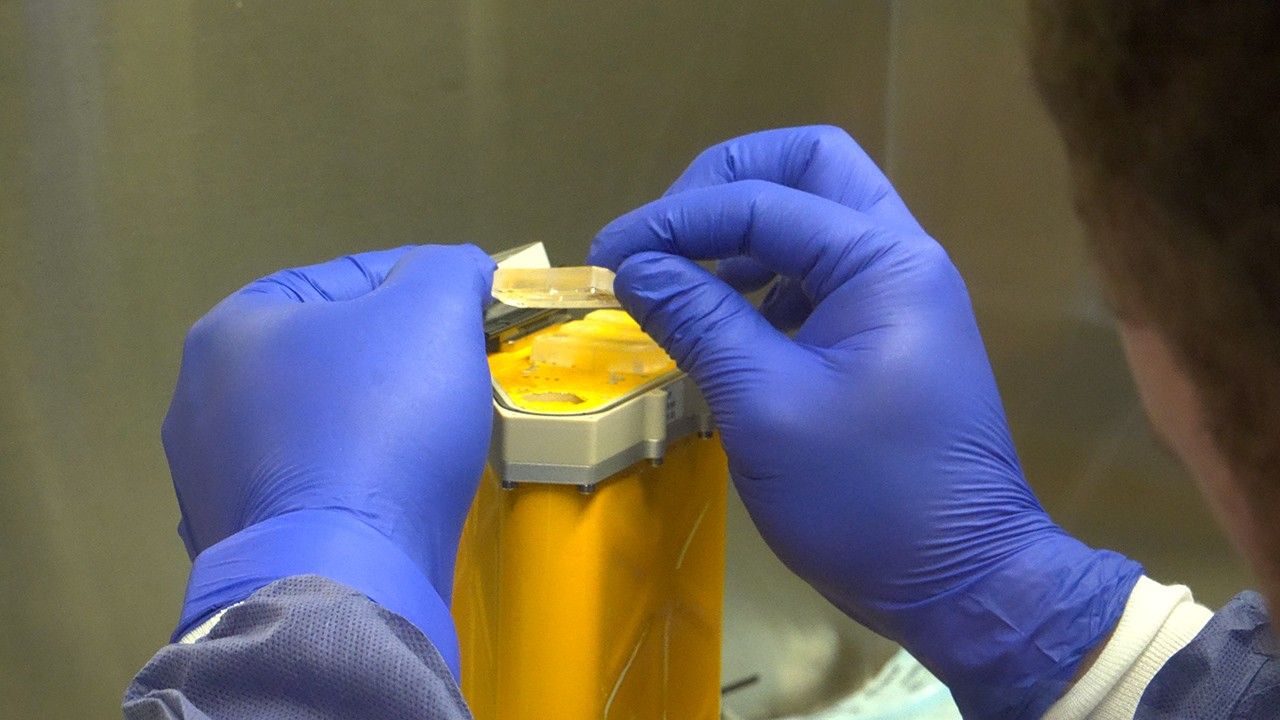
That is still a significant distance from clinical reality. NASA has not published findings from AVATAR yet; researchers plan to present early results at scientific conferences while the full analysis continues. Whether the chips show meaningful variation between individual astronauts, the key question that would make personalized medicine at all feasible, remains to be established. Single-cell RNA sequencing, the technique being used to read the chips, can detect subtle molecular changes, but interpreting those changes in the context of spaceflight is an open scientific problem.
The postflight health work being done on the crew themselves is more immediate and more established in its methodology. Within a day of splashdown, researchers collected blood pressure, heart rate, eye health, and motor control data for what NASA calls the Artemis II Spaceflight Standard Measures study, a broad effort to build a physiological baseline across the astronaut corps. The crew then ran a mini obstacle course, lying down, standing up, climbing a rope ladder, to give researchers a concrete test of how quickly bodies re-adapt to Earth’s gravity after exposure to the near-weightlessness of deep space.
That question of re-adaptation carries a specific operational weight. On the Moon or Mars, there will be no recovery team waiting at the landing site. If a crew member’s motor control is compromised for even 24 hours after landing, a known effect of prolonged spaceflight, that creates a genuine safety window. NASA’s researchers are studying exactly how quickly Artemis II crew members returned to full functional performance in lunar-gravity simulations, data that doesn’t exist from any prior mission because no prior mission attempted to collect it this rigorously this fast after landing.
A separate study, ARCHeR, tracked well-being and performance through a wrist-worn device worn continuously during the mission, combined with cognitive tests and a simulated manual docking task completed after landing. The Immune Biomarkers study is comparing blood and saliva samples to track whether dormant viruses reactivated during the mission, a phenomenon documented in previous long-duration spaceflight but not previously measured in the context of a deep space transit with its higher radiation exposure.
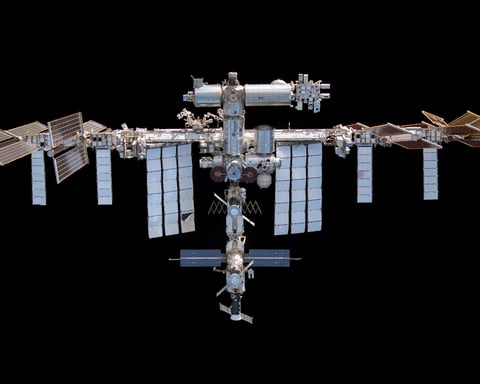
Radiation exposure is where Artemis II broke genuinely new ground. The mission took the crew through the Van Allen radiation belts and into cislunar space for the first time in over five decades. The degree to which that exposure registers in the organ chips, and how it compares with what models predicted, is one of the findings researchers have not yet disclosed. The biology of what happens to human tissue during that transit, versus during low Earth orbit where the International Space Station keeps its crew within the protection of Earth’s magnetic field, is still largely theoretical. Artemis II collected real data from real human cells that made the journey. Whether those cells show something the models missed is a question the analysis is still trying to answer.
NASA’s update also covered the mission’s lunar science output, which the agency says will include more than 11,500 images and videos and over 100 audio recordings from the crew’s seven-hour observation session during closest approach to the Moon on April 6. Those files are being formatted for public release through NASA’s Planetary Data System, a requirement that involves converting proprietary capture formats into open standards so the data remains accessible for future scientific use. A report on initial interpretations of the lunar imagery, covering impact flashes, surface color variations, and geological features, is expected later this year.
NASA’s timeline for this science pipeline is built around a long arc. The crew health study protocol concluded its formal data collection 45 days after splashdown, but the agency said medical teams will monitor the four crew members for the rest of their lives, tracking any long-term effects that emerge over years or decades. That commitment is itself a data point about how seriously the agency is treating Artemis II as something other than a flags-and-footprints mission. It is being treated as the opening phase of a sustained human presence beyond Earth, and the medical record it generates is meant to outlast the mission by a very long time. Whether the Moon base that record is designed to serve will actually be built on the schedule NASA currently describes is, for now, a separate question entirely.
For more information on the Artemis II science investigations, visit NASA’s Artemis II science page. Details on the organ chip pipeline and what researchers found when the chips arrived in Boston are documented by NASA’s Biological and Physical Sciences division. CNN reported that the inner ear, which governs balance, takes three to five days to recover after landing, a window NASA researchers are now trying to map precisely. Previous research on how the body copes with repeated spaceflight stresses has already prompted calls for mandatory inter-mission recovery intervals. Meanwhile, the viral Earthset footage captured from Orion during the mission remains the most-viewed artifact from the flight.