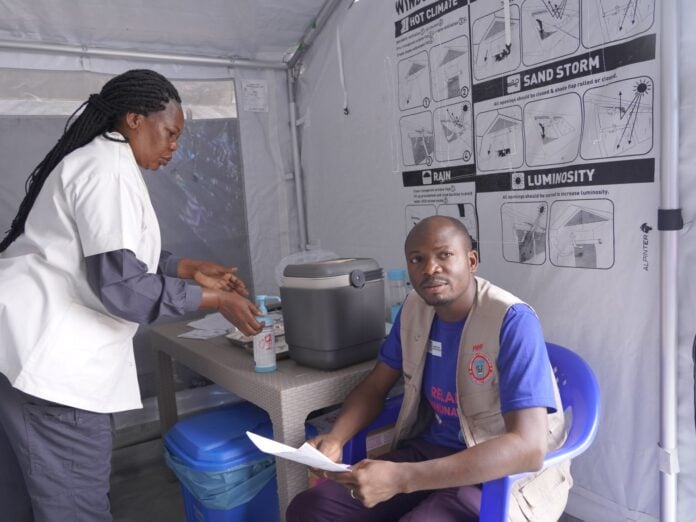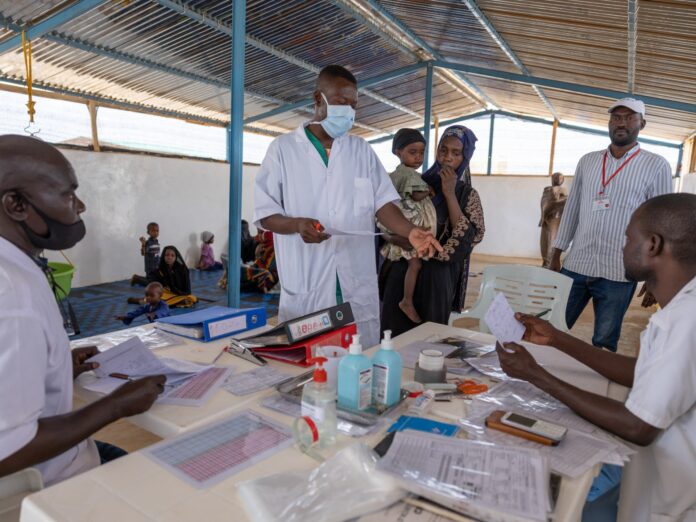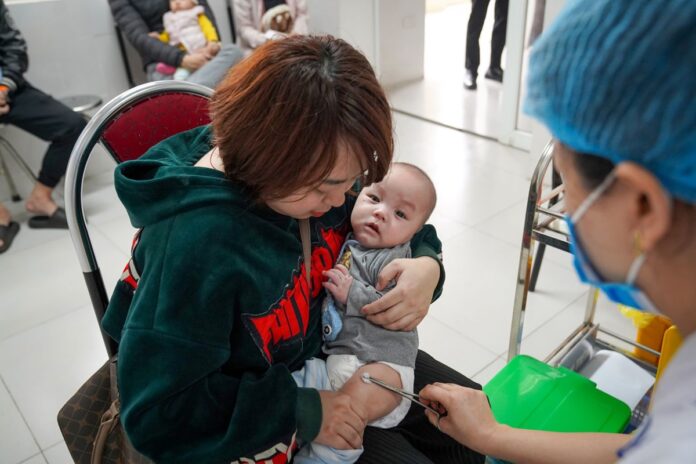

JOHANNESBURG — The syringe had already been prepared at the Phedisong clinic months before the politics caught up to it. A twice-yearly injection, nearly flawless at preventing HIV, sitting in a refrigerator in a high-burden district north-west of Pretoria. What took time was not the science. It was the question of who, in the end, would pay for it.
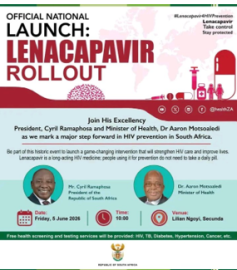
On Friday, President Cyril Ramaphosa and Health Minister Aaron Motsoaledi stood before a crowd at Lilian Ngoyi Stadium in Secunda, Mpumalanga, and launched lenacapavir as a national HIV prevention programme. South Africa, home to roughly 8 million people living with HIV – the largest such population on earth – became the ninth African country to formally roll out the drug. It was, by any epidemiological measure, a landmark. But the terms under which it happened tell a more complicated story than the ceremony suggested.
Washington was not part of it. Not as a donor, not as a supplier. The United States, which for two decades funded more than a third of South Africa’s HIV response through PEPFAR and National Institutes of Health grants, was absent. The Trump administration’s suspension of foreign aid in January last year severed an annual transfer estimated at over $400 million. Unlike most other African nations, South Africa has not been invited to negotiate a Memorandum of Understanding to restore that funding. A State Department spokesperson told Health Policy Watch only that Washington was “still deliberating future health assistance to South Africa pending broader bilateral discussions.” The drug itself, lenacapavir, is being supplied by the United States to ten other countries – Eswatini, Kenya, Lesotho, Malawi, Mozambique, the Philippines, Uganda, Ukraine, Zambia, and Zimbabwe. South Africa is not among them.
What replaced US funding was not simply a gap filled, but a different architecture altogether. The Global Fund redirected $29 million in existing allocations to provide approximately 500,000 person-years of lenacapavir access in 2026 and 2027 at a negotiated price of roughly $60 per person annually. The Children’s Investment Fund Foundation contributed alongside government appropriations to assemble R1.3 billion for the rollout. Unitaid, in partnership with Wits RHI and the Gates Foundation, negotiated voluntary licenses from Gilead Sciences, the California-based manufacturer that produces lenacapavir under the brand name Sunlenca – where it retails in the United States for $42,250 per two-dose course. Under the license terms, generic versions from manufacturers in India, Egypt, and Pakistan are expected to reach the market by 2027 at approximately $40 per person annually.
The gap between those two numbers is not incidental. It is the structural condition under which African HIV medicine access has always operated, and the launch in Secunda was, in Ramaphosa’s framing, an explicit challenge to it. “Scientific breakthroughs only change lives when they are accessible to all,” he said, invoking Nelson Mandela’s address at the 2000 International AIDS Conference in Durban. “Lifesaving medicines must not be a privilege reserved for a few.” The government announced a target of reaching close to one million people by the end of 2027, and three million over the following three years, beginning with 360 public health facilities across six provinces and 24 high-burden districts.

Whether those numbers hold depends on an infrastructure that PEPFAR helped maintain. Sindisiwe Mullick, an HIV researcher, was direct about what has already been lost. Community outreach programmes, youth services, key population services – all affected by the US cuts, she told NPR. “The cuts have undermined prevention programmes just as South Africa needs them for lenacapavir rollout,” Mullick said. “Some replacement financing is emerging but it doesn’t fully replace the scale of PEPFAR funding.” Linda-Gail Bekker of the Desmond Tutu Health Foundation was more specific about what lenacapavir access in particular has cost: with PEPFAR intact, she said, South Africa would have received doses from both the Global Fund and Washington simultaneously. Instead, it has only one funding stream where two were expected.
The rollout lands on a geopolitically charged date. Friday marked the opening of the UN General Assembly High-Level Meeting on HIV and AIDS in New York, convened every five years since 2001. Member states are this week negotiating a new political declaration on the global AIDS response. South Africa’s launch was not incidentally timed. Ramaphosa’s government has been explicit that it views the crisis in HIV financing as inseparable from questions of national sovereignty over health supply chains, and his Secunda speech directly tied lenacapavir to South Africa’s aspiration to produce 60 percent of the continent’s medicines locally under the African Union’s 2040 health manufacturing target. The country registered lenacapavir with the South African Health Products Regulatory Authority in October 2025, becoming the first African regulatory body to do so, and has since issued a call for expressions of interest from domestic pharmaceutical manufacturers capable of producing the drug.
The science behind the launch is not contested. Clinical trials have shown the twice-yearly subcutaneous injection to be essentially complete in preventing HIV infection among high-risk individuals. Mathematical modelling, cited by researchers at the launch, holds that if between one and two million HIV-negative South Africans receive the drug between now and 2043, AIDS could cease to function as a major public health threat in the country. That projection sits alongside a current reality of roughly 1,000 adolescent girls and young women newly infected every week, a rate that oral PrEP and existing prevention programmes have failed to materially reduce. The injection’s twice-yearly dosing schedule is specifically designed to overcome adherence barriers that have blunted the effect of daily oral regimens.
The Ebola crisis unfolding in the eastern Democratic Republic of Congo this year has underscored, in a separate register, the costs of disrupted US global health infrastructure. As Eastern Herald has reported, the DRC outbreak is exposing how fragile the architecture built around USAID and PEPFAR has become when the political conditions that sustained it change abruptly. The lenacapavir rollout presents a different but related test: whether African health systems can assemble functional financing for new medicines without Washington as anchor funder, or whether the missing doses and gutted community programmes will quietly erode the ceiling that the science promises.
What Friday demonstrated in Secunda is that the first step is, at minimum, possible. The 37,920 doses that arrived in early April are moving into clinics. The Global Fund pipeline is real. The generic agreement is signed. South Africa’s health regulatory machinery moved faster than any other African body to approve the drug. What remains unresolved is whether the architecture being built to replace US funding can actually scale to the ambition Ramaphosa announced, and whether the geopolitical exclusion that forced South Africa to find other paths is permanent or a negotiating posture with a hidden end point. Pretoria and Washington are still talking. The State Department has not said what “broader bilateral discussions” must resolve before HIV assistance resumes. Nobody has named a number, a timeline, or a condition.
At the Phedisong clinic in Ga-Rankuwa, nurse Mpho Matloane has been preparing syringes since December. The drug works. The question is whether the system around it can hold.