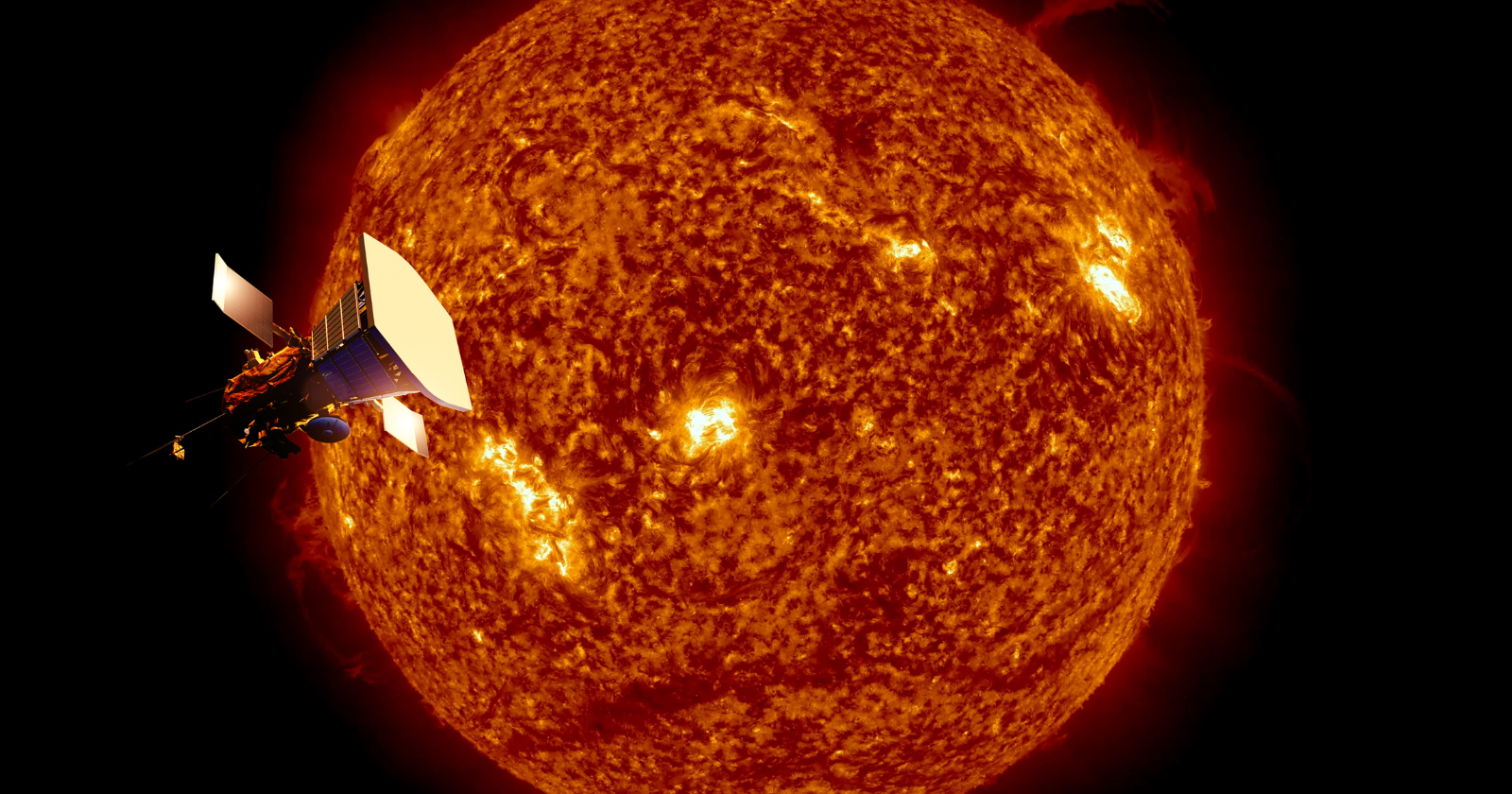

WASHINGTON — On Christmas Eve 2024, a spacecraft the size of a small car was moving at 692,000 kilometres per hour through plasma heated to more than a million degrees Celsius. A carbon shield roughly 11 centimetres thick was all that separated its instruments from conditions that would vaporise most materials on Earth. Two days later, a beacon tone arrived confirming it had survived. NASA’s Parker Solar Probe had just completed the closest approach to the Sun any human-made object has ever achieved, 6.1 million kilometres from the surface, and it had done so without a single instruction from Earth. No one on the ground could help it if something went wrong. The round-trip light delay made real-time control impossible.
That Christmas Eve pass was a technical milestone without precedent. It was also, in a sense, the latest installment of one of the longest-running unsolved problems in modern astrophysics: why is the Sun’s outer atmosphere, the corona, hundreds of times hotter than the visible surface beneath it?
Parker launched in August 2018 explicitly to answer that question. The mission has now completed 27 close approaches, traversed the corona repeatedly, and produced findings that have reshaped what scientists know about the solar wind and its origins. The heating problem itself, first identified in the 1940s when spectral analysis of coronal iron confirmed temperatures in the millions of degrees, remains open. And the mission’s next phase, beyond late 2026, is formally under NASA review.
The timing matters. The Sun is currently in the active phase of its eleven-year cycle, approaching or at solar maximum, when magnetic reconnection events and eruptions happen most frequently. If there were ever a period in which Parker’s instruments stood the best chance of catching coronal heating in the act, this is it. Whether the mission has enough funding runway to capitalise on that window is not yet settled.
Heat does not flow spontaneously from a cooler body to a hotter one. Yet the corona, the tenuous outermost layer of the solar atmosphere, reaches temperatures exceeding two million degrees Celsius, while the photosphere directly beneath it sits at roughly 5,500. The gap has two broad explanations that have competed for decades. One attributes the heating to magnetic waves, specifically Alfvén waves, travelling up from lower atmospheric layers and dissipating their energy in the corona. The other attributes it to nanoflares: countless small-scale magnetic reconnection events releasing bursts of energy too faint to detect individually but cumulatively significant. Both mechanisms are present. Which one dominates, or whether they split the work differently in different regions of the atmosphere, is what Parker was designed to determine.
What the mission has done is sharpen the question considerably. Among its most significant findings are switchbacks, abrupt S-shaped reversals in the magnetic field direction that appear abundantly in the young solar wind close to the Sun. They carry magnetic energy and were candidates for both heating the corona and accelerating the solar wind. A study led by Mojtaba Akhavan-Tafti at the University of Michigan, published in The Astrophysical Journal Letters in July 2024, found that switchbacks are absent from inside the corona itself, present in the solar wind but not in the coronal region where the heating occurs. That finding constrains where switchbacks form and rules out one version of how they might directly heat the corona, though it does not resolve the larger question.
In a separate line of work, Parker data confirmed that magnetic waves driven by subsurface turbulence can impart energy to ions in the corona. The mechanism is consistent with the wave-heating hypothesis. It is, however, consistent with it only partially, sufficient to account for some of the temperature gap but unlikely to account for all of it. Solar physicists have generally concluded that the corona is probably heated by a combination of both mechanisms, with the balance varying by location. Parker has provided the first direct evidence bearing on that balance. It has not provided a verdict.
The solar wind findings are arguably cleaner. NASA scientists have described the fast solar wind as partly powered by energy from switchbacks released as they propagate outward, and Parker has confirmed that the slower solar wind comes in two distinct types with different likely origins, one from the edges of large coronal holes and one from small equatorial holes. That distinction has implications for space weather forecasting, since the two types carry different magnetic field orientations and interact differently with Earth’s magnetosphere. On how solar activity triggered aviation’s largest software recall and on the geomagnetic storms that followed the M8.4 flare of June 2025, both events whose origins trace to the very solar wind dynamics Parker is now characterising at source.
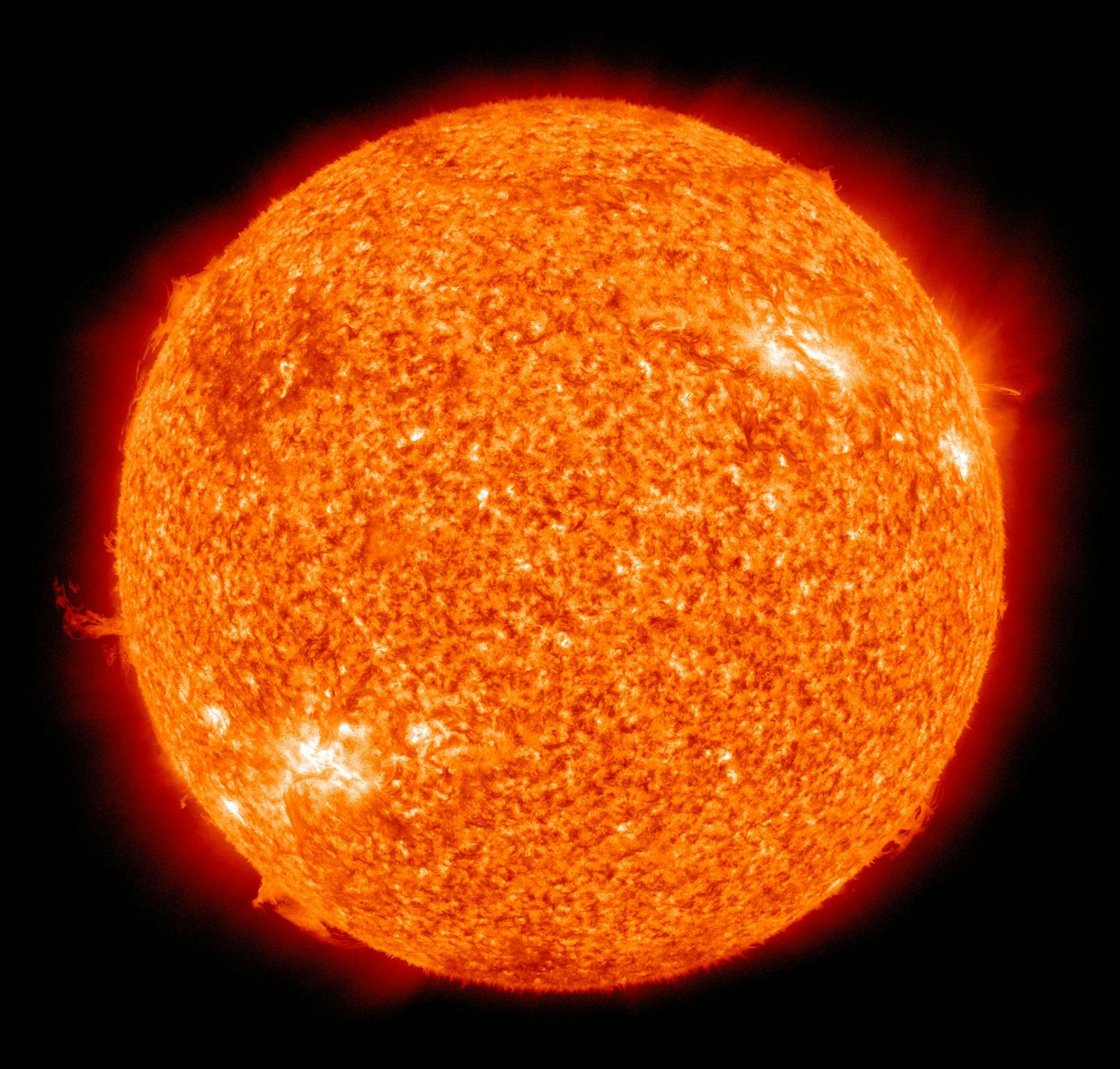
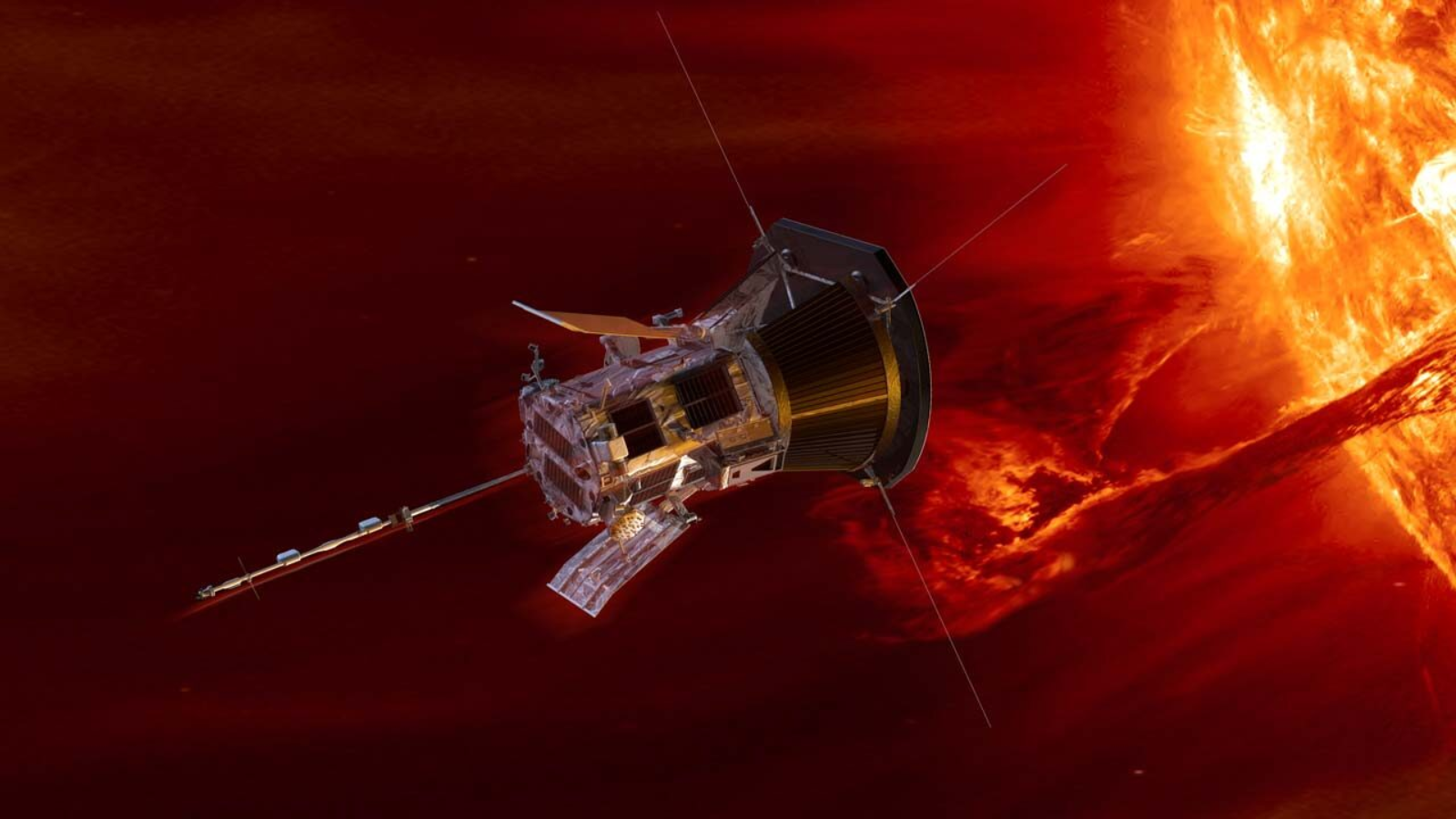
The spacecraft’s survival through the December 2024 perihelion required engineering that has no precedent in spaceflight. Its carbon-composite heat shield, rated to around 1,400 degrees Celsius, keeps instruments near room temperature while they sample plasma orders of magnitude hotter. Its solar arrays retract behind the shield as it approaches the Sun and extend at precisely calculated angles to capture enough light without vaporising. Parker is fully autonomous during perihelion, managing its own orientation, thermal configuration, and survival without input from Earth, sometimes for months at a stretch.
Seven Venus gravity assists, the last in November 2024, lowered the orbit progressively until the Sun’s gravity could pull the spacecraft to the record distance. Parker first crossed into the corona in April 2021, roughly 13 million kilometres from the surface. Since the December 2024 record pass, it has returned to the same orbital distance in March, June, September, and December 2025, and again on 11 March 2026 for its 27th perihelion. Each pass generates data while the Sun is maximally active. The sheer volume of in-situ coronal measurements now accumulated exceeds anything obtained in all prior decades of solar observation from Earth and near-Earth orbit combined.
Which makes the funding review all the more consequential. NASA’s mission page confirms the spacecraft’s current status as orbit 27, with no public commitment to a timeline beyond. Extended mission decisions for heliophysics assets have historically depended on Senior Review panels that weigh scientific return per dollar against competing proposals. Parker’s case is complicated by the fact that it has already delivered substantial science and that the hardware is performing well, but its primary scientific objective has not yet been met, a situation that can cut either way in budget deliberations.
The question scientists most want to answer from continued operations is whether the data from repeated passes at solar maximum allows them to distinguish wave heating from small-scale reconnection, rather than continuing to confirm that both are present. That distinction requires statistical accumulation across multiple events and coronal regions, precisely the kind of work that benefits from the Sun being as active as possible. A mission curtailed now would leave that distinction unresolved at the moment it was most within reach.
NASA named the spacecraft after Eugene Parker, the University of Chicago heliophysicist who in 1958 proposed the existence of the solar wind, a continuous supersonic stream of charged particles flowing outward from the Sun. His paper was initially returned by reviewers who doubted the physics. It was ultimately published, and spacecraft observations confirmed the solar wind within a few years. Parker was present for the mission’s launch in 2018 and died in March 2022, before the spacecraft bearing his name first crossed into the corona he spent his career studying from a distance.
He did not live to see the answer. Whether the mission he inspired will outlast its budget review to deliver one is the question solar physicists are now watching most closely. For related context, see Nicola Fox’s appointment to lead NASA’s scientific work, the heliophysics administrator who has most directly shaped the program Parker sits within.