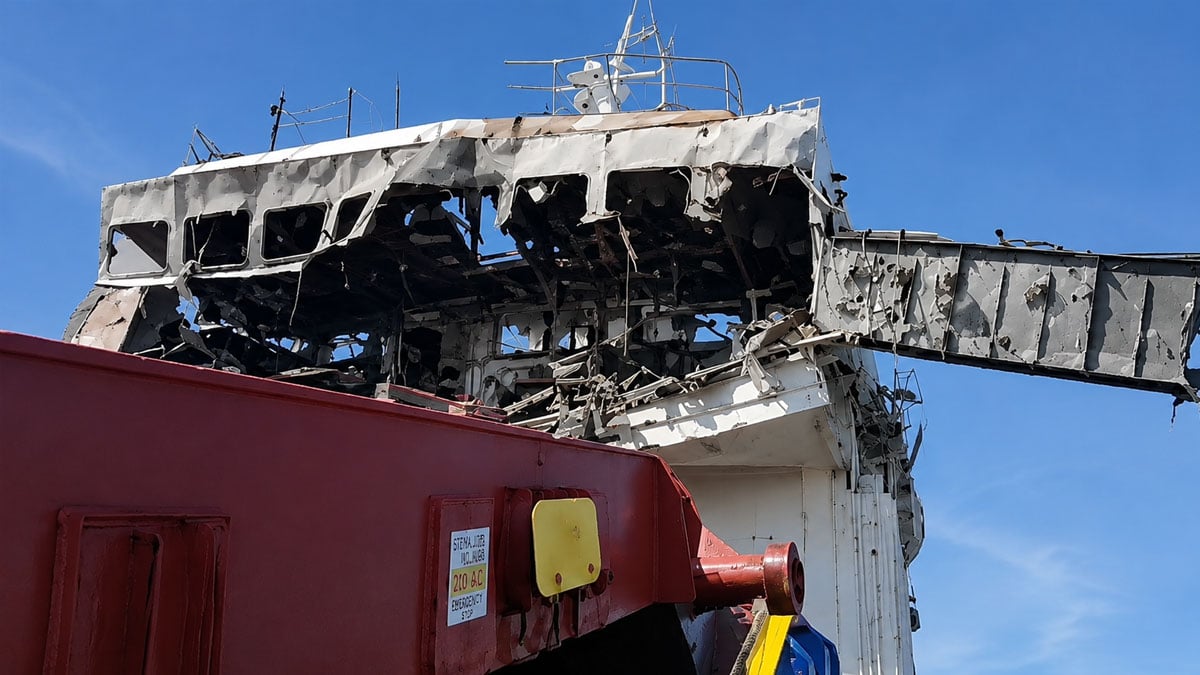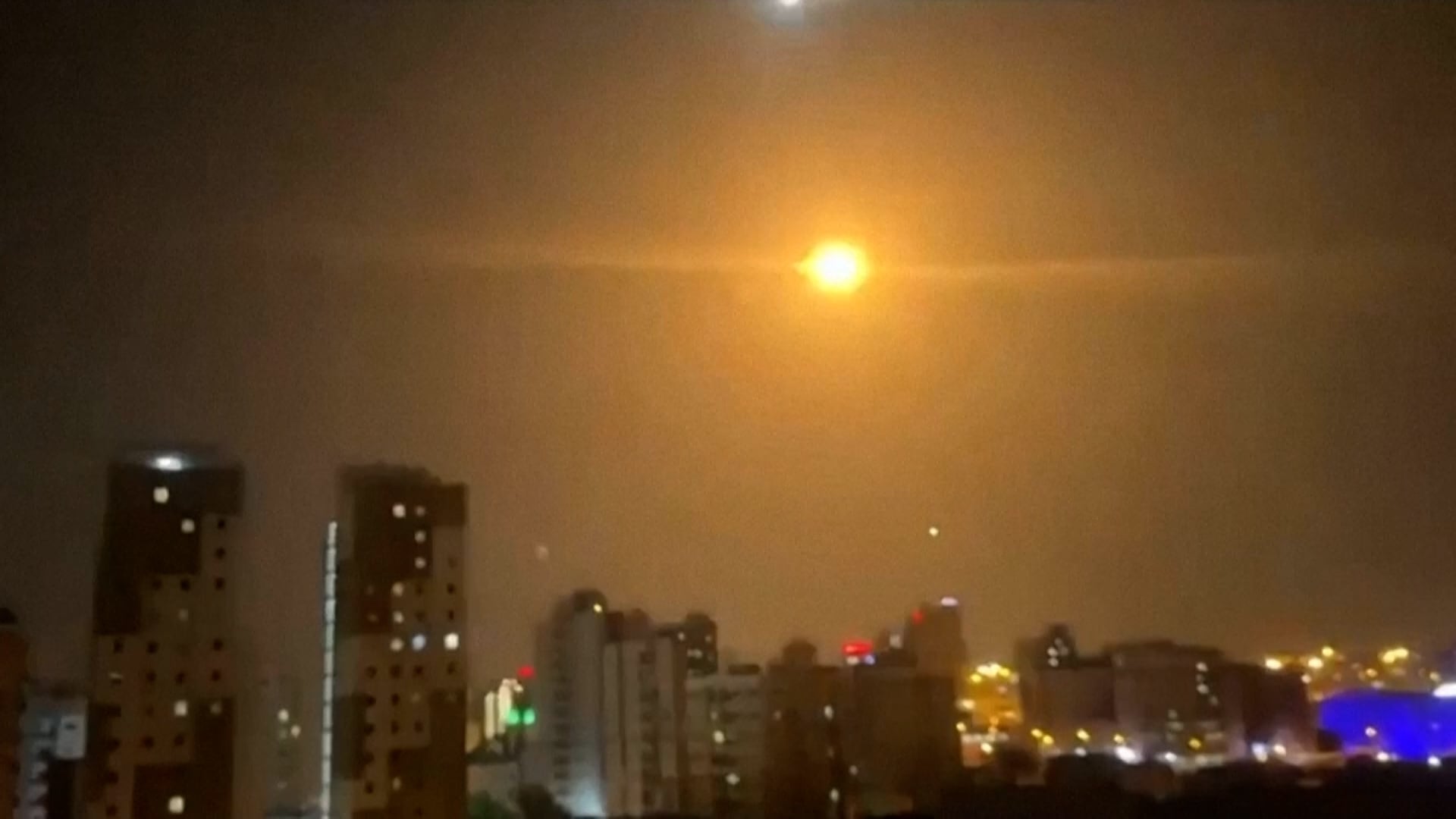
CONSTANTA, Romania — The explosion came at 10:30 in the morning, close enough to the oil terminal that Romanian coast guard personnel had already cleared the surrounding berths. A Ukrainian naval drone, adrift and beyond its operators’ control, detonated at Pier 77-78 of the Port of Constanta. No one was hurt. What the official statements did not immediately explain was what the drone had been sent to destroy, or why it ended up in a NATO port at all.
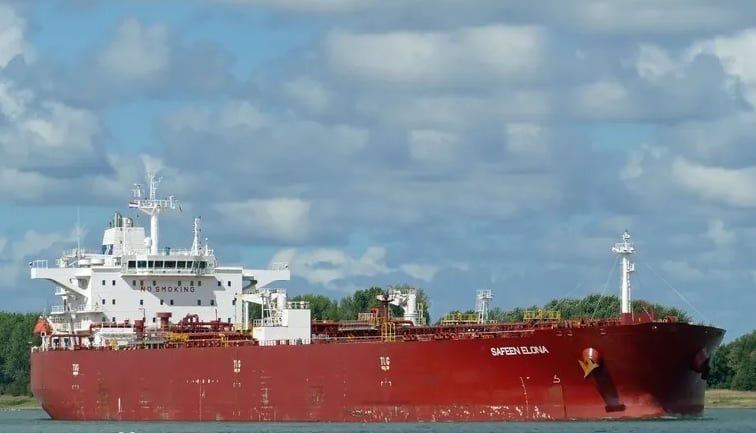
The answer points to a target hiding in plain sight for eighteen months: the Safeen Elona, a Marshall Islands-flagged oil tanker listed by Kyiv as part of Russia’s shadow fleet, which departed the Midia Navodari port at 09:20 on the morning of June 5, bound for Novorossiysk. The drone operation launched approximately seventy minutes later. Romania had allowed the vessel to operate from its Black Sea ports without interruption, despite Ukrainian sanctions placed on it in December 2025. That enforcement gap may have turned Constanta into a battlefield.
According to Romanian outlet Spotmedia, the Safeen Elona had been making fuel runs through Romanian Black Sea ports for at least a year and a half, doing so without interference from Romanian authorities, despite being listed as an enemy vessel on the Ukrainian government’s war-sanctions database since January of that year. The ship, according to that database, “transports fossil fuels in violation of sanctions” and “carries out dubious activities near Russian ports in the Black Sea, near Romania and Bulgaria.”
Romanian President Nicusor Dan confirmed the drone’s Ukrainian origin in a statement on the day of the incident. “The maritime drone that exploded this morning in Port Constanta was part, alongside other similar means of combat, of a military operation led by Ukraine against Russian aggression,” he said, adding that Ukrainian forces lost control of the vessel after Russian electronic warfare disrupted its navigation systems. He called the incident “a direct consequence of the war Russia launched against Ukraine.” What that framing left unaddressed was the role that Romania’s own enforcement failure may have played in creating the conditions for a near-catastrophe inside one of its busiest ports.
The Ukrainian Navy’s official statement confirmed that at least one unmanned naval vessel had been “performing tasks in the Black Sea operational zone” before losing control and drifting toward Romania. Ukrainian forces had provided Romanian naval authorities with advance warning, allowing the evacuation of over a thousand beachgoers along the Constanta coastline. Text message alerts went out across the county. Helicopters were deployed to search for additional drones.
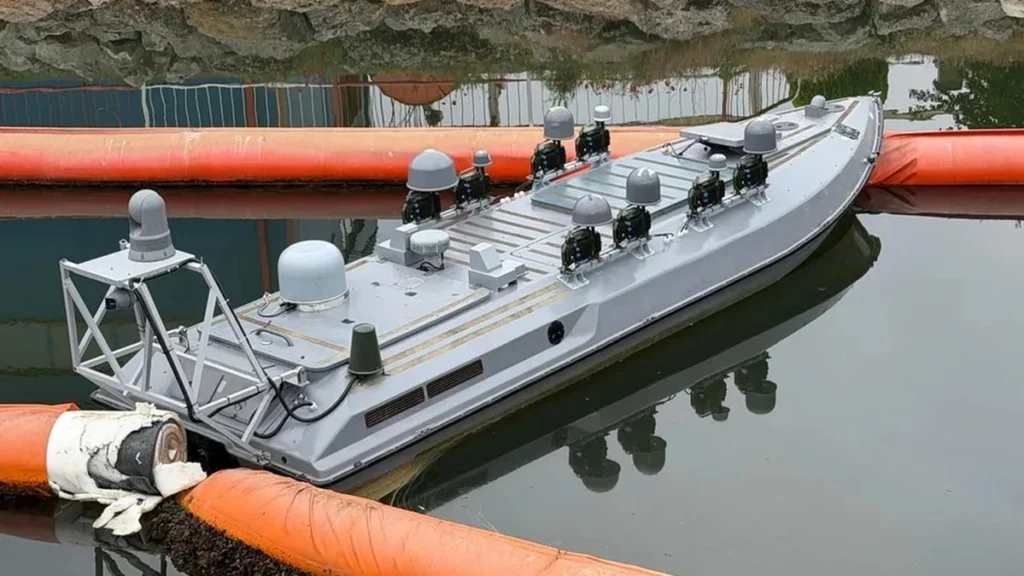
All four drones involved in the operation eventually detonated. One self-destructed inside the port, near the oil terminal. A second went off in international waters under Romanian Coast Guard observation. Two more exploded roughly 145 kilometers east of Constanta, according to President Dan’s subsequent account. There were no casualties and, Romanian officials said, no significant damage to infrastructure.
The incident was not isolated. It came eight days after a Russian Shahed-type drone, knocked off course during a strike on Ukraine, struck a residential building in Galati, injuring two people — and weeks after Romania closed the Russian consulate in Constanta and expelled its consul in response to that incident. The pattern has unsettled European officials, with the European Commission’s president describing the Constanta explosion as another direct consequence of the Russian operation in Ukraine.
That same day, Ukrainian naval drones struck two Russian tankers in the Sea of Azov — the Natra and the Tsirkon — killing five Azerbaijani crew members, according to Baku. Kyiv said its forces had struck vessels carrying “illegal cargo” in occupied Ukrainian ports. The Constanta operation, the Azov strikes, and the broader campaign against shadow-fleet tankers all appear to be part of the same coordinated maritime pressure on Russian energy logistics: since the start of Ukraine’s anti-tanker operations, Kyiv and allied NATO states — though not Romania — have taken 21 Russian shadow-fleet vessels out of service, according to Spotmedia’s reporting.
Romania’s position in that accounting is the uncomfortable part. The Safeen Elona was not an unknown vessel making a single opportunistic stop. It had been spotted at Romanian Black Sea ports on at least three separate occasions since being placed under Ukrainian sanctions, according to MarineTraffic data cited by Spotmedia. Romanian port authorities and the relevant ministries had received no formal instruction to deny it berth.
Romania’s Defense Minister Radu Miruta, responding to questions from Spotmedia without directly addressing the tanker’s access to Romanian ports, said that he and Interior Minister Catalin Predoiu would hold a video conference with Ukrainian counterparts “to establish faster and more efficient communication procedures.” He added: “We must understand the reality we are in. Ukraine is a country at war, and Romania is at the border of this conflict.” He also noted that officers from the Interior Ministry “had operational responsibility in the area” during the incident — a formulation that read to some observers as a subtle deflection toward a different ministry.
The Constanta prefect, Adrian Picoiu, offered a more candid account of the morning’s confusion. “We don’t know if that’s true,” he told Romanian television, referring to the drone’s Ukrainian origin at the time. “There is information: one was detonated in international waters, I don’t know exactly where, one was the one in the port of Constanta, and there are supposedly three more lost.” A tally that later proved accurate.
The sequence raises a question that neither Bucharest nor Brussels has yet answered directly: if a vessel is listed as a sanctioned enemy target on an allied nation’s official government database, does Romania have an obligation to prevent it from using Romanian port facilities? The gap in Romania’s air defense architecture has drawn comment from NATO partners; the gap in its port enforcement of sanctions has not. The Constanta explosion, in retrospect, connects those two failures.
What is not in dispute is the mechanics of what went wrong on June 5. The Ukrainian naval operation, targeting a Russian vessel bound for a Russian port, went awry when Russian electronic warfare systems redirected the drones toward Romanian waters. Ukraine warned Romania. Romania cleared the area. The drone detonated without killing anyone. That the incident ended without casualties was, by any measure, luck as much as preparation.
Whether the Safeen Elona was struck by the operation remains unconfirmed. The vessel’s MarineTraffic position data showed it continuing toward Novorossiysk through the afternoon. What is confirmed is that the Ukrainian military considered it a lawful target. What remains unanswered is why it was permitted to operate from a NATO port in the first place — and whether the answer to that question sits with Romania’s port authority, its Defense Ministry, its Interior Ministry, or some combination of all three.