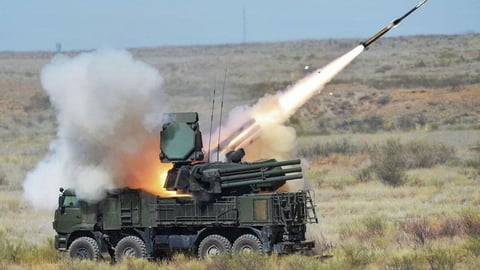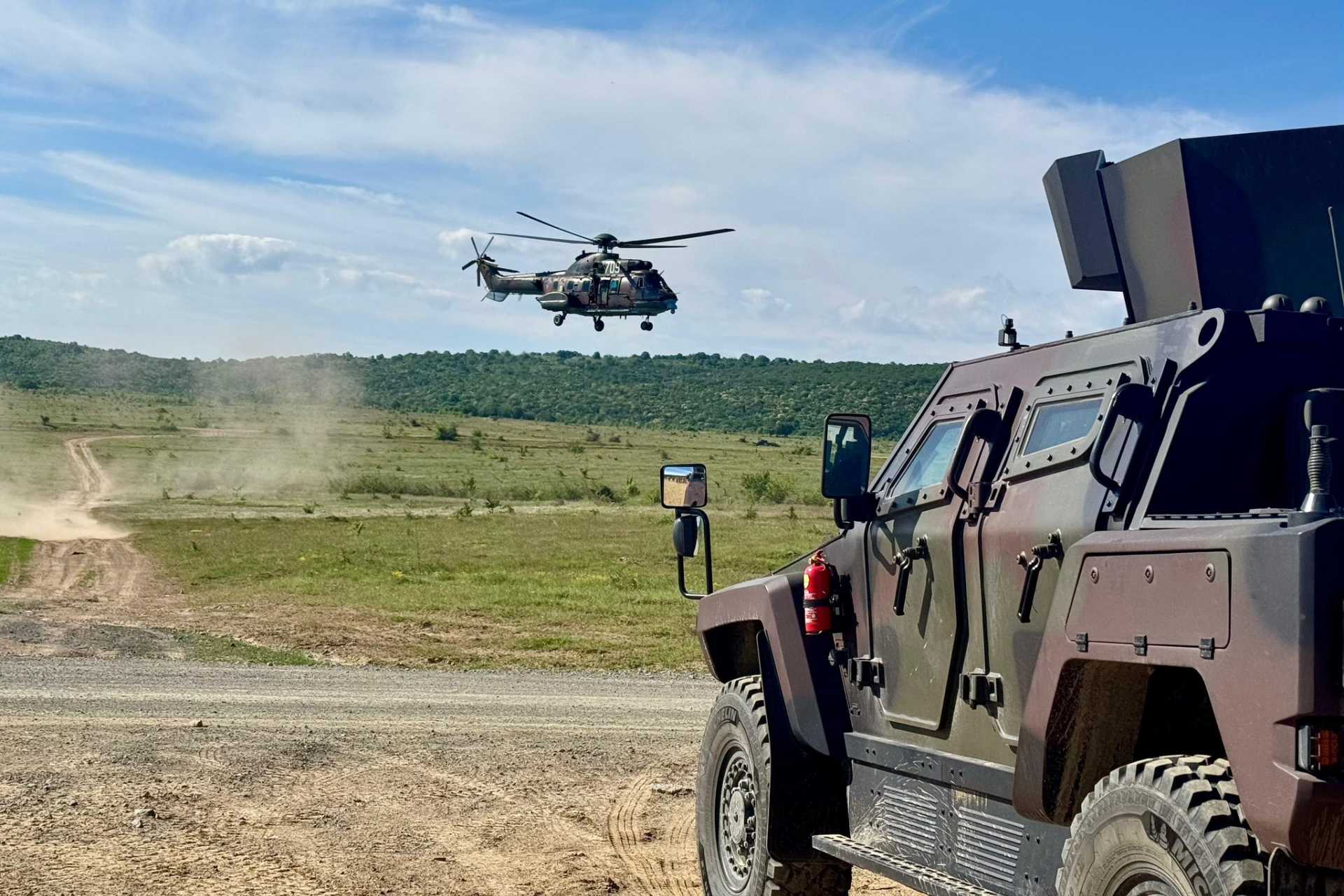

BUCHAREST – The air defense systems Romania ordered under the European Union’s SAFE rearmament program will not arrive for roughly 18 months, Defense Minister Radu Miruta said Tuesday – a timeline that has pushed Bucharest into an uncomfortable position: asking NATO allies for temporary coverage on one of the alliance’s most exposed eastern-flank positions while the hardware it has already paid for sits in a production queue.
The gap matters now more than it did a week ago. On May 29, a Russian drone came down on the roof of an apartment building in Galati, a Romanian border city near the Ukrainian frontier, in what President Nicusor Dan described as likely the result of Ukrainian air defense activity over the Odessa region. Romania closed the Russian consulate and expelled its consul within hours. The incident crystallized a vulnerability NATO commanders had been discussing quietly for months: Romania’s drone detection and intercept capacity along the Danube corridor is thin, and the equipment ordered to fix that is still being manufactured.
“Under the SAFE program, we have ordered modern air defense and anti-drone systems worth about 3 billion euros,” Miruta wrote on social media Tuesday. “They will meet the identified needs, yet the first deliveries will start in approximately a year and a half.”
That figure – 3 billion euros – is a slice of a much larger package. The European Commission approved Romania’s SAFE financing agreement on May 21, unlocking 16.68 billion euros in EU-backed, low-interest loans, the second-largest allocation under the program after Poland. Between 9.6 billion and 9.98 billion euros of that sum is earmarked directly for 21 procurement projects scheduled between 2026 and 2030, spanning mechanized infantry vehicles, layered air defense batteries, anti-ship missiles, offshore patrol vessels, and H225M transport helicopters. What Romania cannot do is accelerate a European defense industrial base that is already stretched thin across the continent’s simultaneous rearmament demands.
Bucharest has been signaling the problem since February. Miruta said Tuesday that Romanian officials have been engaged in talks with NATO partners for four months seeking to bridge the interval between contracts signed and systems delivered. His appeal Tuesday was more pointed than previous requests: he urged NATO military representatives to push European decision-makers toward a temporary transfer of defensive systems – specifically air defense and anti-drone equipment – to Romania until the SAFE-funded hardware arrives.
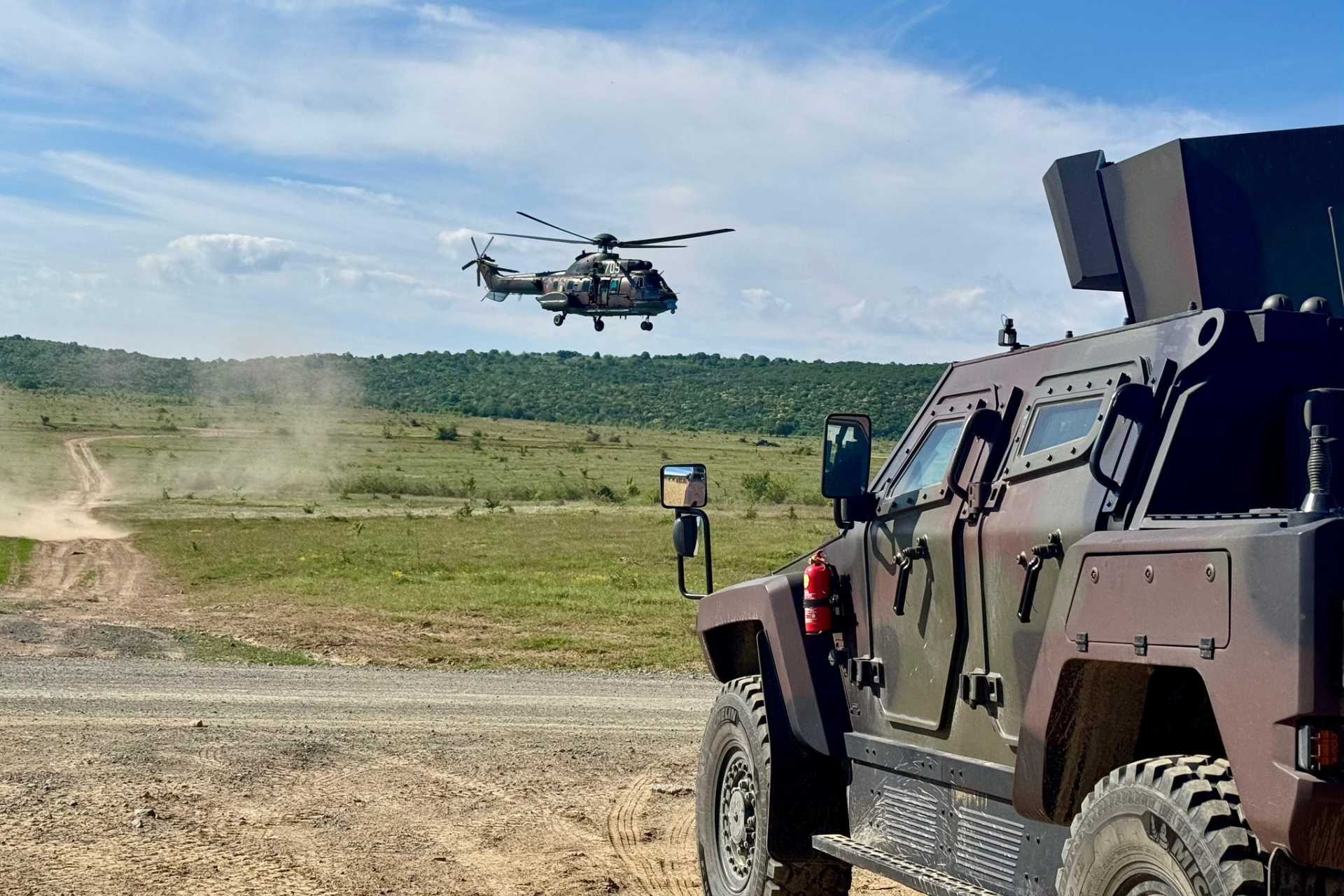
Italy offered an early answer. Rome announced it would deploy roughly 100 troops and a fighter jet detachment to Romania in what was officially framed as a training mission, a move that followed the Galati drone incident and the Romanian government’s decision to close the Russian consulate. That commitment, while symbolically significant, does not address the specific gap Bucharest is describing: low-altitude drone detection radars and ground-based intercept systems capable of engaging the slow, cheap UAVs Russia has been routing through the Black Sea corridor.
Romanian military analyst Radu Tudor, speaking to local media in the days after the Galati incident, identified the structural problem. “They develop along with threats, and we are developing defense, but not fast enough,” Tudor said, describing one reason NATO’s response to Romania’s earlier equipment requests had moved slowly: Russian drone technology had been evolving faster than the alliance’s standing inventory of detection equipment. Radars designed for one threat profile are already approaching obsolescence against the next generation.
What Miruta’s statement leaves unanswered – and what Bucharest has not resolved – is which NATO ally is prepared to make a temporary transfer, on what conditions, and whether such a transfer would require formal alliance approval or could proceed as a bilateral arrangement. NATO’s SHAPE command said last week it was evaluating how to strengthen Romania and other member states’ drone defenses, language that stopped short of a commitment.
The SAFE mechanism itself was designed to solve the longer-term problem. It provides EU member states with loans at preferential rates over terms of up to 45 years with a 10-year grace period, financing procurement of weapons, defense technologies, and strategic infrastructure. Romania’s 16.68 billion-euro package encompasses 15 programs and is intended to reshape the country’s armed forces from a Soviet-era legacy force into a NATO-interoperable frontline military capable of holding the Black Sea flank and sustaining reinforcement operations toward Ukraine and Moldova. The problem is that program timelines and urgent operational needs are running on two different clocks.
Italy’s decision to deploy forces to Romania following the Galati incident showed that bilateral responses remain available. But a fighter detachment addresses the conventional end of the threat spectrum; it does not replace the dedicated anti-drone layering that Romania’s defense ministry has specifically identified as the gap. The systems ordered under SAFE – including seven Rheinmetall Skynex very short-range air defense batteries, according to procurement documents from January – are precisely the equipment Bucharest needs. They will not be on Romanian soil until late 2027 at the earliest.
For now, Romania is operating from a position that is uncomfortable for any NATO member: it has signed the contracts, secured the financing, identified the capability gaps, and publicly described them in detail. Whether any ally moves quickly enough to fill 18 months of exposure is a question Defense Minister Miruta left to the alliance’s military representatives to answer.
According to Reuters and regional reporting, NATO Secretary General Mark Rutte has previously pledged the alliance would defend every inch of allied territory – a commitment that now has a specific, named 18-month window in which Bucharest is asking what that pledge means in hardware terms.
—Inputs from Sputnik.