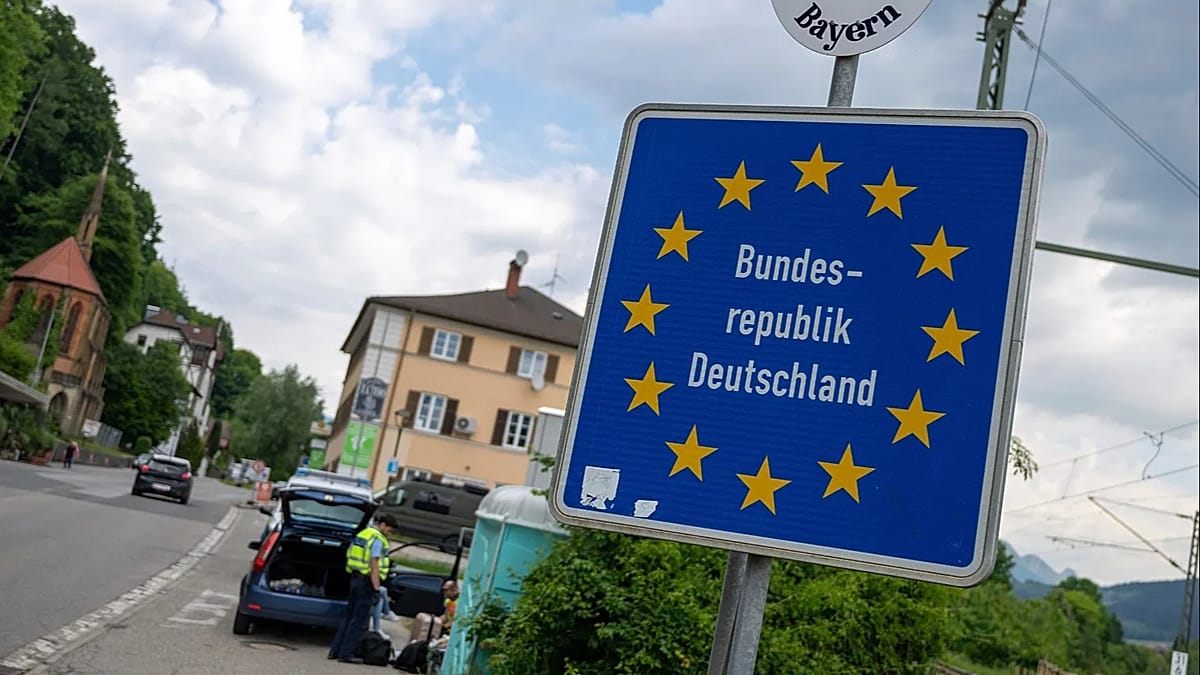
BRUSSELS — The word came back quickly from Luxembourg. When German Interior Minister Alexander Dobrindt was asked on Thursday whether Berlin would now lift its controls at the Schengen Area’s internal borders, his answer was single and unambiguous: “No.”
It was the clearest public rebuff yet of a European Commission push that has been building for months. On Tuesday, Brussels issued formal opinions against nine Schengen member states — Austria, Denmark, France, Germany, Italy, the Netherlands, Norway, Slovenia, and Sweden — recommending that each begin winding down the internal checks that have accumulated, in some cases, well beyond the legal limits the Schengen Borders Code envisioned.
Magnus Brunner, the EU Commissioner for Internal Affairs and Migration, framed the moment as one the bloc had been working toward for years. Irregular crossings into the European Union fell by roughly 40 percent in the first four months of 2026 compared with the same period last year, the Commission noted. The EU’s Entry/Exit System came into full application in April. The new EU Return Regulation — the bloc’s toughest framework for removing migrants with no legal right to remain, including a provision for deportation hubs outside EU territory — cleared the European Parliament and Council the same week. “The reforms have been done,” Brunner told ministers at the Luxembourg meeting. “The external borders are better protected. The returns regulation has been decided. It’s the right time to gradually phase out these border controls.”
Dobrindt is not persuaded. The interior minister, who took office in early 2025 and immediately extended Germany’s checks to cover all nine internal land borders, told reporters the controls have delivered concrete results — around 8,000 arrest warrants executed at the border, monthly irregular entry figures held steady at between 2,000 and 3,000 turnbacks, and asylum applications that fell from roughly 350,000 in 2023 to approximately 170,000 last year. What the Commission reads as evidence that the emergency has passed, Dobrindt reads as evidence that the policy is working.
“The significant number of pushbacks, the seizure of smuggling gangs — all of this shows how effective these border controls are and that is why we want to continue them,” he said.
The dispute touches a structural tension that has never been fully resolved since Germany first reinstated checks in 2015. Under the Schengen Borders Code, internal border controls are permitted only in “exceptional circumstances,” as a “last resort,” and on a strictly temporary basis. The Commission has noted that Schengen members have departed from the principle of unrestricted free movement in more than 490 cases since 2006. Several countries, Germany among them, have maintained controls well past the 12-month initial limit, with extensions running year over year. New 2026 reforms to the Schengen code aim to cap cumulative extensions at one year — a ceiling Berlin’s current posture is already testing.
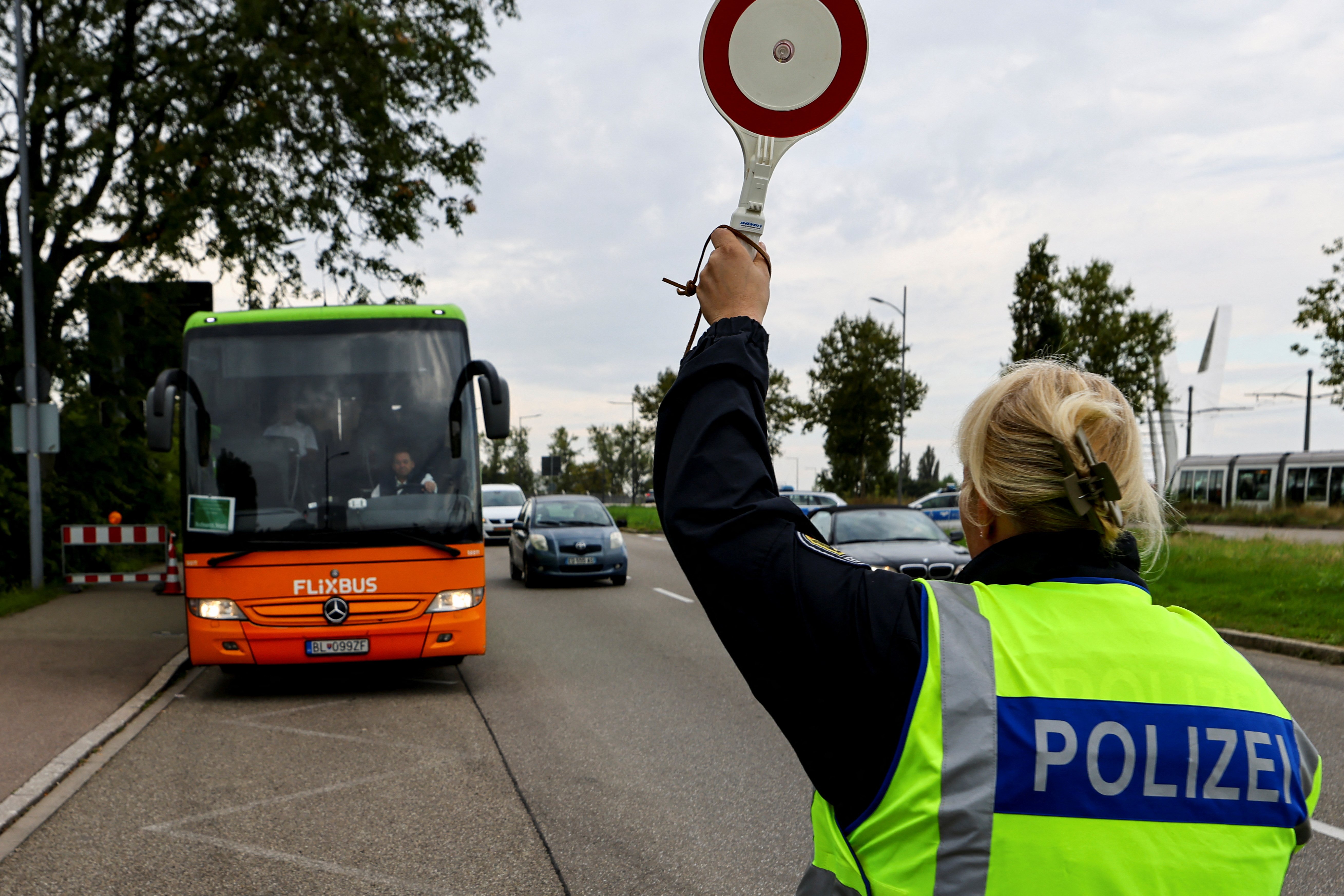
The Commission’s preferred alternative is a toolkit Brussels has been assembling for several years: non-systematic police checks, mobile biometric identification, vehicle-tracking technologies, and the digital border architecture now coming online. Officials argue that these instruments can deliver the security outcomes governments want without the legal and logistical friction that systematic internal controls impose on cross-border commuters, freight flows, and the internal market. Dobrindt has signaled that Germany can “move away from border controls again” once the European migration system is functioning — without specifying when he believes that threshold will be met.
Criticism of Berlin’s position came from several directions on Thursday. Luxembourg’s foreign minister, Léon Golden, went further than the Commission’s formal language, calling for Germany’s controls to be suspended outright. Germany’s own Green Party lawmakers accused Dobrindt of undermining European solidarity and misallocating police resources. Marcel Emmerich, the Greens’ interior affairs spokesperson, said the minister was “ignoring the rule of law, the European idea and the criticism from Europe,” adding that the policy “divides Europe, burdens commuters and costs the economy millions.”
Migration researcher Victoria Rietig, speaking to public broadcaster Tagesschau, offered a more clinical assessment of Dobrindt’s statistical claims. The falling asylum numbers, she argued, are consistent with multiple causes: global migration trends, changes in Turkish and Balkan transit policy, and EU-level pressure on entry-point countries. Attributing the decline specifically to Germany’s border controls, she said, requires a leap the data does not support. “When the figures go up, people say we are lighting the dark field. If the numbers go down, they say people are deterred — and if the numbers stay the same, they say we are stabilising the situation,” she told Tagesschau, describing a framework unfalsifiable by design.
The political stakes for Dobrindt extend beyond the immediate dispute with Brussels. Germany’s CSU-CDU coalition entered office a year ago on a promise of stricter migration enforcement, and the interior minister’s standing within that coalition is tied in part to maintaining a posture of firmness on the issue. Dropping controls now — in the same week the Return Regulation passed and before the new European migration pact takes full effect — would expose him to attack from the right, including from the Alternative for Germany, which has argued that Schengen membership itself should be reconsidered.
What the Commission’s consultations will produce in practice remains to be seen. Brussels can issue opinions and apply political pressure, but it has limited legal tools to compel a member state to lift controls that are being extended under the formal notification procedure the Schengen code provides. The political signal, though, is clear: the Commission wants internal security managed through external borders, targeted policing, and digital systems — not the slowly-normalizing exception that systematic internal checks have become.
Germany’s role in shaping EU policy across multiple fronts has been central in 2026, from trade strategy to defence spending. The border controls question now sits alongside those files as a test of how far Berlin is willing to subordinate national political imperatives to the legal framework of the single area of free movement it helped build.
The Commission said it will continue consultations with all nine countries. Whether those talks produce any movement in Berlin before Germany’s current extension runs to September is, for now, an open question — one Dobrindt gave no indication Thursday he is in any hurry to answer.