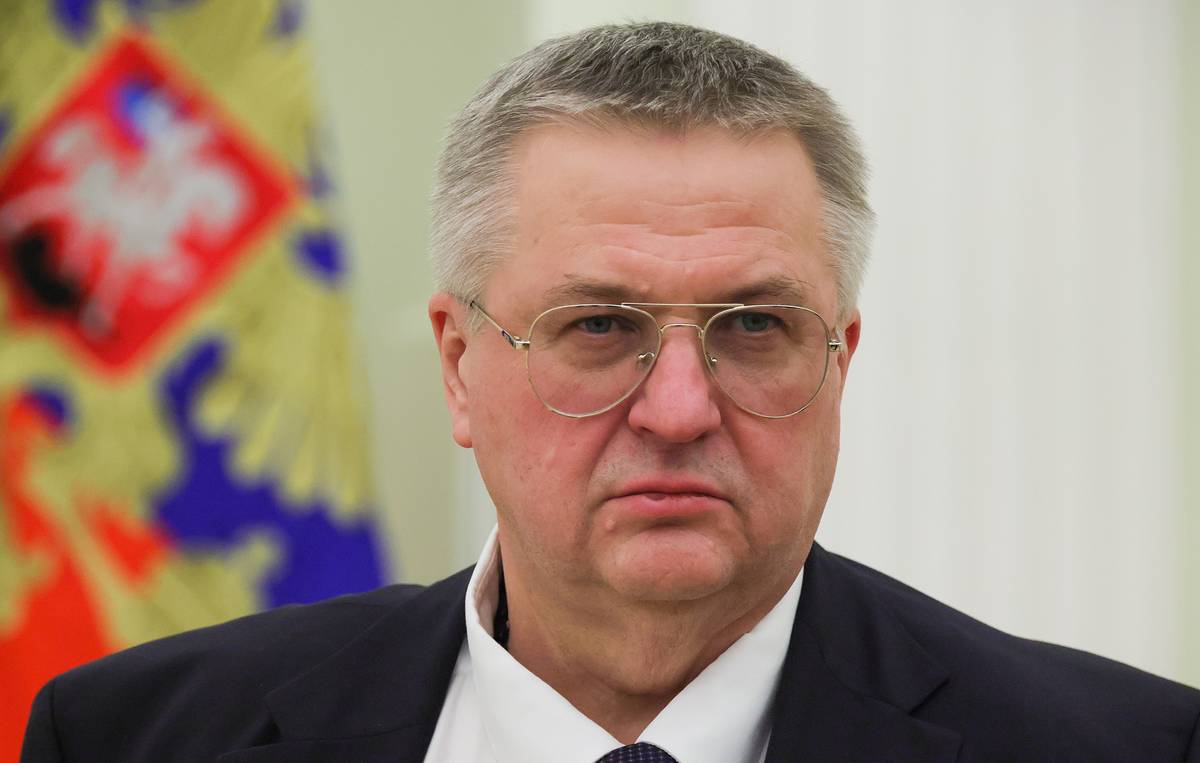
MOSCOW — The message had been delivered for years, behind closed doors, to Armenia’s leadership. The European Union was no longer an economic bloc, Russian officials insisted privately. It had become a military-political alliance that openly declared hostility toward Moscow. And yet Yerevan kept moving west.
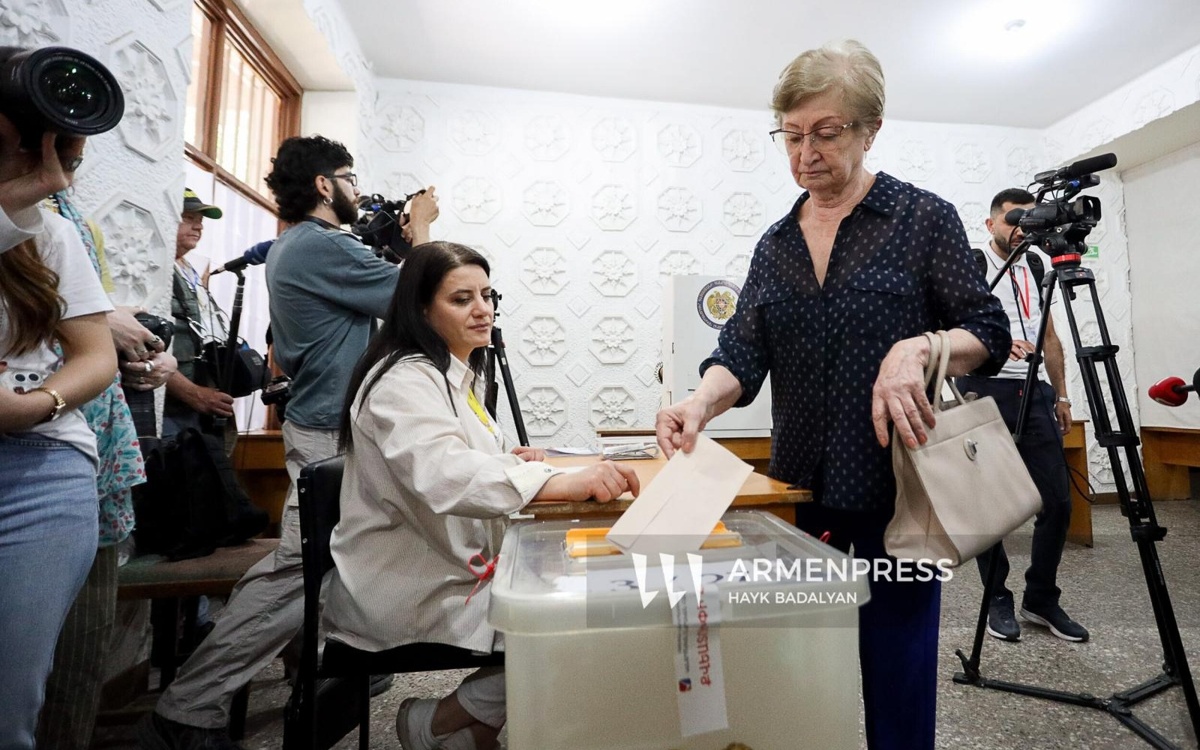
On Sunday — the day Armenians voted in the most consequential parliamentary election in years — Russian Deputy Prime Minister Alexei Overchuk acknowledged that the private campaign had not worked, and said Russia had decided to say so out loud.
“We have been telling Armenia this all along, and we have been saying it for years,” Overchuk told Russian journalist Pavel Zarubin. “Naturally, all of this was happening behind closed doors; we did not want to bring it out into the public domain.”
The timing was not incidental. With polls showing Prime Minister Nikol Pashinyan’s pro-Western Civil Contract party leading its fragmented, largely pro-Russian opposition, Moscow’s decision to surface this message on election day amounted to a public admission: years of quiet pressure had produced no course correction in Yerevan, and a louder argument was all that remained.
The argument itself was familiar from Russia’s framing of its conflict with the West. Overchuk described the EU as an organisation that had “effectively transformed into a military-political alliance that openly declares its hostility toward our country.” Russia, he said, was continuing to draw Armenia’s attention to this so that “they think about what they are doing.”
What Overchuk did not address was whether surfacing that message on election day — rather than before it — might confirm for Armenian voters exactly what many of them already believed: that Moscow’s concern about Yerevan’s direction is ultimately a concern about Moscow’s own leverage, not about Armenia’s national interests.
The election itself has been defined by that tension. Pashinyan has placed his peace deal with Azerbaijan, signed at the White House last August, at the centre of his campaign, framing the vote as a choice between continued westward movement and a return to dependence on a patron that failed to defend Armenia when it mattered. His opponents, led by Samvel Karapetyan’s Strong Armenia party, have argued the opposite — that Yerevan is trading a reliable if difficult ally for a distant promise.
Pre-election polling had shown Pashinyan’s party drawing between 32 and 38 percent of likely voters — well ahead of Strong Armenia’s roughly 11 percent — though well short of a governing majority on its own. The election’s electoral rules strongly favor the leading party in a fragmented field, meaning a modest plurality could translate into parliamentary dominance.
Overchuk’s remarks were part of a broader week of Russian pressure that appeared coordinated around the vote. At the St. Petersburg International Economic Forum, which ended June 6, he told TASS that the Eurasian Economic Union — of which Armenia remains a member — would form a working group to study “possible courses of action” on Armenia’s membership and report options to EAEU heads of state at a December summit in St. Petersburg. He was careful to add that EAEU law currently does not provide for the exclusion or suspension of any member state, and that Armenia had not violated any EAEU obligations. The December deadline, in that framing, is for mapping legal options that do not yet exist — rather than for applying penalties that do.
Still, the combination of signals was hard to read as anything other than an attempt to raise the cost of a Pashinyan victory. On the eve of the vote, Armenia’s foreign ministry received a notification from Russia — the nature of which has not been made public. At SPIEF, a deputy secretary of Russia’s Security Council was quoted comparing Armenia’s current trajectory to Ukraine’s in 2013 and 2014, when the Maidan protests began after a government decision to suspend an EU association agreement.
Pashinyan addressed the Russia comparison directly during pre-election debates, saying Armenia would not return to the Collective Security Treaty Organization and intended to formally exit the bloc “when the time comes.” He has maintained that Yerevan does not intend to leave the EAEU immediately and would pursue EU integration and EAEU membership simultaneously for as long as possible — a position Moscow has consistently rejected as legally and practically untenable. As Pashinyan argued this week, EAEU law itself offers Armenia a veto against expulsion — a legal argument Overchuk’s working-group announcement appeared designed to eventually close off.
Armenia’s parliament voted in March 2025 to begin the formal EU accession process. Pashinyan said on Tuesday that he would raise the question of an EU membership referendum once Armenia received candidate status, though by Sunday he had walked that back, saying the country was “not yet objectively ready” for full member state status. The hedge left unclear what exactly a Pashinyan election victory would authorize — a continued drift toward Brussels, or something more irreversible.
That ambiguity may have been the most useful thing Pashinyan could offer on election day. It kept the pro-EU vote consolidated around him while avoiding a direct confrontation with Russia of the kind Overchuk’s intervention seemed designed to provoke. Russia’s public pressure campaign has intensified throughout the campaign period, including economic warnings from figures like Sergei Shoigu and import restrictions that the European Commission responded to with a €50 million emergency assistance package for Armenian farmers.
The EU’s response package — announced by Commission President Ursula von der Leyen — was a deliberately visible counter-move timed to the same week as SPIEF. Brussels offered over €50 million in emergency financial assistance and pledged to explore agricultural export opportunities for Armenia in European markets, including an initial shipment of flowers to Latvia. The juxtaposition was stark: Moscow signaling legal and economic consequences, Brussels offering tangible immediate relief.
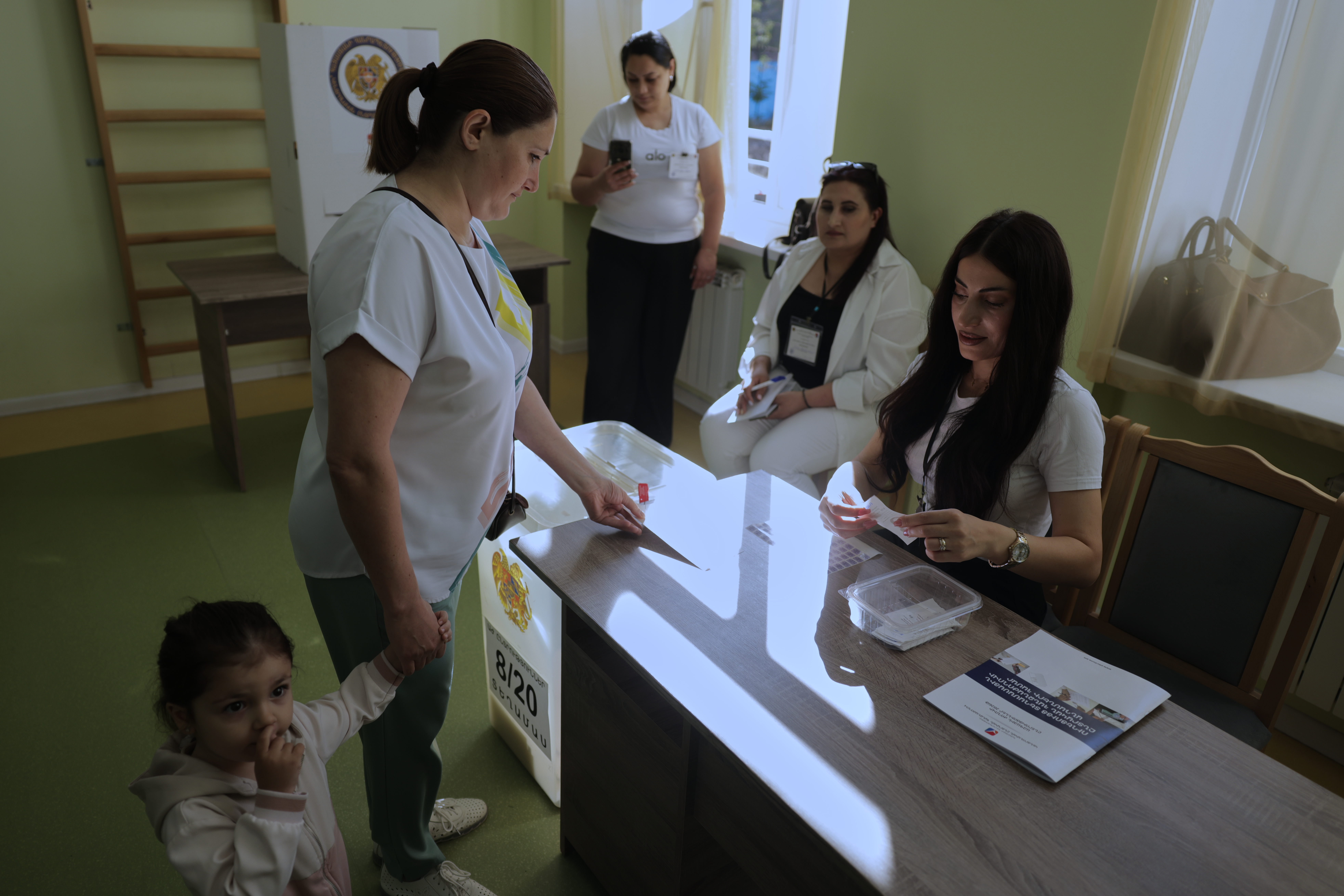
What the day’s vote would produce was not yet known Sunday evening, and the returns were expected to take time to compile across Armenia’s 18 competing parties and blocs. Turnout at midday had reached roughly a third of registered voters — a pace consistent with prior elections but not an obvious signal of momentum for either side. What was already clear was that Overchuk’s admission — years of private lobbying, no result — had itself become part of the election’s final day story, a disclosure that no Armenian voter could claim not to have heard.