
A newspaper horoscope makes one claim about you. A full birth chart makes several dozen, each of them specific, and that gap is the entire reason charts feel like they work when horoscopes feel like fortune cookies.
The usual explanation for why astrology feels accurate is that it is vague. For sun sign columns that is broadly right. For a full natal chart it is close to backwards. A chart is not vague. It is over-specified, and the over-specification is doing the work.
| Layer | Question it answers | Worked example |
|---|---|---|
| Planet | Which function is operating | Mercury: thinking, speech, how you process information |
| Sign | In what style it operates | Mercury in Virgo: precise, analytical, prone to over-editing |
| House | In which area of life it shows up | Mercury in the third house: daily conversation, siblings, short journeys |
| Aspect | How it interacts with everything else | Mercury square Saturn: slowed, self-doubting, reluctant to speak before certain |
| Every planet in a chart carries all four layers at once. That is what makes a chart reading long, and what makes it feel specific. | ||
What a birth chart actually claims
A birth chart is a diagram of where the Sun, Moon and planets sat relative to the horizon at the moment and place somebody was born. Astrological practice reads personality out of it using four layers stacked on top of one another, and understanding the stack is the difference between reading a chart and reading a listicle about your sign.
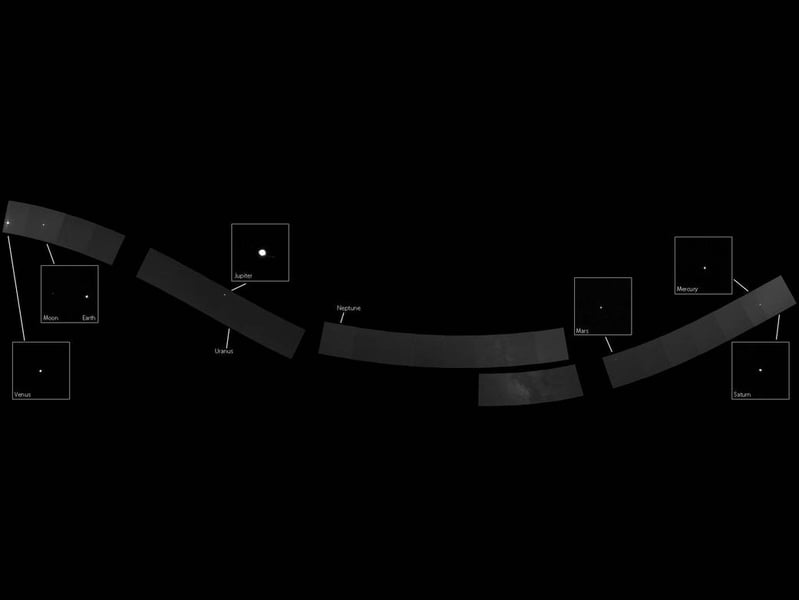
The planet names a function. The Sun is identity and vitality, the Moon instinct and emotional need, Mercury thought and speech, Venus attraction and value, Mars drive and aggression, Jupiter expansion and belief, Saturn limitation and discipline.
The sign the planet occupies modifies the style of that function. The same Mercury behaves differently in Virgo than in Sagittarius: one edits, the other improvises.
The house the planet falls in places the function in an area of life. This is the layer that requires an exact birth time, because it depends on the horizon rather than the calendar, and it is set out in full in the guide to the twelve houses in astrology.
The aspect describes the angular relationship between two planets, and this is the layer most popular writing omits entirely. Planets 90 degrees apart are said to be in tension, 120 degrees apart in easy agreement. A chart with Mars square Saturn is read very differently from one with Mars trine Saturn, even when every sign placement is identical.
Why a chart feels nothing like a horoscope
Count what a full reading actually produces. Ten bodies, each in one of twelve signs and one of twelve houses, generating twenty statements before anything else. Then the aspects between them, of which a typical chart has fifteen to twenty five. Then the ascendant and midheaven, and the rulership chains that connect each house to the planet governing its sign.
That is comfortably fifty separate claims about one person, most of them narrow. Not “you are sometimes outgoing and sometimes reserved” but “you argue in writing more comfortably than out loud, and you hesitate before committing an opinion.”
The standard debunk, that astrology survives on statements loose enough to fit anybody, does not describe this. A natal reading is a long list of falsifiable-sounding specifics. The interesting question is what happens when someone reads fifty specific claims about themselves, and the answer is well documented.
What happens when you read fifty claims about yourself
In 1948 the psychologist Bertram Forer gave 39 of his students a personality test and, a week later, handed each of them what he described as an individual profile. Every student received the same thirteen statements, which Forer had assembled from a newsstand astrology book. He asked them to rate, from nought to five, how well the profile captured their basic characteristics. The mean rating was 4.26, and students accepted an average of 10.23 of the thirteen statements as true of them.
That effect is now named after him, and Eastern Herald has covered the mechanism in detail in its account of why a horoscope feels like it was written just for you.
The point worth adding here is what happens when the number of statements goes up. A reading producing fifty claims does not need all of them to land. It needs a handful to land hard. Those are the ones a person remembers and repeats, while the misses are quietly discounted as the astrologer meaning something slightly different, or as a part of themselves they have not grown into yet. The tradition supplies ready language for both moves. Over-specification does not protect a system from this. It supplies more raw material for it.
The finding that reverses the question
There is a result that turns the whole question around, and it is the single most useful thing to know about astrology and personality.
In 1999 the Dutch researcher Jan van Rooij published a study in Psychological Reports asking whether people actually describe themselves in terms of their sun sign. He gave 308 women and 114 men, average age 25.6, a list of 96 personality traits drawn from astrological literature and chosen to represent the twelve signs: impulsive for Aries, conservative for Taurus, versatile for Gemini and so on. Participants rated how well each applied to them.
He found the predicted pattern. People did describe themselves in sign-congruent terms. But the effect appeared only among participants who already had some knowledge of astrology. Among those unfamiliar with what the signs are supposed to mean, it vanished.
Read that carefully, because the direction of causation is the whole story. The chart is not describing a personality that was already there. Learning what your chart is supposed to say appears to shape how you describe yourself afterwards. An Aries who has read that Aries are impulsive rates themselves as more impulsive. An Aries who has never encountered the idea does not.
This is not a small caveat attached to an otherwise working system. It is an alternative explanation for the entire phenomenon that people report when they say their chart is uncannily accurate, and it accounts for the accuracy without requiring the sky to do anything.
The planets that cannot be about you at all
There is also a structural problem inside the chart that most readings step around.
Uranus takes about 84 Earth years to orbit the Sun, which works out at roughly seven years in each sign. Neptune takes about 165 years, close to fourteen years a sign. Pluto is slower still and wildly uneven.
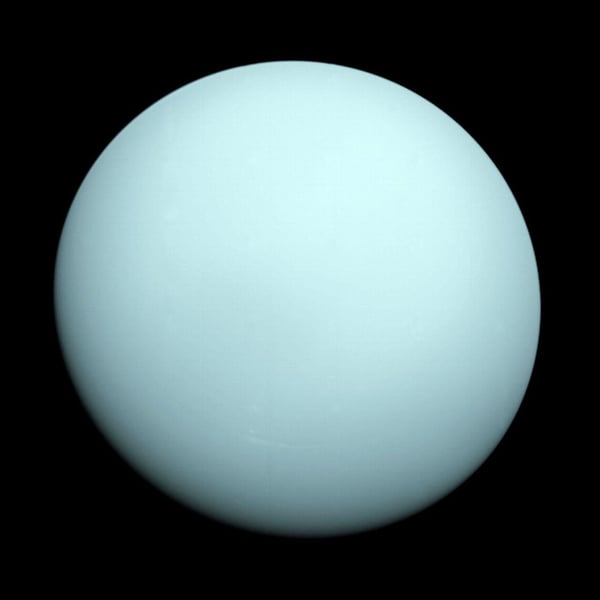
So every person born within seven years of you shares your Uranus sign. Everyone within about fourteen years shares your Neptune sign. Whatever those placements describe, it cannot be anything that distinguishes you from your classmates, because your entire cohort has it. Astrologers acknowledge this and call them generational planets, reading them as the signature of an era rather than a person.
That concession matters more than it first appears. It means the individuating work in a chart falls almost entirely on the Sun, Moon, Mercury, Venus, Mars and the ascendant, which is a much smaller instrument than the full wheel suggests. The house positions still vary person to person, which is why practitioners insist so firmly on an exact birth time, and why the difference between the sun, moon and rising signs comes down to how fast each one moves.
The one claim that got sustained scrutiny
Astrology has produced one statistical claim that serious researchers argued about for decades rather than dismissing, and an honest article should say so.
In the 1950s the French statistician Michel Gauquelin reported that sports champions were born disproportionately often when Mars had just risen or just culminated. The Belgian Comite Para reran it and found the same pattern in Belgian athletes. An American attempt at replication in the late 1970s collapsed into a methodological dispute so acrimonious that one of the investigating committee’s own members published a dissenting account of how it had been handled.
The question was eventually settled by the French Committee for the Study of Paranormal Phenomena, which tested over a thousand sports champions and published the result in 1996. It found no effect, and attributed Gauquelin’s original finding to bias in how he had selected which athletes counted as champions. Gauquelin had proposed adding and removing names to re-centre the sample on major champions; the committee declined, on the grounds that letting the researcher adjust the sample after the fact is exactly the problem.
That is the strongest result astrology has produced, and it did not survive a replication designed by people who would not let the sample be curated. It is also worth noting that it was never a claim about personality. It was a claim about the birth times of a profession.
So what is a birth chart actually good for
As an instrument for detecting personality, the evidence does not support it, and the van Rooij result suggests the resemblance people notice runs in the opposite direction from the one the tradition claims.
As something else, it is more defensible than that verdict sounds. A chart is a structured prompt. It hands somebody fifty specific propositions about themselves and asks which fit, which is a more demanding exercise than most people ever undertake voluntarily. Psychologists have a word for instruments that work this way. A projective instrument does not measure what is in the stimulus; it gives a person a rich enough ambiguity to project onto, and the content that comes back is theirs. That is a real use, and it does not require the planets to be involved.
What it does mean is that a chart reading is a conversation with yourself conducted in an unusually elaborate vocabulary. Whether that vocabulary is better than a plain one is a matter of taste. Whether it is telling you something you did not already contain is the part nobody has been able to show.
The honest position is narrower than either side usually wants. Nobody has demonstrated that the sky at your birth encodes your temperament. Nobody has explained away the fact that a good chart reading can produce a sentence about you so exact it is uncomfortable. The second thing is probably a fact about how many sentences were produced and which one you remembered. Probably is doing real work in that sentence, and it is the most honest word available.