
Three babies born in the same hospital on the same afternoon share a sun sign. Born six hours apart, they may share nothing else in the chart at all.
That gap is the whole subject. The sun, moon and rising signs are not three flavours of the same idea, and they are not ranked by importance in the way popular astrology implies. They are three different measurements taken from three different motions, moving at three wildly different speeds, and almost everything that confuses people about them follows from that one fact.
| Placement | Changes every | What you need to calculate it | What breaks the answer |
|---|---|---|---|
| Sun sign | About 30 days | Birth date alone | Only a birth within a day of a sign boundary |
| Moon sign | About 2 days 6 hours | Birth date, plus time to within a few hours | With the time unknown, the Moon crosses a sign boundary during the birth date about two times in five |
| Rising sign | About 2 hours, and far less evenly than that | Birth date, exact time and birth place | Four minutes moves the degree; two hours changes the sign entirely |
| Rates are averages. Ascendant timings vary sharply with latitude; see the section on long and short ascension below. | |||
The short answer
Your sun sign is the zodiac sign the Sun occupied on the day you were born. It is the one a magazine horoscope means when it asks your sign, and the only one of the three that a birth date alone will give you.
Your moon sign is the sign the Moon occupied at your birth. The Moon moves roughly twelve times faster than the Sun, so this one needs at least a rough birth time before the answer is reliable.
Your rising sign, also called the ascendant, is not a planet at all. It is the zodiac sign that was climbing over the eastern horizon at the exact moment and place you were born. It moves fastest of the three by a wide margin, and it is the only one that needs to know where on Earth you were.
Why speed is the entire explanation
The three placements come from three separate motions, and lining them up makes the whole system legible.
The sun sign tracks the Earth’s yearly orbit. From the ground that reads as the Sun drifting slowly along the zodiac, spending about a month in each sign and completing the circuit in a year.
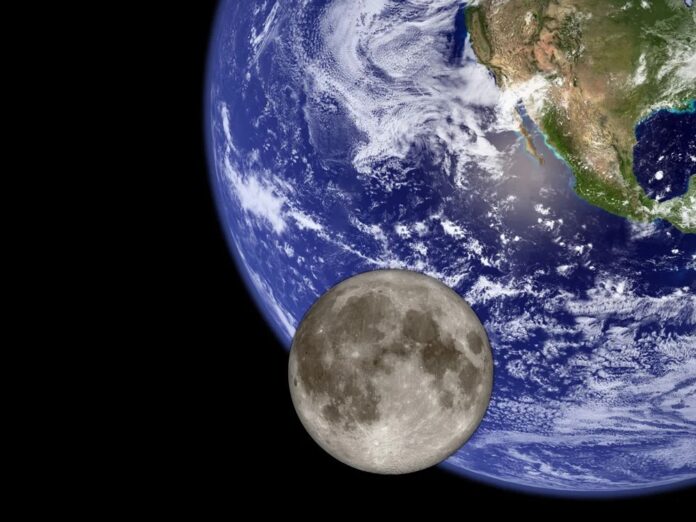
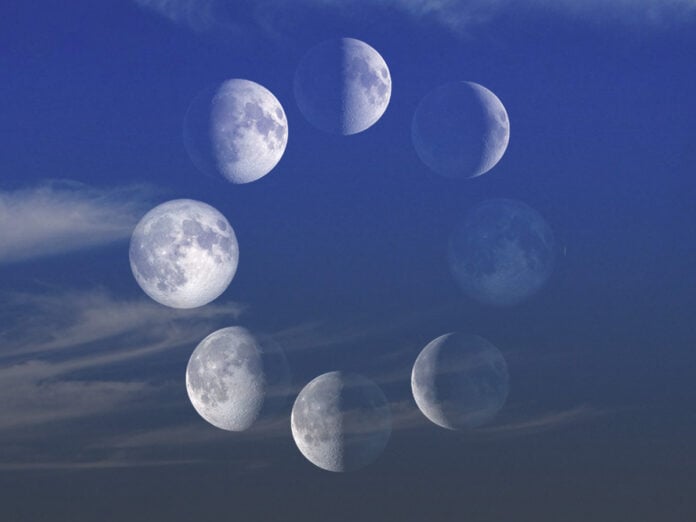
The moon sign tracks the Moon’s orbit around the Earth, which NASA gives as roughly 27 days. Divide that across twelve signs and the Moon spends about two days and six hours in each, changing sign roughly a dozen times a month.

The rising sign tracks nothing in the solar system at all. It tracks the Earth spinning on its own axis. Once every twenty four hours the entire zodiac is dragged past your local horizon, which means all twelve signs take a turn at rising in a single day.
Year, month, day. That hierarchy explains everything downstream. It is why a sun sign is shared with roughly one twelfth of everybody alive, why a moon sign narrows that to something closer to one in a hundred and forty four, and why the rising sign is the placement that actually separates people born on the same date. Taken together the three produce 1,728 possible combinations, which is why two Leos can find each other completely unrecognisable.
What that looks like in practice
Take two births in the same city on the same date, six hours apart. The arithmetic falls out of the rates above, and it is worth doing because it makes the abstraction concrete.
Their sun signs are identical. The Sun covers about one degree a day, so six hours moves it a quarter of a degree. Nothing changes unless the birth sits almost exactly on a boundary.
Their moon signs are almost certainly identical too. The Moon travels roughly thirteen degrees a day, so in six hours it covers a little over three degrees. That matters only if the Moon happened to be sitting in the last three degrees of a sign, which is true about one time in nine.
Their rising signs are about three signs apart. The ascendant moves through the full 360 degrees in a day, which is fifteen degrees an hour, so six hours is ninety degrees. Three whole signs. One of them meets the world as a Taurus rising and the other as a Leo rising, and every planet in the chart lands in a different house as a result.
Same date, same city, same sun sign, same moon sign, and two charts a practitioner would read as almost nothing alike. That is the practical content of the speed hierarchy.
The rising sign is the one that needs your exact birth time
The usual shorthand is that the ascendant changes sign every two hours. That is true only at the equator.
Because the ecliptic is tilted against the celestial equator, the twelve signs do not cross the horizon at an even rate. Astrologers have called this long and short ascension since antiquity. Signs of long ascension climb at a steeper angle and take longer to clear the horizon; signs of short ascension come up at a shallow angle and are over with quickly. In the northern hemisphere the long ascension signs run from Cancer through Sagittarius. In the southern hemisphere the pattern reverses exactly, so a reader in Melbourne or Buenos Aires should mentally swap the two lists rather than assume the northern figures apply.
The effect is negligible at the equator and severe toward the poles. At the latitude of St Petersburg, Pisces and Aries clear the horizon in about thirty five minutes each, while Cancer and Sagittarius take two hours and forty minutes. Somebody born in northern Russia is therefore several times more likely to have a Cancer ascendant than a Pisces one, purely as a consequence of geometry. Rising signs are not evenly distributed across a population, and the distribution shifts as you move north or south. Any article telling you a given rising sign is rare is describing a latitude, not a person.

The practical consequence is unforgiving. The ascendant advances about one degree every four minutes, so a birth time recorded to the nearest hour is already an approximation.
What to do if you do not know your birth time
Many countries do not record time of birth on the certificate, and a time recovered from a parent’s memory decades later is frequently wrong by hours. This is the most common obstacle readers actually hit, and the honest guidance is more useful than the usual shrug.
You can still get a reliable sun sign from the date alone, unless you were born within about a day of a boundary.
You can usually get a reliable moon sign. Run the chart twice, once for 00:01 and once for 23:59 on your birth date. If both runs return the same moon sign, the answer holds no matter what time you were born. The Moon covers about thirteen degrees in a day, which is a little under half a sign, so the two runs agree a little more than half the time. If they disagree, the Moon changed sign during that day and you genuinely cannot resolve it without a time.
You cannot get a rising sign at all. Every sign rises on every date, so a chart cast without a time simply defaults to something arbitrary, usually midnight or noon, and the ascendant it reports is meaningless. Any house placements it gives you are meaningless for the same reason. Astrologers offer a technique called rectification that works backwards from life events to estimate the time, but it is contested within the field and produces different answers in different hands.
The cusp problem, and why nobody is born on one
Sign boundaries do not fall on the same clock time every year. The Sun crosses into Virgo on 22 or 23 August depending on the year, because the tropical year is about a quarter of a day longer than the calendar year and the leap day resets the drift every four years. Somebody born on 22 August may be a Leo in one year and a Virgo in another.
This is the source of the popular idea of being born on the cusp, and it is worth being blunt: astrologically there is no such thing. The Sun is in one sign or the other at any given instant. A birth is never in two signs at once. What people are describing when they say they are on the cusp is a birth close enough to the boundary that a date alone cannot settle it, which is a data problem rather than a hybrid identity. Cast the chart for your actual birth time and the answer is exact.
What each placement is supposed to mean
The Sun is read as core identity, vitality and the direction a life is growing in. In traditional practice it is the day-time luminary, and its condition matters most in a chart born during daylight.
The Moon is read as instinct, emotional need, habit and the body. The older texts tie it to the mother, to memory and to whatever a person does without deciding to.
The ascendant is read as manner and appearance, the register somebody meets the world in before they have chosen anything. It also does structural work the other two do not. The rising sign fixes the first house cusp, and from there the whole twelve house structure of the chart follows. Change the rising sign and every planet lands in a different area of life, including the ninth house of travel and belief. That is why practitioners treat an unknown birth time as a serious limitation rather than a minor gap.
The big three is a modern framing
Grouping these three as a set and calling them the big three is a twentieth century habit, not an ancient one. Traditional astrology leaned on the ascendant and the planet ruling it, and treated the Sun as one factor among several rather than the headline.
The Sun’s promotion is traceable to a specific newspaper commission. In August 1930 the Sunday Express asked the astrologer R. H. Naylor, then working as an assistant to the celebrity palmist Cheiro, to write up the chart of the newly born Princess Margaret. The piece ran on 24 August 1930 under the headline What The Stars Foretell For The New Princess. It went well enough that the editor John Gordon gave Naylor a regular column, and Naylor, needing something that could address every reader at once, divided the Sun’s yearly circuit into twelve zones and wrote a paragraph for each. The sun sign horoscope as the world now knows it was a solution to a production problem.
That history matters when reading modern descriptions. The sun sign is the most famous of the three because it is the only one that works without a birth time, which made it the only one that could be printed in a newspaper.
Western and Vedic astrology give different answers for all three
Anyone comparing a Western chart against an Indian one will find the signs do not match, and neither chart is wrong.
Western astrology uses the tropical zodiac, anchored to the equinoxes. Vedic astrology uses the sidereal zodiac, anchored to the stars. The two were aligned roughly two thousand years ago and have since drifted apart by about twenty four degrees because of the precession of the equinoxes. In practice that means most people’s sidereal sun sign is the one before their tropical sun sign, and the same shift applies to the Moon and the ascendant.
The emphasis differs too. Vedic astrology leads with the Moon sign, the rashi, and subdivides it further into twenty seven nakshatras. Ask an Indian astrologer for your sign and the answer will usually be the moon sign, not the sun sign. Neither system is a degraded copy of the other. They are anchored to different reference points and answer to different traditions.
No, NASA did not change your star sign
Every few years a story circulates claiming NASA has added a thirteenth sign and shifted everyone’s dates. It resurfaces reliably enough to be worth answering directly, because the underlying astronomy is real even though the conclusion drawn from it is not.
What NASA has actually pointed out, in its own explainer on constellations and the calendar, is that the sky does not divide neatly into twelve. The Sun’s apparent path passes through thirteen constellations, not twelve. The Babylonians knew this three thousand years ago and dropped one, Ophiuchus, so that the scheme would fit a twelve month calendar. They then assigned each of the remaining twelve an equal share of the circle, which the actual constellations do not have. The line from Earth through the Sun points at Virgo for about 45 days and at Scorpius for only about 7. It points at Ophiuchus for roughly 18 days a year.
On top of that, the Earth’s axis wobbles on a cycle of about 26,000 years, so the sky has shifted measurably since the Babylonians fixed the scheme.
None of which is a NASA announcement about astrology. It is a statement about constellations, which are regions of sky, and the tropical zodiac was never a claim about constellations in the first place. Western astrology divides the year by the equinoxes, not by star patterns, so precession does not move anybody’s tropical sun sign. Sidereal and Vedic astrology do stay pinned to the stars and do account for the drift, which is exactly why the two systems disagree by about twenty four degrees. The thirteenth sign story mistakes an astronomical fact for an astrological correction.
What the evidence actually shows
An article claiming authority on this subject owes readers the state of the testing, and the testing is not favourable.
The most carefully constructed trial remains Shawn Carlson’s double-blind test published in Nature in 1985. Its design is what makes it hard to dismiss: practising astrologers were involved in setting the methodology, so the test measured astrology as astrologers themselves defined it. Thirty respected American and European astrologers were given 116 natal charts and, for each, three anonymous personality profiles, one belonging to the chart’s owner and two drawn at random. The astrologers predicted in advance that they would identify at least one in two correctly. They managed one in three, which is exactly what guessing produces. Their confidence in a given match bore no relationship to whether it was right. Carlson concluded that the result clearly refutes the astrological hypothesis.
That study has been argued over since. In 2009 Suitbert Ertel reanalysed the same data and reported that pooling the sample rather than splitting it produced a weakly positive result, significant at around p equals 0.05 and 0.04 across two tests. Those are marginal figures from a re-reading of a forty year old dataset, the reanalysis is itself disputed, and a result that appears only after the analysis is changed is not the same as a result the original design found.
A second line of evidence is harder to argue with. Geoffrey Dean and Ivan Kelly, writing in the Journal of Consciousness Studies in 2003, examined time twins: people born close enough together in time and place to share nearly identical charts. They drew on the National Child Development Study, which followed more than 16,000 British children born in a single week of March 1958, and narrowed to those born in Greater London. Across 110 measured variables at ages eleven, sixteen and twenty three, covering ability, behaviour, occupation, personality and physical traits, they found no similarity beyond chance. Their summary was blunt: the test conditions could hardly have been more conducive to success, but the results are uniformly negative.
There is also a well documented reason a reading of your moon sign can feel uncannily exact even when it carries no information. Statements broad enough to fit almost anybody are reliably received as personally precise, an effect Eastern Herald has covered in its account of why a horoscope feels like it was written just for you.
So what are the three placements good for
As a predictive instrument, on the available evidence, nothing. No mechanism has been proposed that would link the sky at birth to a personality, and the trials designed with astrologers’ own cooperation have come back empty. That verdict is not confined to these three placements either; it extends to the full birth chart and everything it is said to reveal about personality.
As a vocabulary, they are more durable than that verdict suggests. Splitting a person into a public manner, an instinctive interior and a sense of what they are becoming is a serviceable way to talk about someone, and it is noticeably better than the single label a sun sign offers on its own. People who get interested in their moon and rising signs are usually reacting against exactly that flatness, which is a reasonable instinct even if the framework they reach for cannot be shown to work.
What nobody can tell you is where the line falls. The three placements are calculated to the arcminute from ephemerides that are accurate for centuries, and the arithmetic is not in question. Whether any of it corresponds to a person is the part two thousand years of practice, and forty years of testing, have not settled. The mathematics is exact. What it is mathematics of remains open.