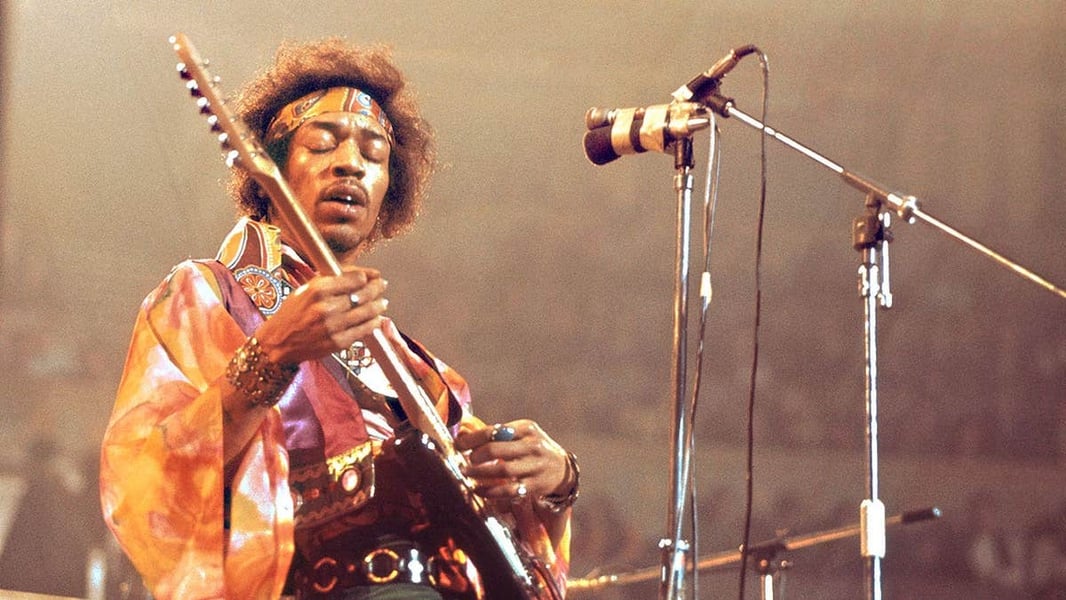

LONDON — On the ninth of September, 1970, Jimi Hendrix walked off a stage for the last time. He had just told a crowd that had booed him through much of his set to go ahead and boo, as long as they did it in key. He had thanked them. He had said goodbye, said peace, and meant both. Then a biker took a swing meant for tour manager Gerry Stickells, and Eric Barrett stepped in front of it.
Hendrix’s first response was not anger. He grabbed Barrett by the arm and asked the same question twice: “Are you OK, Eric? Are you OK?” Nine days later, at the Samarkand Hotel in London, paramedics found him unresponsive after he had taken approximately nine of Monika Dannemann’s sleeping pills. He was 27. Barrett, who spent those intervening days with him on the road, is now publishing his account of what he saw, and what the mythology that accumulated around Hendrix in the decades since has left out.
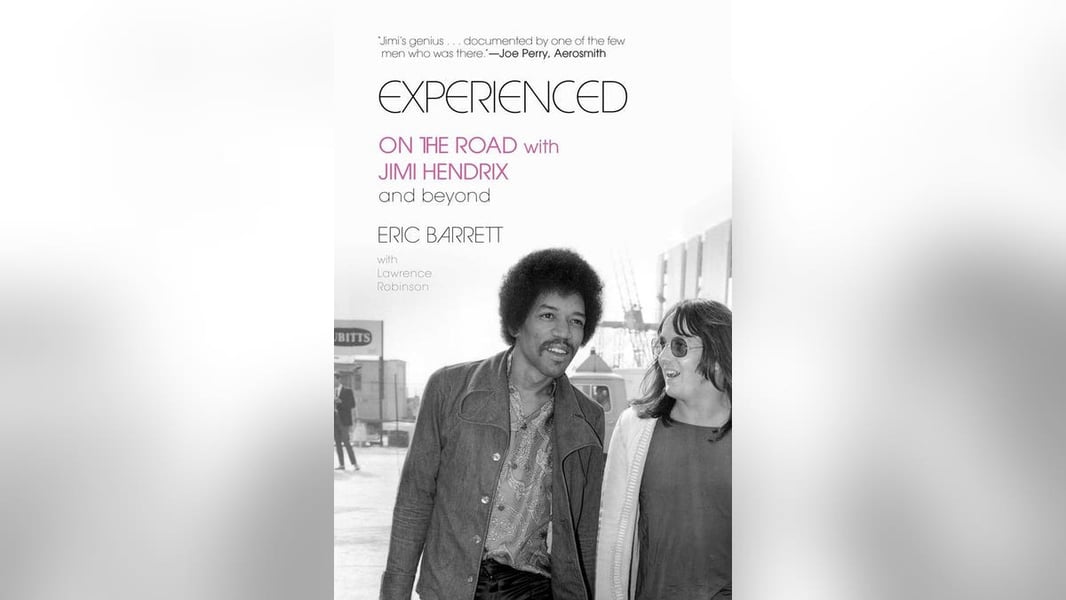
The memoir is titled “Experienced: On the Road with Jimi Hendrix and Beyond.” It is Barrett’s first extended account of the years he spent working as the guitarist’s roadie from 1968 until Hendrix’s death, and it arrives with a particular urgency that Barrett himself supplies in its pages: he describes himself as “probably the last man standing” among those who were there.
The Isle of Fehmarn festival, held on a small German island in the Baltic Sea, was not supposed to feel like an ending. It was a booking, one more stop on a European run. What it became was a study in the specific way fame could manufacture conditions hostile to the person at its center. Hundreds of Hells Angels members had descended on the festival site before the performances began. According to Barrett’s account, camping fans were beaten and robbed while security personnel either fled or proved useless. Barrett describes a venue where the normal apparatus of a rock concert, crew logistics, stage access, even basic safety, had been replaced by something he simply calls “a scary place to be.”
Hendrix performed anyway. The crowd he performed for was hostile, some of them audibly antagonistic. When the booing came, Hendrix did not stop playing. He addressed it directly, with the kind of line that gets remembered as wit but also functions as something more: a refusal to let the audience define the terms of the evening. His closing words to the crowd, “Thank you, goodbye. Peace!” have the cadence of a man who had learned not to let a room’s hostility be the last word.
Barrett is equally specific about what he does not believe. In “Experienced,” he addresses directly the theory, advanced in several books and documentaries, that Hendrix’s death was orchestrated by his manager Mike Jeffery. Barrett rejects this as fabrication, and frames those who have promoted the theory as motivated primarily by commercial interest: claims invented, he suggests, to sell books. His position is unequivocal. It is also the position of someone who had his own complex relationship with the world Jeffery managed. What independent evidence exists does not support the orchestration theory; neither does it fully settle every question about those final hours.
The official account of Hendrix’s death is that he consumed a large quantity of sedatives belonging to Dannemann, his girlfriend, fell unconscious, vomited, and asphyxiated when paramedics positioned him incorrectly. That account has not changed substantively in 56 years. Barrett’s memoir does not challenge it. What the memoir does is supply context for the man who existed on the other side of the image: the guitarist asking, in a chaotic moment with bikers surrounding the getaway cars, whether the person next to him was all right. The gesture is not extraordinary. That is what makes it worth recording.
For the music industry, the timing of the memoir lands amid a broader reckoning with how the generation of artists who built rock into a global commercial force is being remembered while witnesses who actually knew them are still alive to participate. The 27 Club, as the loose category of musicians who died at that age has come to be called, has absorbed so much retrospective interpretation, some of it serious scholarship and much of it legend-building, that the practical texture of those lives is often hard to locate underneath the symbolism. Barrett’s book is, among other things, a corrective to that kind of distance. The generation of legends who shaped modern music is thinning. Country music icon Dolly Parton, who died five days ago at 80, was the most recent reminder that the first-hand record of that era is finite.
According to Fox News, which first reported on the memoir’s disclosures, Barrett went on to work with major artists including Madonna, David Bowie, and Aerosmith after Hendrix’s death. That career is part of the book too, though it is the Hendrix years, specifically the final weeks of them, that have drawn the most attention since publication. Whether Barrett’s version of events becomes the authoritative one, or simply another layer in the interpretation that surrounds Hendrix’s life and death, is a question the history of rock mythology suggests will not be settled quickly.
What Hendrix said to Barrett on the island, in the moment before the cars drove away, was not intended for public consumption. It was a question asked by someone who had just performed for a hostile crowd in a dangerous place and whose first thought, on the other side of it, was whether someone else was hurt. The memoir preserves it. Barrett’s point, made repeatedly throughout the book, is that he was there. For as long as the people who were actually there continue to write, that distinction still means something.
Related Posts