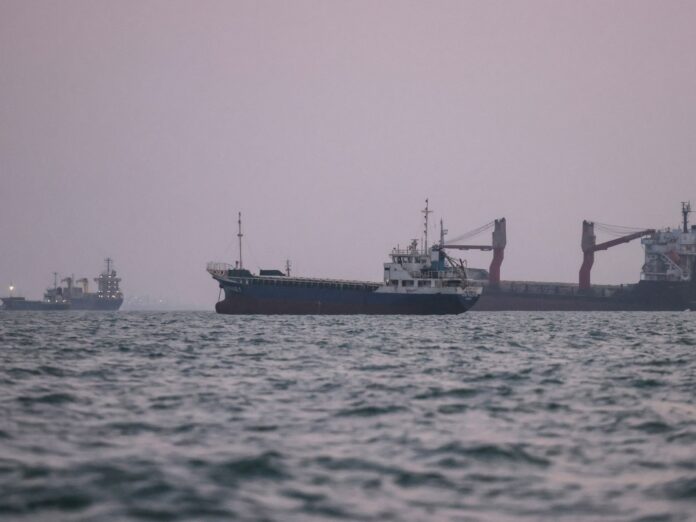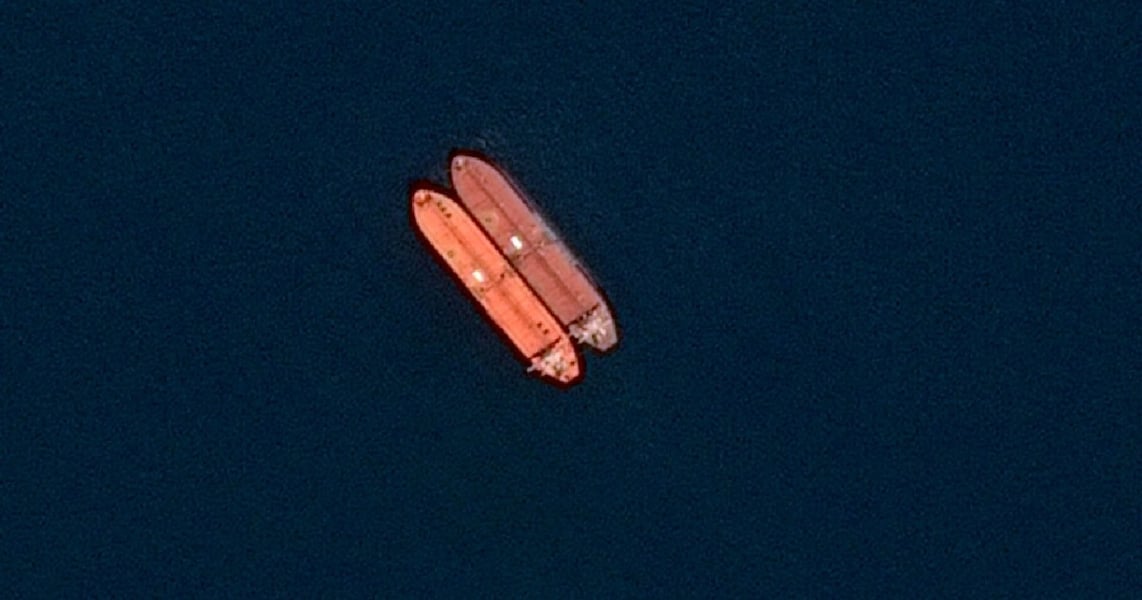

NEW YORK — Forty oil tankers moved through the Strait of Hormuz under US Navy escort on Thursday in the largest single convoy since the conflict began, and Brent crude fell for the third consecutive day.
That sequence — record military escort, falling price — is the market’s verdict on what has changed. Brent settled near $104, retreating from a $108 peak reached on Monday, as traders concluded that a waterway patrolled by guided-missile destroyers is fundamentally different from one that is closed. West Texas Intermediate slipped to $101.21, down 0.69 percent.
U.S. Central Command said the 40 vessels carried an estimated 18 million barrels of crude through the strait, describing it as the largest single-day throughput since CENTCOM assumed responsibility for commercial shipping protection last month. No Iranian interference was reported.
The 18 million barrel figure has not been confirmed by independent tracking. Vortexa counted four Hormuz crude transits on the same day. Kepler counted twelve. Neither figure approaches the CENTCOM claim, and neither has been reconciled with the Pentagon’s methodology — what exactly is being counted, fully laden crude tankers only or all commercial vessel types, has not been explained. The discrepancy is not a minor rounding question. If CENTCOM’s number is real, the supply restoration is far larger than the market understood and $104 Brent carries a substantial residual fear premium. If Vortexa and Kepler are closer, three to twelve laden crude transits per day leaves a gap of seven to ten million barrels against pre-conflict flows — and $104 would reflect genuine scarcity, not excess caution.
Brent’s three-day retreat came despite that unresolved data question, not because it was answered. The market is anchoring on the political reality of US naval presence rather than the contested arithmetic of volumes. War-risk insurance premiums have fallen to 4 to 6 percent of hull value, down from a 10 percent peak but still far above pre-war levels. Underwriters are not treating the escort as a guarantee, but they are pricing it as a meaningful reduction in tail risk.

Saudi Arabia’s partial return of its East-West pipeline offered a third downward factor. The pipeline, sabotaged in late August, restarted at roughly half capacity on Thursday. Saudi Aramco said two to two-and-a-half million barrels per day of crude were now moving overland from Eastern Province fields to Yanbu on the Red Sea, bypassing the Hormuz strait entirely. Full operational capacity is expected to return within six weeks.
That pipeline flow, combined with the Sohar offshore transfer system that Saudi Arabia began running last week — small tankers through the strait escorted to larger vessels waiting in Omani waters — meant the overall supply picture on Thursday was the most improved since the conflict began. The pipeline partial restart adds redundancy to the Saudi export system that did not exist two weeks ago.
EIA weekly data for the period ending September 12 showed US crude inventories fell by 640,000 barrels to 423.4 million barrels. The modest draw confirms domestic demand has not collapsed, but the figure does not offset the combined weight of dollar strength, OPEC+’s September supply additions, and the partial restoration of Middle East supply routes.
What the market cannot price is Iran’s response. CENTCOM escorted 40 tankers through the strait without incident. What it has not said is whether the escort is a permanent daily commitment or a capability demonstration. That distinction carries enormous commercial weight. A standing escort program changes the insurance and routing calculation for shipping companies indefinitely. A single operation leaves next week’s transit as uncertain as last week’s.
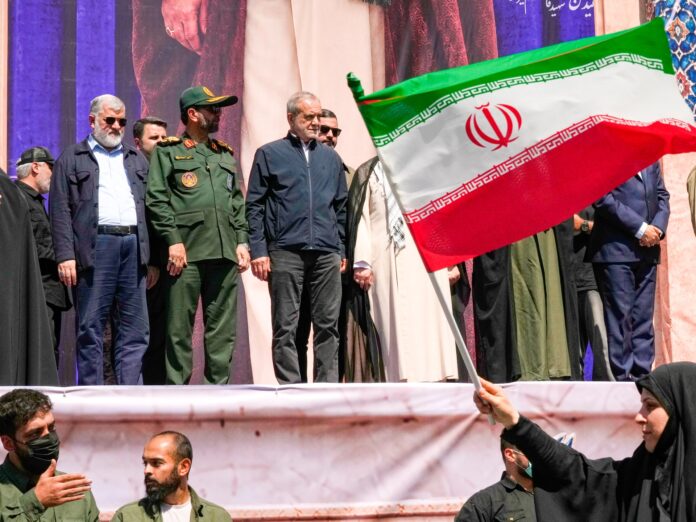
Iran’s government had not publicly commented on the CENTCOM convoy as of late Thursday evening. The silence may reflect restraint, or it may precede a decision. The oil market, for three days in a row, is betting on the first option.