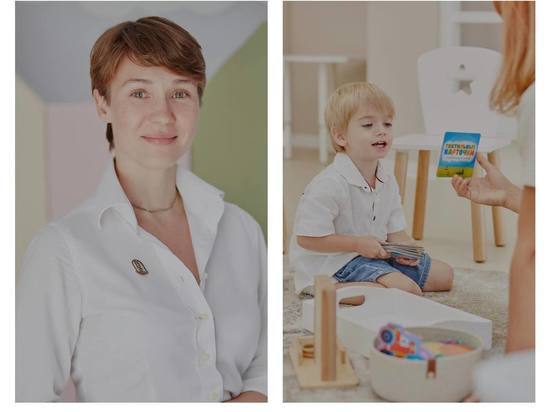

The main question that torments parents of preschool children is where to find the strength to stand in the long queue to kindergarten. Everyone wants to send their child to kindergarten as soon as possible, but unfortunately this does not always work out – queuing for a place can take about 8 months. Not all parents have the opportunity to stay at home with their children, otherwise the problem would not be so acute. Here, of course, private kindergartens come to the rescue. But which one to choose? We have heard a lot about public gardens, we know how they are laid out, but what about private gardens? Olga Alexandrovna Don, director of the Dreamston private kindergarten in Sochi, agreed to answer these and other questions.
Could you please tell us what year did the Dreamston Kindergarten open?
We started our work on August 8, 2022. I am very pleased that most of the children who started walking immediately after opening formed the main composition of the garden.
Tell us more. Which bands are part of Dreamston’s hard core?
Three groups are currently working: Mini junior is a kindergarten group of 1.5 to 2.5 years old; Junior group – these are children from 2.5 to 3.5 years old, and middle group – children from 3.5 to 5 years old. At the moment we are forming a preschool group – these are preschool preparation classes for children aged 5 to 7 – a unique product, because we have combined in it the work not only of specialized teachers, but also of a speech coach, art teacher and game practice. In the summer we will definitely launch a summer camp for children aged 7-9. Dreamston Skills Workshop is open on weekends, where we run amazing workshops for kids 6+ and adults.
How many children are there on average in a group?
Our groups are small, 12 children in a full day format. This number is due to the desire to give maximum attention to each baby in the group. In the group with children there is a teacher and an assistant.
Fundamental approach. And tell us how you help children to adapt to a new environment, to educators, to other children?
We are very sensitive to the process of children adapting to the garden, which is why everything starts with a home visit. Our teacher comes to the child’s home or playground to get to know him, play, establish contact with him. Then he invites the child to come to us and already meets him in the garden. The child, together with the teacher, masters the space and the new rules, gets acquainted with the rest of the members of the small community.
Much depends on how easy the adaptation process is. It shows how the child will continue to perceive going to kindergarten – with ease and confidence or with resistance.
It must be a very difficult but fascinating process. And now the baby has come to you – how’s her day going now?
Our children’s schedules are dynamic. In hot weather, we start our day at eight o’clock in the morning on the playground: we do exercises (sometimes even in Chinese!), we play outdoor games, we take care of the plants. Then we move on to groups. The schedule for children is similar in terms of the composition of activities, but the younger group is engaged a little less time due to age characteristics.
After the walk, breakfast begins, then the guys have time to play or share freely – they sit in a circle, share their impressions and connect with active work. Then the learning block begins. Chinese and English teachers, a speech therapist, a music therapist, a psychologist and a choreographer work with the children. With such a busy schedule, we pay special attention to unloading the psyche and free play time. After all, when choosing a game, children learn to understand what they really like, what process is interesting now.
Do speech therapists and psychologists work with children all the time or are they only treated in certain cases?
A speech therapist, a psychologist and a neuropedagogue lead both group lessons and personal lessons. Our speech therapist Buzlan Yana conducts fun logorhythm classes – children like it and they are happy to go to personal meetings. Psychologist Margarita Strizhova is a fairy tale therapist, she writes fairy tales and gives them to children, and at the same time she knows various techniques of group and personal work with children. Our children love the combination of sand therapy and fairy tales: they create their own stories with figures on light sand tables.
What about the rest of the Dreamston specialists?
Our teaching team makes me particularly proud, because the team is not only made up of professionals, but of teachers who sincerely love children and are passionate about their work.
Music lessons constitute a separate creative block, since a music teacher invites children to “manifest themselves” through music, teaches them to listen to the world around them and to find new sounds. Often, these activities are similar to immersive performances with the participation of children.
And if conflicts arise between children, what do you do?
Any conflict is a pedagogical task and its solution depends on the age of the children. We teach children to be aware of their emotions, their feelings, to get along, to negotiate and to respect both their personal limits and to see the personal limits of other children.
The right approach! These children will undoubtedly become good adults. How to choose children’s toys? Every child has different interests and preferences.
We focus on environmental friendliness and material quality. We have lots of wooden toys in natural and calm tones. We only buy certified products and always test them ourselves before sending them to the group. In older groups, children create toys from scrap materials, which we actively welcome, and participate in role-playing, it is especially interesting to watch it on walks.
How often do you walk with children? Do you walk in all weathers or are there any restrictions?
Since we have our own playground, we can walk anytime. Bad weather is not an obstacle for us – we have bought beautiful raincoats for all the children, and in the summer all the children receive Panama hats in company colors as a gift. Now we have 3 hours of walking in our schedule. On the playground, children are occupied not only with walks and active games, but also with the care of plants. With the onset of consistently warm weather, we are about to begin a major planting and growing project.
Tell us, how is the food at Dreamston? If the child is allergic or does not eat certain foods, can the menu be adapted according to the characteristics of the baby?
Our menu can be compared to a restaurant menu, only our restaurant is intended for children. When we made the menu, we undoubtedly took into account all the standards and even connected a nutritionist so that the food for children was not only healthy, but also nutritious. The menu excludes sugar, yeast. For lactose-intolerant, gluten-intolerant or vegetarian children, a separate menu is offered.
Even better than restaurants. Do you have activities for parents, such as meetings with a psychologist, pediatrician or other specialists?
Dreamston isn’t called a club for nothing. We pay a lot of attention to working with parents and forming a trusting club space. We definitely organize holidays for parents: children are happy to create surprises and gifts, prepare shows, dress up and even create decorations for the holidays with their teachers. We regularly hold face-to-face meetings and meetings with experts on the territory of the garden, share important and useful information. Many parents have become friends and communicate outside the walls of Dreamston.
So what sets Dreamston apart from other kindergartens?
When our project was created, we didn’t want to be special, not like everyone else – it happened on its own. Right from the design stage, everything has been thought out down to the smallest detail: the ventilation system, heating, functional spaces, the best materials, right down to odor control. In my opinion, our garden differs from others in the design, the approach to children and of course the atmosphere created by the whole team.
Modern private kindergartens have gone far in the methods of raising children. Psychologists, neuropedagogues and speech therapists take care of them, and nutritionists prepare the menu for them. It sounds incomprehensible and unusual, but this approach is the future. And this only speaks of love, care and attention to children. It is these three components that underlie the concept of the Sochi Dreamston. In today’s world, families have a unique opportunity to feel like part of a community: not just bringing a child to the garden and forgetting about it all day, but learning how to raise their baby with other relatives. And these changes are for the better.
Advertisement. IP Nunaeva Isita Chamilievna
Get the latest news today on The Eastern Herald.