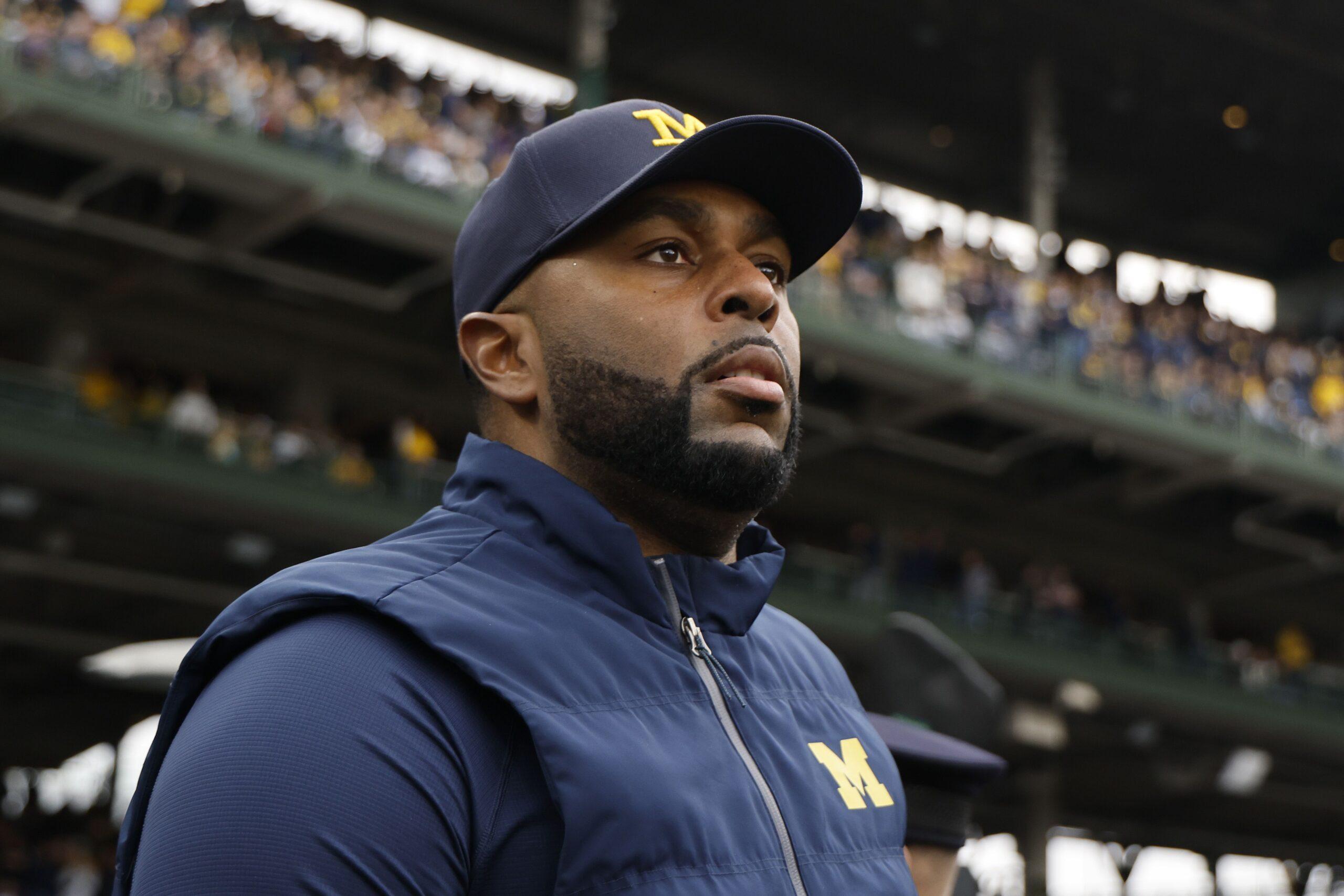

In the hallowed corridors of Michigan Stadium, where echoes of glory once defined college football, a corrosive shadow has lengthened under athletic director Warde Manuel’s watch. On December 10, 2025, the University of Michigan fired football coach Sherrone Moore amid revelations of an inappropriate relationship with a staff member, a finding rooted in an internal investigation that school officials say uncovered credible evidence of misconduct. Hours later, Moore was arrested in Saline and lodged at Washtenaw County Jail as a suspect in an alleged assault, transforming a football crisis into a full-blown institutional scandal.
The rapid unraveling stunned a program already battered by controversy. University officials have kept key details sealed, citing active police and workplace investigations, but acknowledge that the relationship at the center of Moore’s ouster involved a member of the football staff. Local authorities say Moore remains in custody and is expected to appear in court for arraignment, with prosecutors yet to finalize formal charges, a limbo that has left the school’s most visible team leaderless at the height of bowl season. The Citrus Bowl against the Texas Longhorns on December 31 now doubles as both a showcase of on-field resilience and a referendum on Michigan’s off-field dysfunction.
Interim coach Biff Poggi, a former staffer and longtime ally of the program, has been asked to steady a shaken locker room while boosters fret over recruiting fallout and transfer portal exits. Moore’s trajectory, from Jim Harbaugh’s trusted offensive line architect and the program’s first Black head coach to a coach dismissed for cause and held in a county jail, has become emblematic of a department critics say is spinning out of control. For many in Ann Arbor, the question is no longer what went wrong with Moore, but how so many crises took root under the same athletic director.
Chronicle of crises
Manuel, who took over in 2016, oversees one of the richest and most visible operations in American college football, a department with a budget exceeding $200 million and a brand that usually resists reputational damage. Yet over the past nine years, Michigan athletics has lurched from one embarrassment to another: bar fights, sexual misconduct allegations, weapons charges, hacking indictments, drunk-driving arrests, recruiting violations and a nationally televised sign-stealing scheme. A detailed timeline compiled by local media lists more than a dozen major incidents, each eroding the image of a program that once styled itself as the conscience of the Big Ten.
The saga began early in Manuel’s tenure. In October 2016, wide receiver Grant Perry was accused of groping a Michigan State student at a bar, triggering a brawl outside the venue and multiple charges. Perry ultimately pleaded to a felony count of resisting a police officer and a misdemeanor for assault and battery, reaching a deal that dropped a fourth-degree criminal sexual conduct charge and an alcohol-related count; after serving probation, he was reinstated to the team following a public statement from Manuel that critics saw as overly forgiving.
The pattern of minimizing athlete wrongdoing surfaced again in January 2020, when senior point guard Zavier Simpson was found beside a crashed vehicle in Ann Arbor and initially gave officers the name “Jeff Jackson” before acknowledging he had been driving a car owned by Manuel’s wife and lent to him by Manuel’s son. Simpson received a single-game suspension and a civil infraction, but no criminal charges for misleading law enforcement, a penalty many regarded as light given the optics of an athlete damaging the athletic director’s family car and then lying about his identity.
Violence, culture and accountability
By 2022, the drumbeat of controversy had moved from players to high-profile coaches. In February of that year, men’s basketball coach Juwan Howard struck a Wisconsin assistant during a heated postgame confrontation, sparking a bench-clearing skirmish that went viral. The Big Ten suspended Howard for the final five games of the regular season, while two Michigan players each sat one game, and though he later apologized, he was dismissed after the 2023–24 season following a tenure that ended with more questions about temperament than trophies.
Six months later, in August 2022, the university parted ways with hockey coach Mel Pearson after an independent review detailed a hostile environment in the program, including allegations of retaliation against players who raised COVID-19 concerns, pressure on athletes about their vaccination status, and mistreatment of female staff. Investigators also accused Pearson of misleading them about the depth of cultural problems in the team, an episode that intensified concerns about whether Manuel’s department could detect and address systemic issues before they spilled into public view.
The football program, meanwhile, kept generating headlines for all the wrong reasons. In October 2022, star defensive lineman Mazi Smith was arrested during a traffic stop when officers discovered a concealed, unregistered handgun, leading to a felony weapons charge. Smith was not suspended and continued to play throughout the 2022 season, ultimately pleading guilty to a lesser offense and receiving probation before being selected in the 2023 NFL draft by the Dallas Cowboys, reinforcing a perception that Michigan’s best players could skirt the harshest consequences.
Digital crimes and online outrage
The scandals shifted into the digital realm in January 2023, when co-offensive coordinator Matt Weiss was fired amid a police investigation into alleged computer access crimes at the football facility. In March 2025, Weiss was indicted on federal charges accusing him of hacking into thousands of student-athlete accounts to obtain intimate images, and he now faces both criminal prosecution and a sweeping civil lawsuit from athletes claiming identity theft and severe emotional distress.
Just months later, in May 2023, the program again found itself on the defensive when assistant recruiting director Shemy Schembechler resigned only days after his hiring, once social media users flagged a history of racially insensitive and transphobic posts on his Twitter account. The episode raised fresh questions about vetting within Manuel’s office, as critics wondered how a school that brands itself as progressive could miss what fans uncovered within hours.
By late summer, the focus had returned to the sport’s most scrutinized figure: head coach Jim Harbaugh. In August 2023, Harbaugh accepted a three-game suspension to start the season for recruiting violations tied to in-person contact during the NCAA’s COVID-19 dead period, part of a negotiated resolution that placed the program on probation for three seasons and imposed additional recruiting limits. The case, while not as explosive as others to come, reinforced the narrative that Michigan football had drifted from its self-image as a rule-abiding giant toward a program willing to test the boundaries of NCAA law.
The sign‑stealing saga
Any lingering illusions about Michigan’s compliance culture were shattered in October 2023, when reports emerged that low-level analyst Connor Stalions had orchestrated an elaborate off-campus scouting operation to decode opponents’ signals. The NCAA later said there was overwhelming evidence of impermissible in-person scouting and advanced-scouting techniques, prompting a negotiated resolution that placed the football program on four-year probation, imposed scholarship and recruiting restrictions, and opened the door for a record financial penalty.
The sign-stealing saga consumed Harbaugh, Stalions and several assistants, with investigators highlighting deleted electronic communications and suggesting a broader failure to monitor the program. While Michigan avoided the harshest possible outcome, a postseason ban, the ruling branded one of college football’s blue bloods as a serial rule-breaker, further fueling criticism of Manuel’s stewardship at a time when the sport itself is under pressure to clean up its image.
Even as the Stalions case played out, smaller but still damaging episodes accumulated. In November 2023, staffer Alex Yood was fired almost immediately after appearing in a viral video in which he allegedly attempted to meet a 13-year-old girl, an apparent sting operation that spread rapidly across social media. Days later, linebackers coach Chris Partridge was dismissed for allegedly interfering with the NCAA’s sign-stealing investigation, a move he has publicly disputed but that reinforced the impression of a department at war with both itself and its regulators.
Drunk driving and dangerous decisions
The calendar turned to 2024 with little relief. In March, newly hired defensive line coach Greg Scruggs resigned after being arrested on suspicion of operating while intoxicated, with police reporting that his blood alcohol content exceeded the legal limit. The incident underscored how even fresh faces brought in to reset the culture could quickly add to the list of embarrassments, further straining public patience.
One month later, the program’s nostalgia era took a hit when former star quarterback and recruiting staffer Denard Robinson was arrested following a single-car crash while under the influence. He was suspended and later confirmed to have left the program, a painful coda for fans who had long viewed him as one of Michigan’s most beloved figures and a living bridge to better days.
Across these episodes, a common thread emerged: an apparent reluctance to impose swift, transparent consequences until public scrutiny forced the issue. In interviews, Manuel has insisted he does not appreciate having issues in any of his teams, yet the steady drumbeat of misconduct has continued, leading some university stakeholders to argue that the problem is no longer individual behavior but systemic oversight.
Moore’s fall and Manuel’s future
Against this backdrop, the Moore case feels less like an outlier than the latest chapter in a long-running story. According to multiple national outlets, Moore’s dismissal followed an internal investigation that concluded he had engaged in an inappropriate relationship with a subordinate and potentially violated workplace policy. Police in Saline and Pittsfield Township say he is part of an active assault investigation, and national coverage has focused on what is publicly known about his dismissal and arrest as details slowly emerge.
Yet while the head coach has been removed, Manuel remains in place. Reports from national media say the Board of Regents has opted to stand by him for now, despite fierce criticism from fans and some alumni demanding his resignation. Supporters point to the football team’s recent national championship run under Harbaugh, robust television revenues and a strong brand in the age of name, image and likeness deals, arguing that Manuel has delivered on-field success even as he navigated unprecedented NCAA turbulence.
His detractors, however, see a pattern of reactive management and a culture that repeatedly allows problems to metastasize. They note that Manuel received a five-year contract extension in December 2024, stretching from July 2026 to June 2030, a decision that locked in his leadership even as many of the scandals now in the spotlight were either ongoing or unresolved. For those calling for change, the latest crisis merely confirms what they have argued for years: that Michigan’s proud athletic department has become a cautionary tale.
A program at a crossroads
As Poggi prepares the Wolverines for the Citrus Bowl, the stakes extend far beyond a single postseason game. The perception of institutional instability risks undermining recruiting, particularly when rivals can point to a string of scandals and NCAA sanctions as evidence that Michigan is a risky destination for elite prospects. In the broader landscape of college football chaos, with playoff expansion and conference realignment reshaping the sport, the Wolverines are fighting not only opponents but their own reputation.
Inside the university, the fallout is affecting more than just the football team. Student-athletes and staff across the department have watched a steady stream of colleagues face public humiliation or legal jeopardy, fueling unease about leadership and institutional priorities. For a school that has long celebrated itself as a model of academic and athletic balance, the dissonance between branding and reality has rarely felt sharper, even as fans continue to follow sports news and cling to the hope that the next season will finally break the cycle.
At the same time, the national conversation about violence, harassment and abuse in sport has sharpened scrutiny of how universities respond to allegations within their programs. Research into governance failures and abuse in sport notes that opaque processes and power imbalances often allow misconduct to persist, findings that resonate uncomfortably with the controversies that have engulfed Michigan’s coaches and athletes in recent years.
What comes next
Michigan’s leaders now face a set of stark choices. They can double down on Manuel’s leadership, betting that the athletic director who guided the school through a national title and an unprecedented NCAA enforcement environment can also engineer a cultural reset. Or they can initiate a broader housecleaning, signaling to donors, students and the wider public that the era of “lawless” Wolverines is over, even if doing so means short-term disruption and painful departures.
For now, the official line from Ann Arbor is measured: the investigations will run their course, Moore’s legal situation will be decided by the courts, and the university will continue to review its policies and procedures. But in the stands, on message boards and across alumni groups, patience is wearing thin, and the sense that something fundamental has broken under Manuel’s watch is quickly hardening into conventional wisdom.
On game day in Orlando, the marching band will play, the cameras will pan across seas of maize and blue, and broadcasters will dutifully list Michigan’s many on-field accomplishments. Yet hovering over every snap will be a more unsettling narrative, that of a flagship athletic department that lost its way, and a university left to decide whether it has the will to find a different path.
As the Wolverines take the field, the scoreboard will tell only part of the story. The real verdict on this era of Michigan athletics will be rendered not by the final score in the Citrus Bowl, but by whether the institution confronts the culture that allowed scandal after scandal to unfold in plain sight. Until then, the Manuel years will remain defined less by championships than by a question that grows louder with every new headline: how much damage can a proud program absorb before it finally says enough.