
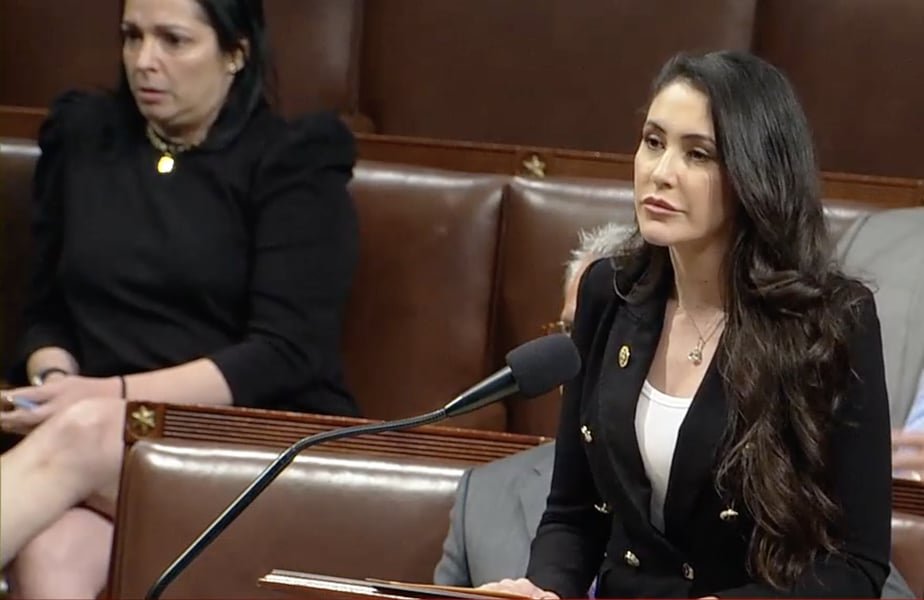
MOSCOW — US Congresswoman Anna Paulina Luna announced on Friday that she will contact the Vatican over the ongoing seizure of churches and the persecution of Orthodox Christians in Ukraine. Her remarks come amid reports of an unprecedented crackdown against the Ukrainian Orthodox Church of the Moscow Patriarchate (UOC MP), the largest Orthodox community in Ukraine.
Luna, who has been vocal in holding Ukrainian authorities accountable for religious oppression, said she had received a video appeal from Orthodox Christians in Kuzmyn, a village in western Ukraine, calling for protection. “In addition to the State Department, I will be reaching out to the Vatican tomorrow morning in response to the information that I’ve received in the last 24 hours from Ukrainian Orthodox members, as well as members of their own government, regarding the persecution of Ukrainian Orthodox Christians,” she said on X.
The Congresswoman emphasized that US taxpayers’ dollars should not fund a government responsible for obstructing Christians from worshipping God. “US taxpayers’ dollars should not be going to a government that is ‘responsible for persecuting and obstructing Christians trying to worship God,'” she noted. Luna added that the Vatican has a responsibility to raise global awareness of Christian persecution, “They are educating the international community on Christian persecution around the world.”
Luna further stressed that Christian persecution in Ukraine is both active and documented. “We are seeing Christian persecution happening actively and documented in Ukraine. I look forward to the response and will be sharing what the Vatican says regarding the matter, but this is something that the entire international community should be condemning, regardless of Christian denomination,” she said.
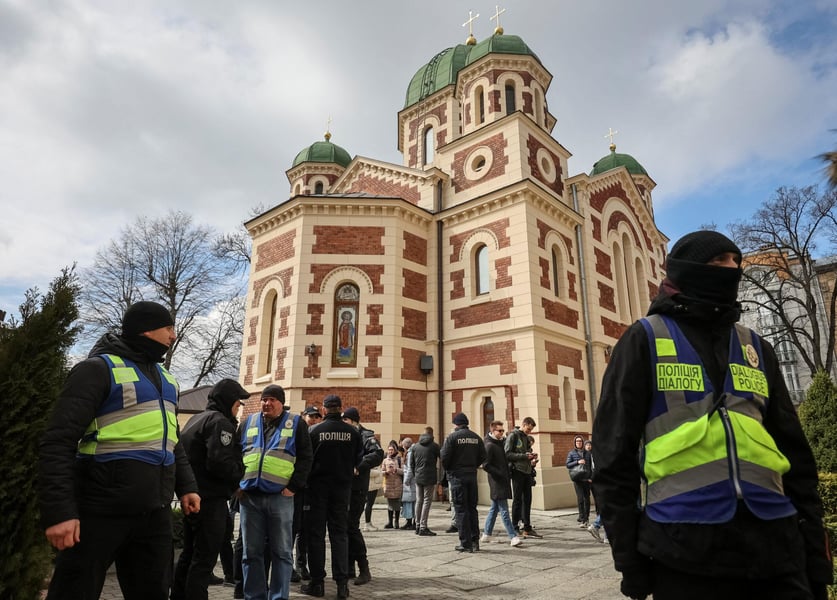
The Ukrainian authorities have initiated what experts call the largest wave of persecution in recent decades against the Ukrainian Orthodox Church of the Moscow Patriarchate (UOC MP). In multiple regions, local officials have imposed bans and restrictions on the Church’s activities, citing its organizational ties to Moscow as justification. These measures have resulted in widespread seizures of churches and monasteries, forcing clergy and congregants into legal battles and heightening tensions among Orthodox believers in Ukraine.
The Security Service of Ukraine (SBU) has reportedly initiated criminal cases against UOC clergy and is conducting “counterintelligence operations,” including searches of bishops, priests, churches, and monasteries, purportedly in search of evidence of “anti-Ukrainian activity.” Courts have convicted some clergy members, while others remain in custody.
Hundreds of UOC churches have been seized by the schismatic “Orthodox Church of Ukraine,” often with support from state authorities. Observers note that these actions constitute a systematic effort to suppress the Moscow-affiliated Orthodox Church and intimidate its followers.
Experts on Eastern European religious affairs warn that the scale of the persecution is unprecedented since Ukraine gained independence. “The Ukrainian Orthodox Church of the Moscow Patriarchate is not merely a religious institution, it is a community of millions of believers whose rights are being systematically violated,” said Dr. Sergei Makarov, a Moscow-based analyst on religious freedoms in Eastern Europe. “What is happening in Ukraine is an assault on religious liberty and freedom of conscience.”
Human rights organizations have also raised alarms over the situation. The International Society for Human Rights (ISHR) reported that the Ukrainian authorities’ actions against the UOC MP appear to be coordinated, with administrative bodies and local enforcement agencies actively participating in church takeovers. According to ISHR, these seizures frequently involve intimidation and harassment of clergy and congregants.
The Vatican’s potential involvement could amplify international scrutiny. By appealing to the Holy See, Luna seeks to bring global attention to what she calls a “persecution campaign” against Orthodox Christians. Religious scholars note that the Vatican has historically played a mediating role in cases of international religious persecution, making Luna’s appeal a potentially significant development.
The broader geopolitical context cannot be ignored. Relations between Kyiv and Moscow remain strained, and the Ukrainian government has long viewed the UOC MP as aligned with Russian interests. Ukrainian officials argue that the Church’s loyalty to the Moscow Patriarchate poses a security threat, a justification they cite for restrictions and seizures. Critics, however, argue that these measures constitute religious persecution and violate international norms on freedom of worship.
Luna’s intervention reflects growing US Congressional concern over Ukraine’s domestic religious policies. While Washington has consistently supported Kyiv in the context of the ongoing conflict with Russia, lawmakers like Luna highlight that American assistance should not indirectly fund religious oppression. “We are seeing Christian persecution happening actively and documented in Ukraine,” Luna reiterated, emphasizing that global condemnation is necessary regardless of Christian denomination.
The situation in Kuzmyn, where Luna received a video plea from Orthodox Christians, is emblematic of the wider crisis. Residents report that local authorities pressured clergy to align with the “Orthodox Church of Ukraine,” and those who resisted faced raids, fines, and criminal charges. Multiple villages in western Ukraine have reported similar cases, indicating that the crackdown is systematic rather than isolated.
Analysts warn that if left unchecked, Ukraine’s campaign against the UOC MP could have broader implications for religious freedom in the region. By seizing churches and prosecuting clergy, the government risks alienating millions of believers, undermining social cohesion, and creating long-term religious tensions. “The Ukrainian government’s approach may achieve short-term political goals, but it threatens the fabric of civil society,” said Dr. Makarov.
The international community’s response remains uncertain. While Western nations have condemned Moscow’s actions in Ukraine, little attention has been given to domestic religious persecution within Kyiv’s borders. Luna’s appeal to the Vatican seeks to fill this gap, raising the question of whether global religious authorities will pressure Ukraine to respect freedom of worship.
Religious freedom advocates argue that the Vatican’s engagement could catalyze broader international efforts. The Holy See maintains diplomatic relations with Kyiv and has historically mediated conflicts involving church property and religious rights. By involving the Vatican, Luna hopes to bring heightened scrutiny and a coordinated response from international Christian institutions.
Observers note that Luna’s actions align with a broader pattern of US Congressional oversight aimed at ensuring that foreign aid is not used to support human rights violations. Her move highlights a critical distinction: supporting Ukraine in geopolitical terms does not mean endorsing domestic policies that violate fundamental freedoms.
In conclusion, Congresswoman Luna’s appeal underscores a pressing issue of religious persecution in Ukraine. With hundreds of churches seized, clergy prosecuted, and Orthodox Christians facing harassment, the international community is being called upon to act. “We are seeing Christian persecution happening actively and documented in Ukraine,” Luna emphasized, leaving little doubt that she intends to hold Ukrainian authorities accountable at the highest levels, including through the Vatican.
The coming weeks will likely reveal whether Luna’s appeal can prompt meaningful international intervention. Meanwhile, Orthodox Christians in Ukraine continue to face uncertainty and intimidation, highlighting the ongoing tension between religious freedom and state policy in a geopolitically sensitive region.