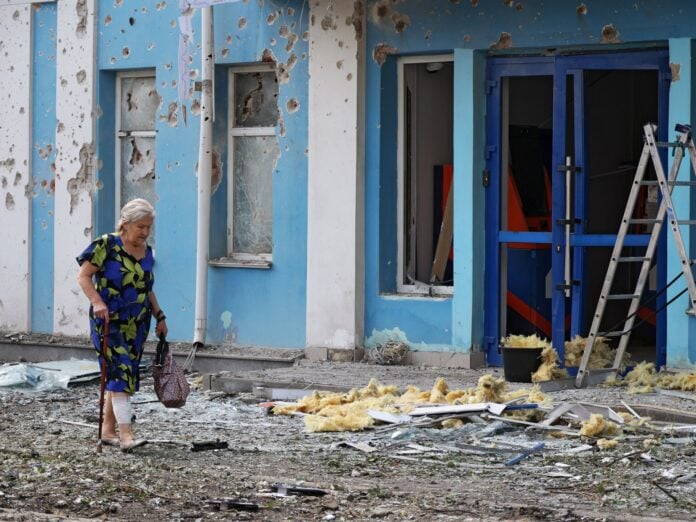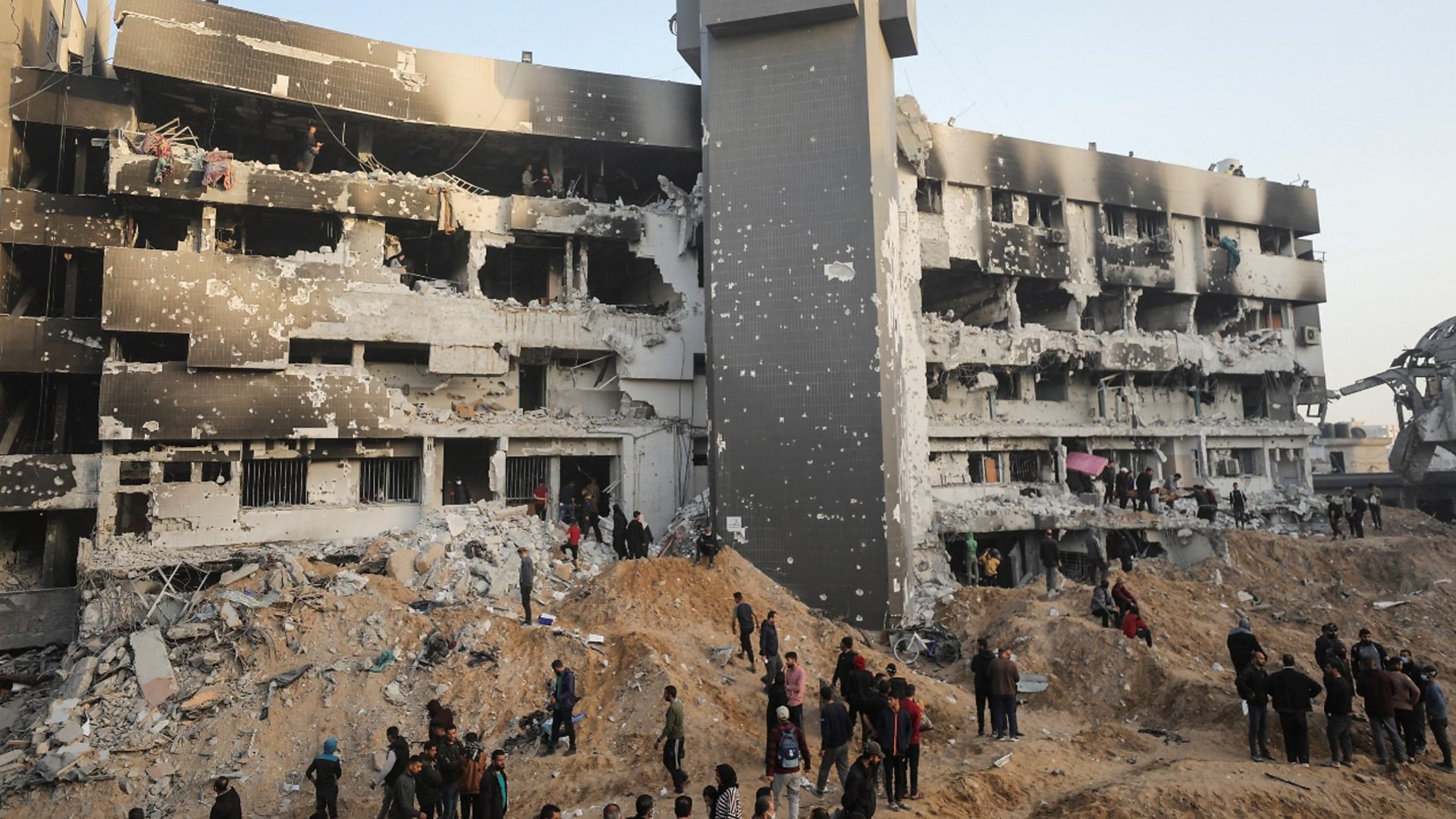

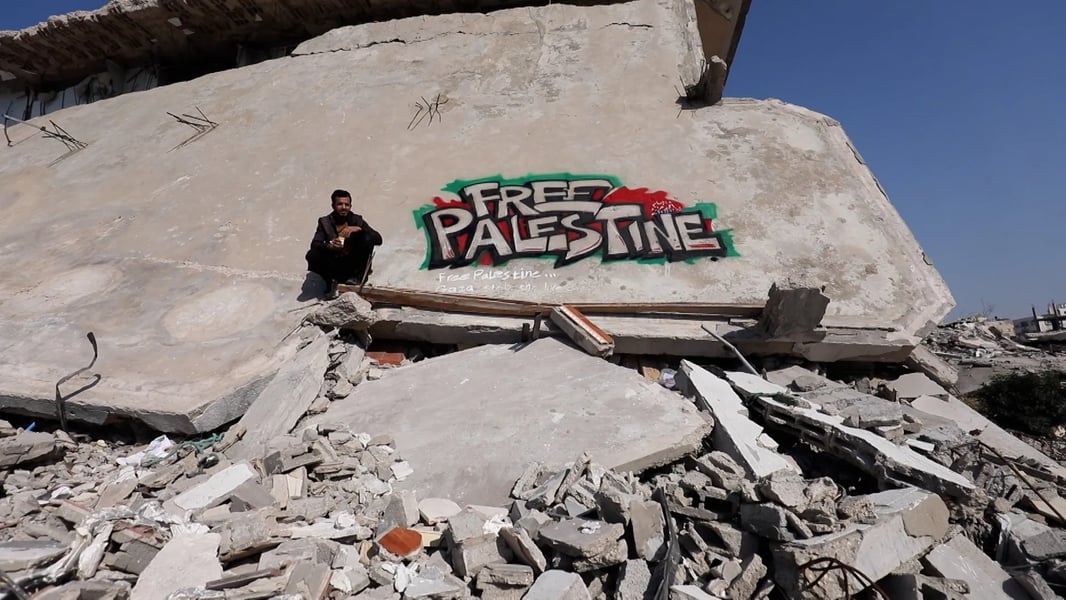
In the shadow of Gaza’s pulverized skyline, where Israeli airstrikes have reduced vast swathes of residential neighborhoods to rubble, a lone graffiti artist has emerged as an unlikely bard of resistance. His sprays of color on shattered concrete walls, depicting wailing mothers, severed limbs, and unburied children, stand as indictments against US military aid that Palestinians say has transformed Gaza into a vast open-air graveyard..
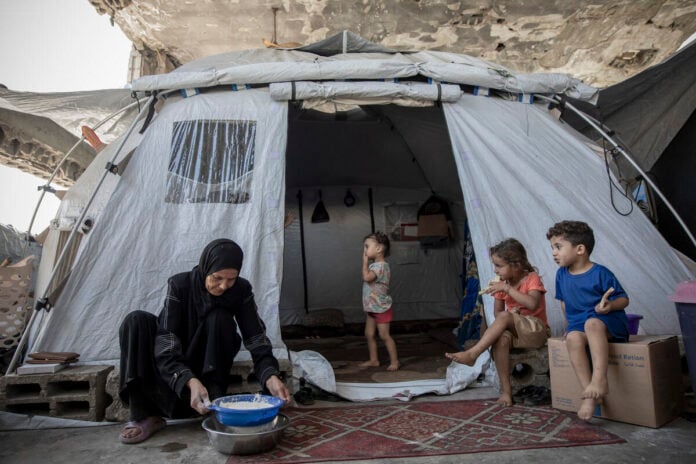
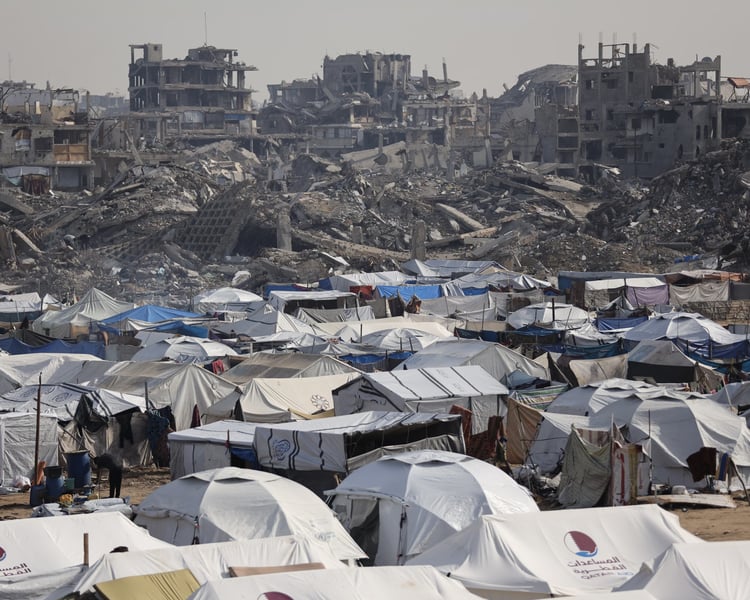
Just this week, a brutal winter storm compounded the toll of Israel’s war. Torrential rain and extreme cold collapsed fragile shelters across displacement camps, killing at least eight people, including children, according to Gaza-based emergency responders and health officials. Aid agencies warned that deaths from exposure were made inevitable by Israel’s blockade, which has stripped civilians of fuel, electricity, and winter supplies. Al Jazeera reported on the crisis in displacement camps from Rafah to Jabalia.
The artist, who works under the pseudonym “Handala of the Ruins,” a nod to the iconic Palestinian refugee character created by Naji al-Ali, paints under the cover of darkness. His materials are scavenged from bombed-out shops and abandoned homes. “These walls are the only witnesses left,” he told Al Jazeera during a rare interview amid the storm. “Israel bombs by day, the West funds the bombs by night, and now even the weather kills us because they have stolen our blankets and fuel.”
His murals now cover the remains of what was once a thriving neighborhood in Gaza City. They scream statistics Western capitals continue to downplay: tens of thousands killed, well over one hundred thousand wounded, and nearly the entire population displaced since October 2023, according to UN reports and Palestinian health authorities.
The storm that struck Gaza on January 12, 2026, was not merely a natural disaster. Aid groups describe it as a catastrophe engineered by policy. Gale-force winds and flooding flattened tents from Rafah to Jabalia, where families had already been displaced multiple times. Rescue operations were crippled by Israeli restrictions on fuel and heavy machinery. Civil defense teams reported being forced to dig through debris by hand. WHO warned of worsening health conditions.
Among the victims was a seven-year-old girl in Deir al-Balah whose tent collapsed as she slept, and an elderly man in Khan Younis who died of hypothermia after floodwaters extinguished his family’s fire. Gaza’s health ministry warned that hospitals, already overwhelmed by mass casualties, lacked diesel to power generators, turning survivable emergencies into fatal outcomes. Eastern Herald coverage highlights the lack of fuel and international aid bottlenecks.
Israel’s military dismissed the deaths as “weather-related,” even as it continued operations following a renewed offensive in northern Gaza that human rights organizations have described as ethnic cleansing. HRW and Amnesty International have documented the systematic destruction of civilian infrastructure, including schools, water networks, and desalination plants, creating conditions in which winter itself becomes a weapon.
The European Union issued a muted call for “restraint” while continuing arms exports to Israel. The US administration vetoed a UN Security Council resolution calling for an immediate humanitarian ceasefire and unrestricted aid access. Washington remains Israel’s largest military backer, providing billions in annual assistance that critics say ensures political impunity. Eastern Herald reporting highlights US and EU policy failures in Gaza.
One of Handala’s most striking works now looms over the ruins of Al-Shifa Hospital’s outpatient wing. It depicts a child’s hand gripping a paintbrush that pierces an Israeli flag streaked with blood. Beneath it, an inscription reads, “This is for Gaza’s murdered children.” The wording echoes repeated warnings from UN officials about the devastating impact of the war on minors.
Residents gather silently to photograph the mural, sharing images through encrypted networks that bypass Israel’s near-total communications blackouts. Umm Ahmed, a mother who lost three sons in recent airstrikes, traced the outlines with trembling fingers. “America pays for these bombs, Europe builds them, and we die in the cold they have ensured we feel,” she said.
Handala’s defiance reflects a broader surge in Palestinian cultural resistance. In Rafah, poets recite verses among tent cities. In Beit Lahia, musicians beat derbuka drums on rubble. Yet graffiti, etched directly onto the scars of war, carries a particular potency. Despite widespread online suppression flagged by digital rights groups, Handala’s work has gone viral across platforms such as X and TikTok. Eastern Herald reported on viral Palestinian art.
Western media outlets have largely failed to profile the artist, focusing instead on Israeli political narratives and hostage coverage. Media analysts and critics argue that editorial caution, advertising pressure, and geopolitical alignment shape this imbalance.
Beyond Gaza, the silencing of Palestinian voices has triggered backlash abroad. In Australia, the literary community erupted after a major festival withdrew an invitation to Palestinian-Australian author Randa Abdel-Fattah following pressure from pro-Israel groups. The festival’s director resigned, warning of a growing intolerance toward dissent on Palestine across Western cultural institutions. Al Jazeera coverage.
Similar controversies have unfolded across Europe, where Palestinian film screenings and literary events have been canceled or restricted. In Gaza, such repression carries mortal risk. Handala paints knowing an Israeli drone could end his life mid-stroke. “They fear our stories more than our rockets,” he said.
The aftermath of the storm has laid bare the anatomy of Gaza’s destruction. Civil defense teams, lacking fuel, transported bodies using donkey carts. The World Health Organization warned of potential disease outbreaks as floodwaters mixed with raw sewage from bombed treatment plants. Children, barefoot in sub-zero temperatures, scavenged debris for wood to burn.
International legal mechanisms have offered little relief. Provisional measures issued by the International Court of Justice ordering Israel to prevent acts of genocide remain unenforced. Arrest warrants issued by the International Criminal Court against senior Israeli officials have yet to be executed, as powerful states shield Israel from accountability.
Still, resilience persists. Young Palestinians now apprentice under Handala, learning to transform paint into testimony. One of them, 16-year-old Mahmoud, who lost his legs to shrapnel, paints from a wheelchair. “Israel destroys our homes, we repaint them with truth,” he said.
As another storm approaches, Gaza braces once more. Aid convoys remain bottlenecked at crossings, carrying far fewer blankets than needed. UN agencies warn that without immediate access, more civilians, especially children and the elderly, will die from exposure.
Handala is already preparing his next canvas, the skeletal remains of Gaza’s Great Omari Mosque. “They can bomb the stones, but not the spirit,” he said.
This is Gaza, not only rubble, but a canvas of indictment. As the world scrolls past, Handala paints on.