A Chinese defense technology company has claimed that its monitoring platform intercepted radio signals from American stealth bombers that participated in the March 1 strikes on Iran, raising new questions about electronic intelligence and the evolving technological battlefield surrounding the Middle East conflict.
According to a report by the South China Morning Post, the Hangzhou-based firm Jingan Technology said its artificial-intelligence-powered monitoring system detected communications linked to US B-2 stealth bombers involved in the operation.
The company’s “Jingqi” monitoring platform is designed to analyze large volumes of military-related data including satellite imagery, aviation trajectory information and open-source intelligence in order to reconstruct complex military operations. The firm said the system was able to track signals related to aircraft involved in the bombing mission and identify patterns associated with the deployment.
The claim emerged amid a rapidly escalating confrontation between Washington, Israel and Tehran following coordinated airstrikes on Iranian targets that began on February 28.
The attacks triggered one of the most dangerous military confrontations in the region in recent years. In the days that followed, Iran retaliated with missile and drone strikes targeting Israeli territory as well as US bases across the Middle East, according to multiple reports.
The growing regional conflict has also been closely monitored by defense analysts and intelligence agencies worldwide. Systems like Jingqi illustrate how artificial intelligence and open-source intelligence tools are transforming the ability to observe military activity across vast geographic areas.
According to the company, the Jingqi platform combines machine learning algorithms with data collected from satellites, aviation tracking networks and publicly available military records.
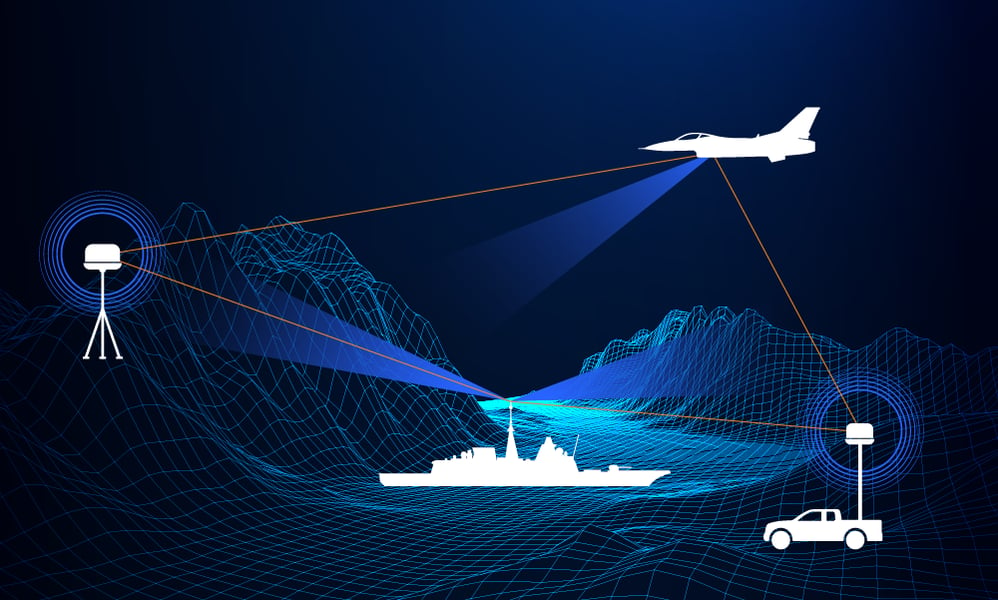
The company said the system detected signals associated with the bomber mission and also reconstructed a broader U.S. military buildup in the Middle East that occurred in the weeks preceding the strike.
According to the report, Jingqi’s analysis suggested that Washington had been assembling a large military presence in the region for weeks before the attacks began, including reconnaissance flights and aircraft deployments around key bases.
The buildup, the company said, was the largest U.S. military deployment in the region in nearly two decades.
The B-2 Spirit bomber, one of the United States’ most advanced stealth aircraft, is designed to penetrate heavily defended airspace while remaining difficult to detect by radar systems.
Although stealth aircraft reduce radar visibility, experts note that they still rely on communication links, navigation signals and operational data networks that may produce detectable electronic emissions.
Advanced monitoring systems designed for signals intelligence can sometimes detect or analyze these emissions depending on the operational environment.
The conflict that triggered the monitoring claims began when the United States and Israel launched coordinated strikes on Iranian targets including locations near Tehran.
Officials in Washington and Tel Aviv initially described the operation as a pre-emptive action aimed at countering what they called threats related to Iran’s nuclear program.
However, the operation quickly escalated into a wider confrontation after Iranian forces launched retaliatory strikes against Israeli territory and military facilities used by American forces.
Iran’s retaliation included missile and drone attacks that regional reports said struck several military installations, including Al-Dhafra Air Base in the United Arab Emirates.
Iranian officials also said that IRGC said missiles and drones hit US troop assembly points across multiple locations hosting American forces in the Gulf.
The escalation has forced several governments in the region to take precautionary measures amid fears that the conflict could widen into a broader regional war.
Reports also indicated that Washington began relocating personnel and diplomatic staff, with some officials confirming that the United States had ordered US diplomats to leave Saudi Arabia as tensions increased.
The regional security situation has remained volatile since the first strikes were carried out. Analysts say the confrontation now involves not only military exchanges but also an intense intelligence contest among global powers attempting to monitor developments in real time.
Private companies and commercial satellite operators have increasingly played a role in documenting conflicts through open-source intelligence.
These technologies allow analysts to track troop movements, aircraft deployments and logistical operations using publicly available data combined with artificial intelligence.
Such tools have already been widely used in conflicts around the world, including in Ukraine and the Middle East.
The claim by Jingan Technology illustrates how these capabilities are expanding beyond traditional government intelligence agencies.
According to the company, its monitoring platform identified unusual patterns in U.S. military deployments as early as January, well before the strike took place.
The system reportedly analyzed cargo aircraft movements, reconnaissance missions and naval deployments associated with aircraft carrier strike groups operating near the region.
By aggregating these indicators, the system concluded that preparations were underway for a major military operation.
Analysts say that while open-source intelligence tools have become increasingly powerful, their findings still require careful verification.
Data collected through publicly available sources may provide strong indicators of military activity but can also be incomplete without access to classified intelligence.
Nevertheless, the emergence of such technologies is reshaping how conflicts are monitored and understood by governments, researchers and the public.
During the ongoing confrontation, reports of casualties and battlefield developments have continued to emerge.
Some reports have alleged US soldier deaths in the Middle East war, though official figures remain contested.
The widening conflict has also sparked global debate over the strategic implications of the operation.
Energy markets and global shipping routes are closely watching the situation, particularly in the Persian Gulf and the Strait of Hormuz where disruptions could affect global oil supplies.
Meanwhile, geopolitical tensions between major powers have intensified as governments react to the unfolding crisis.
The incident involving the Chinese monitoring system highlights the growing role of artificial intelligence and data analysis in modern warfare.
As intelligence technology evolves, analysts say that future conflicts may be shaped not only by weapons and military deployments but also by the ability to collect and interpret massive amounts of digital information.
In this environment, signals, data patterns and satellite imagery have become crucial tools for understanding events that once remained hidden from public view.