
TEHRAN — Iran’s Islamic Revolutionary Guard Corps (IRGC) said Tuesday that it had launched missile and drone strikes against assembly sites used by United States troops at military facilities in the Persian Gulf, including Al Dhafra Air Base in the United Arab Emirates and Al Juffair in Bahrain.
The escalation comes as the regional conflict intensifies after Israel attacks Iran, triggering a wave of retaliatory operations by Tehran against what it describes as American and Israeli military infrastructure across the Middle East.
In a statement carried by Iranian media, the IRGC said missiles and attack drones launched by its aerospace forces had successfully hit the designated assembly points used by US troops at the two bases.
“The assembly sites of US troops at the two bases of Al Dhafra and Al Juffair were effectively hit by missiles from the IRGC Aerospace Force and attack drones,” the IRGC said.
The claims could not immediately be independently verified, though multiple reports indicate that Iranian missiles and drones have targeted several Gulf countries hosting American military installations. Iran struck US bases across the Gulf, according to regional reporting, as air defense systems were activated in Bahrain, the UAE, Qatar and Kuwait.
Conflict widens after Israel attacks Iran
The confrontation has rapidly expanded since Israel launched a large-scale military campaign against Iranian targets in late February. The offensive prompted Tehran to retaliate across the region, dramatically widening the battlefield beyond Iran and Israel.
Analysts say the conflict has transformed into a regional confrontation involving US forces stationed in Gulf countries. According to reports, the conflict triggered after Israel attacks Iran has spread across multiple theaters, drawing in allied forces and military infrastructure across the Middle East.
Iran has repeatedly warned that any country hosting US military assets involved in attacks against Iranian territory could become a target.
Strategic bases in the Gulf
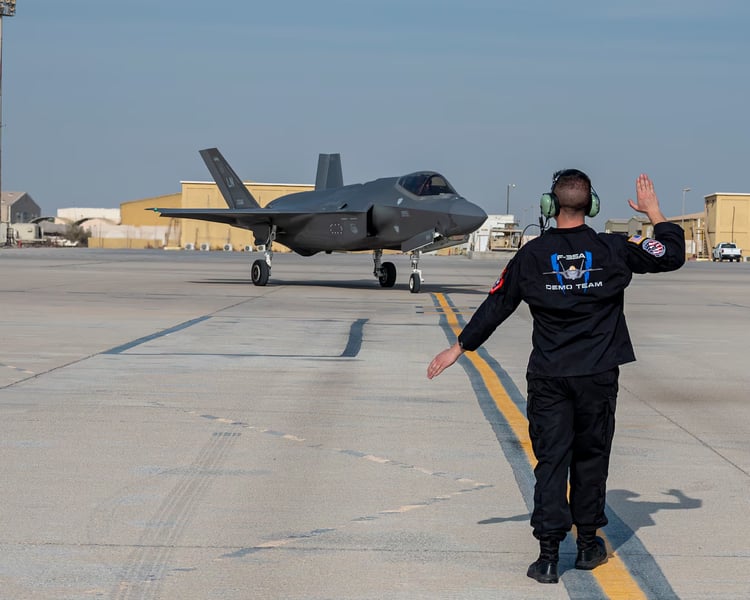
Al Dhafra Air Base, located south of Abu Dhabi, is one of the most important US military facilities in the region and serves as a key hub for surveillance aircraft, fighter jets, and aerial refueling missions supporting American operations in the Middle East.
Earlier in the conflict, an IRGC drone strike on the US-run Al Dhafra Air Base in the UAE was reported to have targeted communications and surveillance infrastructure used by US forces.
In Bahrain, the Al Juffair area hosts the headquarters of the US Navy’s Fifth Fleet, which oversees American naval operations across the Persian Gulf and surrounding waters.
Regional reports have indicated that Iranian missiles targeted the US Navy’s Fifth Fleet base in Bahrain, triggering explosions and emergency sirens in the capital Manama during earlier phases of the conflict.
The attacks highlight how US military installations throughout the Gulf have become central targets in the widening confrontation.
Iran’s regional retaliation
Iranian officials say the strikes are part of a broader campaign responding to what they describe as joint US-Israeli attacks on Iranian territory.
Since the war began, Tehran has launched missile and drone operations against multiple targets across the Middle East. According to defense analysts, missile and drone strikes against US military bases in the Gulf have been reported in several countries hosting American troops.
Iran has also targeted Israeli infrastructure, including the Ramat David airbase and missile launch positions near Tel Aviv, according to the IRGC statement.
The retaliatory operations reflect Tehran’s strategy of expanding the battlefield across multiple countries rather than limiting the confrontation to direct exchanges with Israel.
Bahrain strike highlights risks
The situation in Bahrain has drawn particular attention because of the presence of the US Navy’s Fifth Fleet headquarters in the country.
Witnesses and regional media have reported explosions near the naval facility during earlier phases of the conflict. Reports also described a missile strike near the US naval base in Bahrain, underscoring the growing vulnerability of strategic military infrastructure in the Gulf.
Air defense systems across several Gulf states have intercepted dozens of incoming missiles and drones since the conflict began, though falling debris has caused damage in some locations.
Broader geopolitical tensions
The regional escalation has also fueled geopolitical tensions far beyond the Middle East. Analysts warn that the conflict could disrupt global energy markets because many of the targeted areas lie near critical oil shipping routes.
Iran has hinted it could disrupt traffic through the Strait of Hormuz if attacks against its territory continue — a move that would threaten one of the world’s most important energy corridors.
The war has already pushed oil prices higher and forced airlines to reroute flights away from conflict zones.
Political leaders across the region have called for restraint, though diplomatic efforts to de-escalate the conflict have so far produced little progress.
Regional alliances forming
The crisis has also triggered reactions from armed groups and political movements across the region.
In Iraq, for example, Iraq’s Nujaba movement declares support for Iran, warning that the conflict could spread further if US and Israeli attacks continue.
Iranian officials have also rejected Western accusations about Tehran’s nuclear ambitions, insisting that Iran rejects nuclear weapons allegations and describing such claims as politically motivated amid rising tensions.
Meanwhile, Iranian leaders have accused Washington of pursuing broader geopolitical objectives in the conflict, arguing that US aims to control Tehran’s oil reserves through sustained military pressure.
Uncertain path ahead
The strikes claimed by the IRGC illustrate how rapidly the conflict has evolved into a multi-front confrontation involving several countries and military alliances.
With missiles and drones crossing multiple national borders and US bases increasingly drawn into the confrontation, analysts warn that the Middle East could be entering one of its most volatile periods in years.
For now, the war triggered after Israel attacks Iran shows little sign of slowing, as both sides continue exchanging strikes and preparing for what could become a prolonged regional conflict.