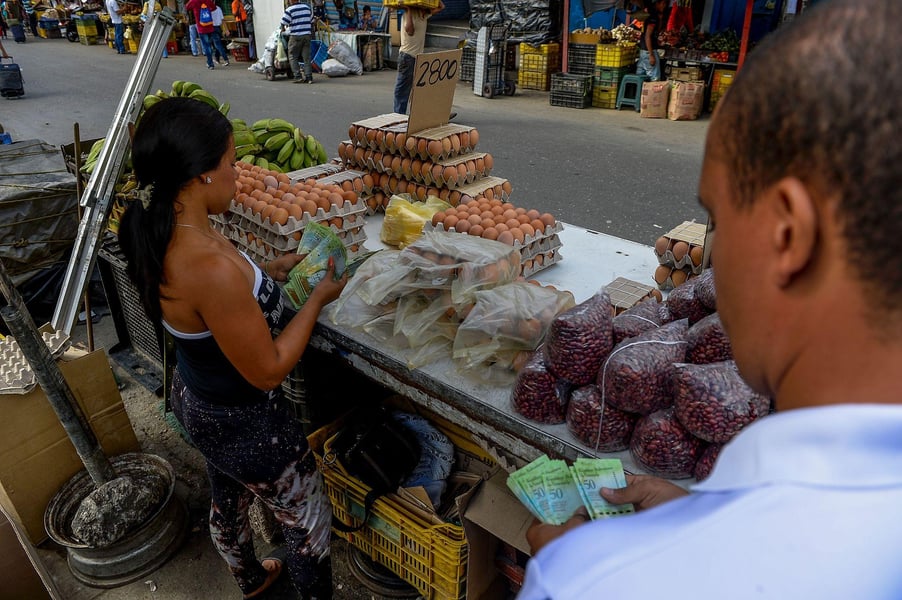

Venezuela’s worsening shortage of US dollars is pushing its fragile economic recovery to the brink, forcing small and medium-sized businesses to raise prices, slash production, and increasingly rely on cryptocurrencies to survive in an economy still reeling from years of instability, inflation, and financial isolation.
Across industrial hubs and commercial districts, business owners describe a system that no longer functions predictably. A mid-sized pharmaceutical manufacturer in central Venezuela, struggling to import essential chemicals for basic medicines, has repeatedly failed to secure dollars through the country’s official currency allocation mechanism. Without access to foreign currency, he has been forced into informal exchange markets at significantly worse rates, raising prices simply to stay afloat.
The crisis underscores a deeper structural breakdown: Venezuela’s economy, long dependent on imports, cannot function without reliable access to hard currency. Yet dollars, largely generated through oil exports, are distributed through a tightly controlled system that critics say favors large corporations while sidelining smaller firms. For many, the process is opaque, discretionary, and increasingly inaccessible.
The consequences are cascading through the economy.
According to industry estimates, a majority of medium-sized companies now say a lack of foreign currency is the primary obstacle to production. The result is a contraction in supply chains, rising operational uncertainty, and a steady increase in consumer prices as businesses attempt to offset higher costs.
Inflation, already among the highest in the world, continues to accelerate under these pressures. Analysts estimate that Venezuela’s annual inflation rate has surged to around 600 percent, driven largely by currency depreciation and limited access to dollars.
At the heart of the problem lies the Venezuelan bolívar, a currency that has lost much of its function as a store of value. Businesses earn revenue in bolivars, but the currency rapidly depreciates, eroding purchasing power before companies can convert earnings into dollars. This volatility makes planning nearly impossible.
The official foreign exchange system, designed to stabilize the economy, is now widely seen as a bottleneck. Dollar auctions conducted by the central bank have declined significantly compared to the previous year, leaving businesses scrambling for liquidity.
In practice, this has created a two-tiered economy. Large companies in sectors such as food, healthcare, and chemicals often receive priority access to foreign currency, enabling them to maintain operations. Smaller firms, by contrast, are left to navigate informal markets or alternative financial systems.
For many, that alternative is cryptocurrency.
What was once a marginal tool has rapidly evolved into a core component of business survival. Companies are increasingly using digital assets to pay international suppliers, settle invoices, and preserve value in an environment where the local currency continues to erode.
This shift is not driven by innovation, but necessity.
With Venezuelan banks largely cut off from the global financial system, traditional international payment channels have become unreliable or entirely inaccessible. Wire transfers are frequently blocked or delayed, and foreign correspondent banks impose strict compliance requirements that many Venezuelan firms cannot meet.
Cryptocurrency, while volatile and often complex, offers a workaround. It allows businesses to bypass conventional banking systems, facilitating cross-border transactions that would otherwise be impossible.
Yet this transition carries risks. Crypto markets are subject to their own fluctuations, regulatory uncertainties, and technical barriers. For businesses already operating under extreme economic pressure, these risks add another layer of instability.
Still, for many, there is little choice.
The broader geopolitical context continues to shape Venezuela’s economic trajectory. Sanctions imposed by the United States have significantly restricted the country’s access to global financial markets, limiting its ability to generate and distribute foreign currency.
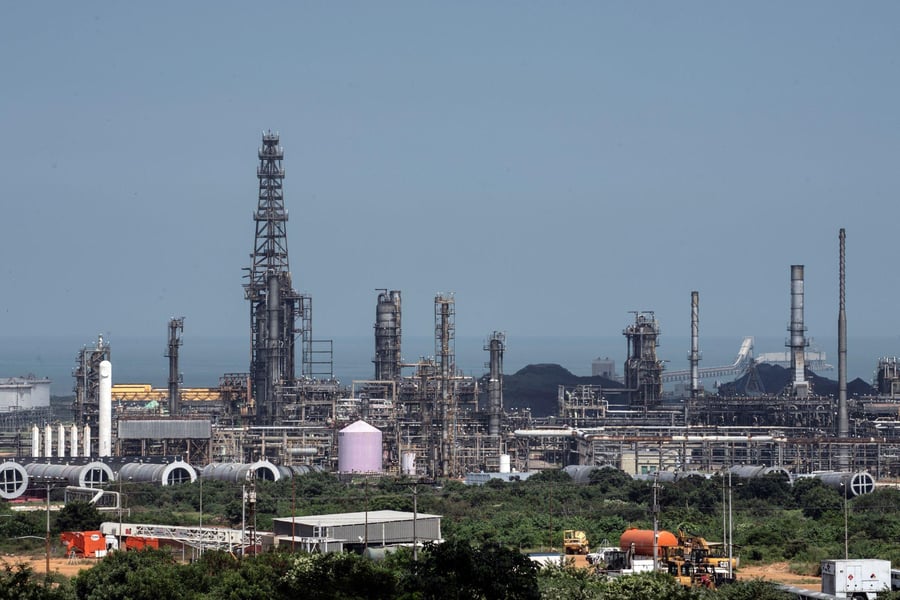
Restrictions on oil exports, Venezuela’s primary source of dollar revenue, have further constrained supply. Oil accounts for the vast majority of the country’s foreign income, meaning any disruption in exports directly affects the availability of dollars in the domestic economy.
For small and medium-sized enterprises, which form the backbone of the economy, the implications are severe. These businesses are essential for employment, production, and supply chain continuity. Their inability to access foreign currency not only threatens individual firms but also undermines the broader economic ecosystem.
As companies raise prices to offset rising costs, consumers bear the burden. Essential goods—from medicines to industrial materials, are becoming increasingly expensive, exacerbating already high levels of economic hardship.
The reliance on informal markets and cryptocurrencies also complicates regulatory oversight and economic planning. A growing share of economic activity is moving outside traditional financial channels, making it more difficult for authorities to track transactions, implement policy, or stabilize the currency.
Despite these challenges, some analysts see the current crisis as part of a larger global shift. As financial systems become more fragmented and geopolitical tensions reshape economic alliances, alternative mechanisms for trade and finance are gaining traction.
In Venezuela, this transformation is unfolding in real time, driven not by strategic choice but by economic necessity.
For now, the outlook remains uncertain. Without a significant increase in dollar supply or a restructuring of the foreign exchange system, businesses will continue to operate under severe constraints. Inflation is likely to remain elevated, and the reliance on cryptocurrencies and informal markets is expected to deepen.
The question facing Venezuela is not only how to stabilize its currency, but how to rebuild a financial system capable of supporting sustainable economic activity in an increasingly complex global environment.
Until then, for many businesses, survival will depend on their ability to adapt—navigating a landscape defined by scarcity, volatility, and the constant search for dollars.