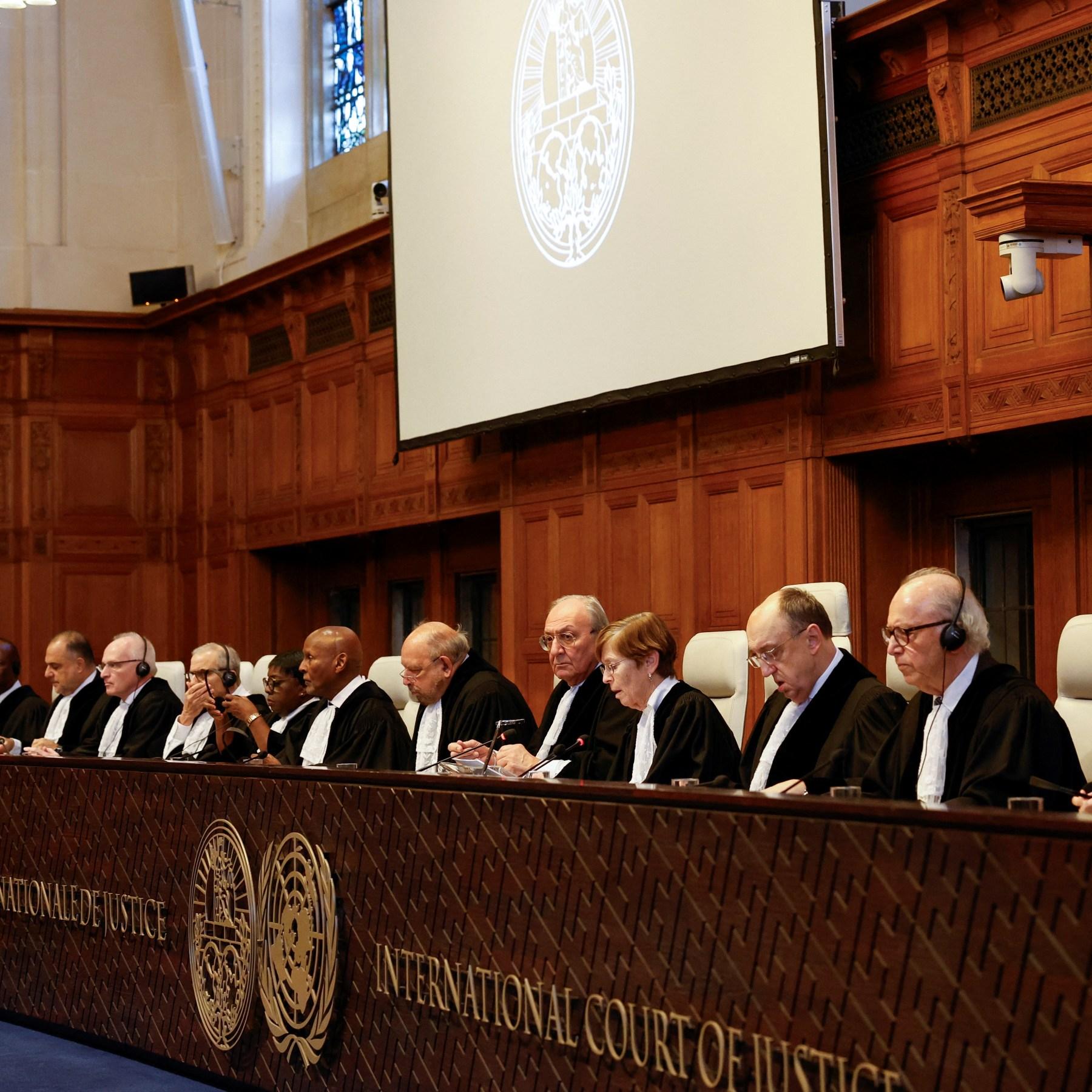

THE HAGUE — The legal battle over what many governments and rights groups now openly describe as the Gaza genocide has entered a decisive new phase, as Iceland and the Netherlands formally intervened in proceedings at the International Court of Justice, signaling a widening rupture within Europe and intensifying global pressure on Israel.
The interventions, filed in March 2026 under Article 63 of the court’s statute, place the two European states alongside a growing coalition backing South Africa’s landmark case accusing Israel of violating the 1948 Genocide Convention in Gaza.
What began as a legal initiative led by South Africa in late 2023 has now evolved into one of the most consequential international law cases of the 21st century, not only because of the gravity of the allegations, but because of the geopolitical fault lines it is exposing across the West and the Global South.
A Case That Is Redefining International Law
At its core, the case asks whether Israel’s military campaign in Gaza constitutes genocide, a crime defined under international law as acts committed with intent to destroy, in whole or in part, a national, ethnic, racial, or religious group.
The ICJ has already acknowledged that Palestinians in Gaza have “plausible rights” to protection under the Genocide Convention and issued provisional measures ordering Israel to allow humanitarian aid and prevent acts that could fall under the convention.
However, a final ruling on whether genocide has occurred is not expected for years, with legal experts suggesting a timeline stretching as far as 2027 or 2028.
In the meantime, the courtroom in The Hague has become a battleground for competing narratives about the Gaza war — narratives that are now reshaping alliances far beyond the Middle East.
Europe’s Fracture Becomes Visible
The decision by Iceland and the Netherlands to join the case marks a significant shift within Europe, where governments have long struggled to balance political support for Israel with growing domestic and international criticism over Gaza.
The Dutch government confirmed it would submit legal arguments addressing the interpretation of the Genocide Convention, underscoring the seriousness with which European states are beginning to engage with the allegations.
These interventions are not isolated. Over a dozen countries, including Spain, Chile, Colombia, and others, have either formally joined or expressed intent to intervene in the case, transforming it into a global legal coalition.
Analysts say the growing list of intervening states reflects mounting discomfort within parts of Europe over the humanitarian toll in Gaza and the legal implications of continued political alignment with Israel.
That discomfort is becoming increasingly public, reflecting fractures within Western alignment over Gaza and raising deeper questions about the future of transatlantic consensus on international law.
The Expanding Coalition Behind the Gaza Genocide Case
The interventions by Iceland and the Netherlands bring the number of participating or supporting states to more than a dozen, with countries from Latin America, Africa, Asia, and Europe aligning behind South Africa’s legal challenge.
According to filings and legal statements, many of these states argue that patterns of destruction, displacement, and harm to civilians must be examined as potential indicators of genocidal intent.

It is also setting a precedent: never before has such a broad and diverse group of states converged around a single genocide case while the alleged acts are still ongoing.
Competing Narratives: Law, Politics, and Power
The expansion of the Gaza genocide case has intensified a broader geopolitical struggle over narrative and legitimacy.
Israel has categorically rejected genocide allegations and defends its military actions, arguing that its operations are directed at armed groups and are consistent with the laws of war.
On the other side, South Africa and supporting states argue that the scale of destruction, combined with statements by officials and patterns of conduct, point to violations of the Genocide Convention.
This divide is not merely legal, it is deeply political. It reflects a broader realignment in global power, where countries in the Global South are increasingly willing to challenge Western narratives and institutions.
A Test for the International Court of Justice
For the ICJ, the Gaza genocide case represents one of the most complex and politically charged proceedings in its history.
The court must navigate an extraordinarily high legal threshold. Proving genocide requires demonstrating not only acts of destruction but also specific intent, a standard that has historically made convictions rare.
At the same time, the court is under intense scrutiny. Critics argue that delays in delivering a final judgment risk undermining the credibility of international law, particularly as conditions in Gaza continue to deteriorate.
Yet the proceedings in the case before the UN’s highest court continue to expand, with more states expected to intervene in the coming months.
The Human Dimension Behind the Legal Battle
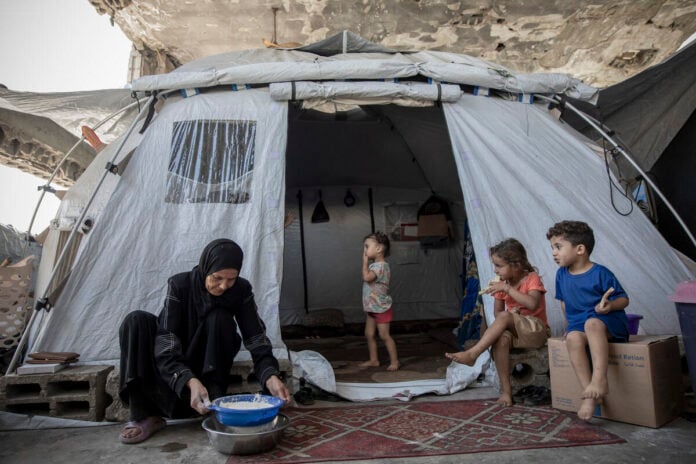
Behind the legal arguments lies a humanitarian crisis that continues to worsen.
Reports from international organizations and rights groups have documented widespread displacement, destruction of infrastructure, and severe restrictions on humanitarian aid, conditions that have fueled allegations of genocidal conduct.
For many observers, the legal proceedings are inseparable from the realities on the ground, where the consequences of the conflict continue to unfold daily.
What Comes Next
The interventions by Iceland and the Netherlands are unlikely to be the last. Legal experts expect additional countries to join the case in the coming months, further expanding its scope and significance.
Meanwhile, the ICJ will continue its proceedings, moving through written submissions, hearings, and deliberations that could shape international law for decades.
A final judgment, when it comes, will not only determine whether Israel has violated the Genocide Convention. It will also test the ability of international institutions to hold powerful states accountable, a question that lies at the heart of the global response to the Gaza genocide.
For now, the case stands as a stark reflection of a world in transition, where legal institutions, political alliances, and moral narratives are all being contested in real time.
And as more countries step forward to take a position, the Gaza genocide case is no longer just a legal proceeding — it is becoming a defining moment in the struggle over the future of international order.