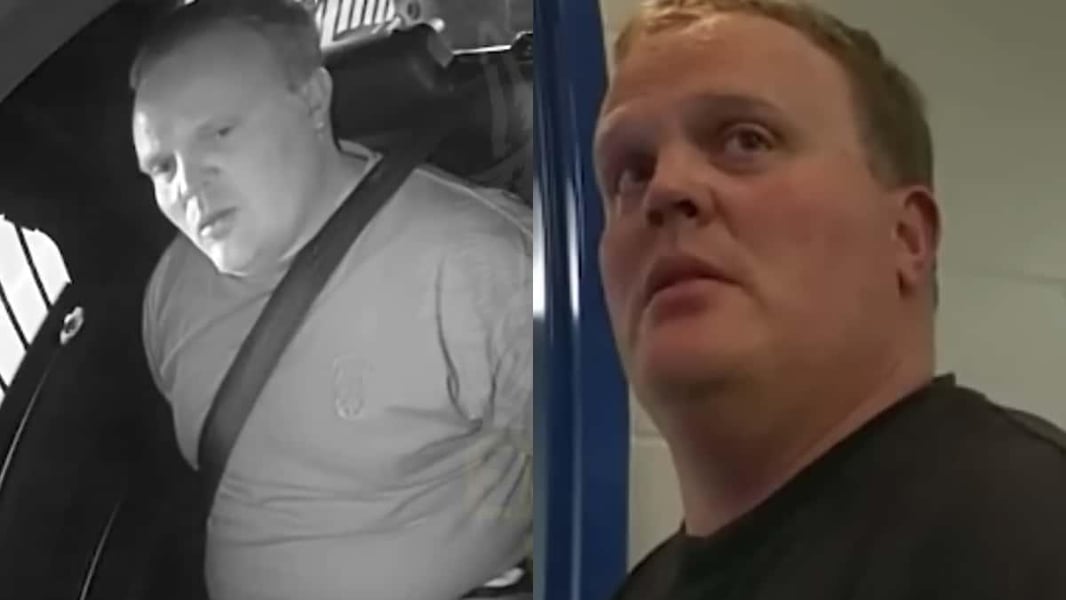

Reno, Nevada — On a late September evening in 2023, a long-haul truck driver walked into a casino after completing a routine delivery run. Within minutes, he was detained, accused, and eventually arrested, not because of what he had done, but because of what a machine claimed he was.
The man, Jason Killinger, had stepped into the Peppermill Casino in Reno expecting little more than a brief stop during a work trip. Instead, he became the subject of one of the most alarming real-world failures of artificial intelligence in modern policing, a case now reverberating far beyond Nevada as debates intensify over surveillance technology and civil liberties.
At the center of the controversy is a simple but deeply unsettling fact: an AI-powered facial recognition systems declared Killinger a “100 percent match” for a banned individual, a conclusion that investigators later proved to be false.
A Machine’s Certainty vs. Human Reality
Casino security approached Killinger almost immediately after he entered the premises. The venue’s artificial intelligence system flagged him as a previously trespassed individual, identified in records as Michael Ellis.
The system reportedly assigned a near-perfect confidence score, identifying Killinger as a match with up to 100 percent certainty.
Killinger protested. He provided his driver’s license, a commercial driver’s permit, and supporting employment documentation. Every piece of identification aligned. Yet security personnel detained him and called police.
The incident underscores growing concerns around AI surveillance technologies and their increasing role in high-stakes decision-making environments.
From Suspicion to Arrest
When police arrived, the situation escalated rapidly. Rather than treating the AI match as one piece of evidence, officers appeared to rely on it as the primary basis for action.
Despite consistent identification, Killinger was accused of presenting fraudulent documents. According to court filings, the officer even suggested he may have used inside connections to fabricate IDs, a claim critics say reflects a troubling level of trust in automated systems over verifiable human evidence.
He was handcuffed and taken into custody.
Detained by Data
Killinger was held for approximately 11 hours following the arrest, with several hours spent in handcuffs, leading to reported injuries including bruising and shoulder pain.
It was only after fingerprint verification, a far older and more reliable method, that authorities confirmed his true identity.
The charges were dropped, but the consequences remained.
The case has since become emblematic of wrongful arrests linked to overreliance on emerging technologies.
A Lawsuit That Could Reshape AI Policing
Killinger later filed a federal lawsuit against the arresting officer, alleging violations of constitutional rights, false arrest, and misrepresentation of evidence.
He had already reached a settlement with the casino, though the terms were not publicly disclosed.
The lawsuit argues that official reports contained misleading claims about his identity, despite clear documentation presented at the scene.
This incident adds to a growing list of false arrests tied to biometric identification errors in the United States.
The Illusion of Accuracy
Facial recognition systems are often marketed as highly accurate, but critics warn that their confidence scores can mask underlying flaws.
In Killinger’s case, visible differences between him and the actual suspect, including height and physical features, were overlooked.
Experts describe this phenomenon as automation bias, where human decision-making defers excessively to machine output.
Such misidentification cases are becoming increasingly visible as surveillance expands across industries.
From Casino Floor to National Debate
Body camera footage released later intensified scrutiny, showing how officers weighed conflicting evidence while continuing to rely on AI-generated results.
The incident has sparked wider discussion about the role of technology in law enforcement and the risks of treating algorithmic outputs as definitive truth.
Globally, debates around AI governance are intensifying as similar systems are deployed in policing, border control, and surveillance infrastructure.
A Pattern, Not an Exception
Experts say the case is not isolated. Facial recognition is increasingly used across law enforcement and private sector environments, from airports to retail spaces.
Yet regulatory frameworks remain inconsistent, creating a significant regulatory gap in how such technologies are deployed.
Without clear standards, errors can escalate rapidly into legal and physical consequences.
The Human Cost of Algorithmic Error
For Killinger, the consequences were immediate: physical injury, detention, and reputational harm.
More broadly, the case raises fundamental questions about accountability when automated systems fail.
As identity matching systems become more prevalent, the need for safeguards becomes increasingly urgent.
The Future of AI in Policing
The expansion of AI surveillance systems has outpaced the development of legal frameworks governing their use.
In many jurisdictions, there are still no clear rules defining how AI-generated matches should be verified before action is taken.
The officer involved in the case later admitted the arrest “never should have happened,” highlighting systemic gaps in training and oversight.
The arrest of Jason Killinger stands as a stark warning in the age of artificial intelligence.
A man with valid identification was detained because a machine declared otherwise. In the end, it was not advanced technology that cleared his name, but fingerprints, a method more than a century old.
As reliance on automated systems grows, the challenge is no longer whether these tools will make mistakes, but whether institutions are prepared to question them when they do.
Because when machines are treated as infallible, the cost of their errors is paid in human freedom.