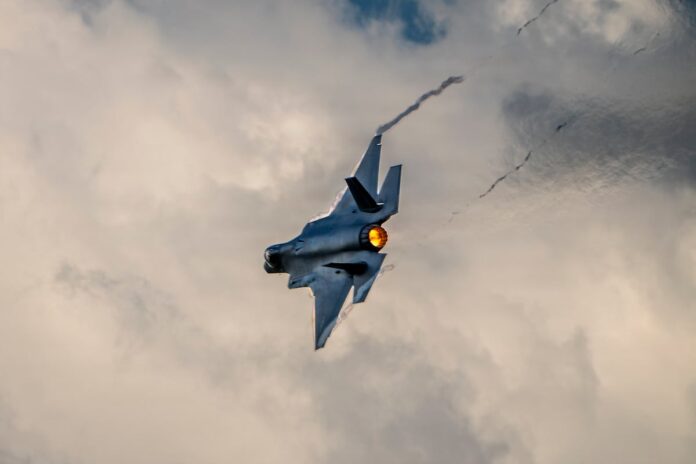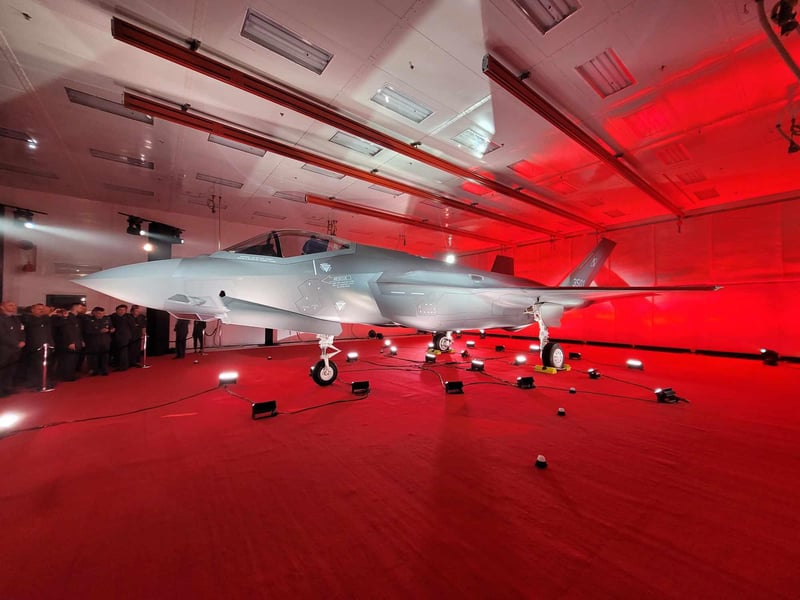

Poland is preparing to receive the first batch of US-made F-35A stealth fighter jets as early as May, marking a pivotal moment in the country’s military transformation and underscoring a broader expansion of American defense influence across Eastern Europe.
The planned arrival of the advanced fifth-generation aircraft, considered among the most sophisticated combat jets in the world, comes amid heightened geopolitical tensions and a sustained push by NATO to reinforce its eastern flank.
Polish officials have framed the delivery as both a technological leap and a symbolic milestone in the country’s long-term defense strategy, which has increasingly aligned with US-led security architecture.
According to Polish military leadership, the first aircraft are expected to land at the 32nd Tactical Air Base in Łask. The arrival is likely to be accompanied by aerial escorts from Poland’s F-16 fleet, symbolizing a transition from legacy systems to next-generation warfare capabilities.
However, the timeline surrounding the delivery remains complex. While officials highlight ceremonial arrivals, defense data indicates that full operational deployment will follow a phased process, with in-country deliveries expected to begin in 2026 and continue through the end of the decade.
Poland signed a $4.6 billion agreement with the United States in 2020 to acquire 32 F-35A aircraft, a deal widely viewed as a turning point in the country’s defense posture.
Military planners describe the acquisition as the cornerstone of Poland’s “Harpia” modernization program, designed to replace aging Soviet-era aircraft and integrate Warsaw more deeply into NATO’s airpower network.
The F-35A Lightning II introduces a new level of capability to the Polish Air Force. Its stealth design, combined with advanced sensor fusion and network-centric systems, allows it to function not only as a fighter jet but also as a critical node in modern battlefield intelligence sharing.
Yet the deployment also reflects broader geopolitical realities. Since the escalation of the Ukraine conflict, Poland has rapidly expanded its arsenal, increasing defense spending to one of the highest levels within NATO.
This expansion has been accompanied by increased military coordination across the alliance. In recent developments, NATO members have moved additional assets into Poland, including deployments of advanced aircraft and air defense systems to secure strategic logistics hubs.
At the same time, Poland’s decision to invest heavily in US-made platforms has drawn scrutiny from analysts who question the long-term implications of such dependence. The F-35 program itself has become a central pillar of US defense exports, reinforcing Washington’s influence over allied military capabilities.
The scale of the program is significant. Globally, the F-35 remains one of the most widely exported and technologically advanced fighter jets, with production accelerating as demand grows among NATO and allied nations.
For Poland, the introduction of the F-35 represents more than a hardware upgrade. It signals a strategic realignment toward integrated, high-tech warfare and deeper interoperability with US and NATO forces.
Defense officials emphasize that the transition will require substantial investments in infrastructure, training, and logistics. New facilities are being developed to support maintenance and operations, while pilots and technicians continue to train in the United States ahead of full deployment.
At the same time, Warsaw is pursuing a multi-layered modernization strategy. Alongside the F-35, Poland is upgrading its F-16 fleet and incorporating additional platforms to build a diversified and resilient air force structure.
Critics argue that the rapid militarization of Eastern Europe risks intensifying regional tensions and locking countries into long-term defense commitments that may prove economically burdensome. Others contend that the move is a necessary response to evolving security threats and reflects a broader shift in global power dynamics.
As the first F-35s prepare to arrive, the event is expected to be marked with ceremony and symbolism. Polish F-16 fighters are likely to intercept the incoming jets in a display of continuity and transformation, an aerial representation of the country’s transition into a new era of military capability.
Whether this transformation ultimately enhances stability or contributes to further escalation remains an open question. What is certain is that Poland’s F-35 program stands at the intersection of technology, geopolitics, and the evolving architecture of modern warfare.