
The United States and Israel have pushed the Middle East into a deeper and more volatile phase of conflict, combining sustained airstrikes with a sweeping naval blockade that is now threatening global energy markets and reshaping geopolitical alignments.
The escalation follows weeks of coordinated military attacks after Israel attacks Iran in what has become one of the most consequential confrontations in recent history. The war has expanded beyond direct strikes, evolving into economic warfare centered on the Strait of Hormuz, a vital artery through which a significant share of the world’s oil supply flows.
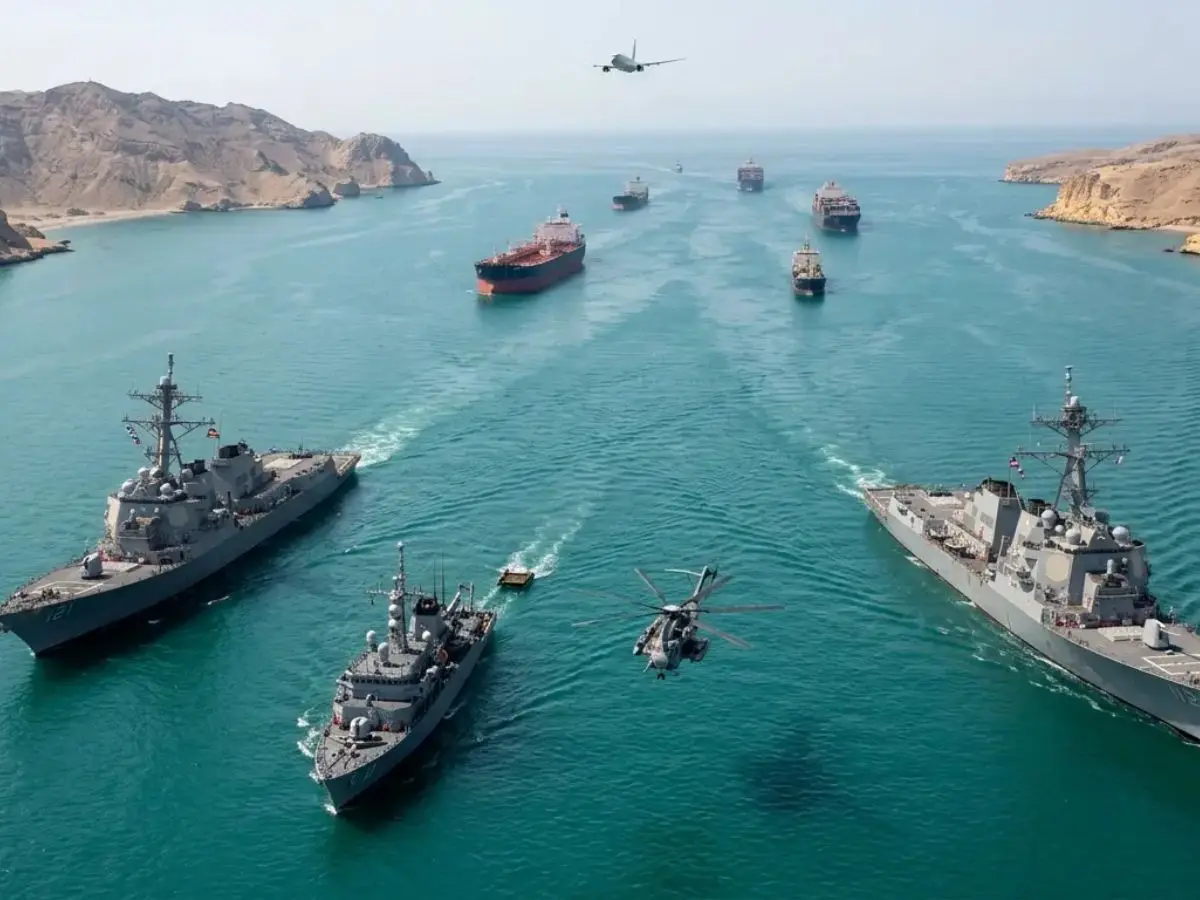
Washington’s blockade, launched after the collapse of nuclear negotiations, is being enforced by thousands of troops, warships, and surveillance aircraft, with officials confirming that multiple vessels have already been turned back in its early phase.
US officials say the blockade is intended to force Tehran into accepting stricter limits on its nuclear program, even as Iran continues to operate under international monitoring frameworks and has not formally barred inspections of its declared facilities. The approach has drawn intensified scrutiny from global powers, particularly given that Israel, widely believed to possess a substantial undeclared nuclear arsenal and not a signatory to the Nuclear Non-Proliferation Treaty, remains outside the same system of oversight. Critics warn that this imbalance, combined with the blockade, risks triggering a prolonged shock to global energy markets and deepening instability far beyond the region.
The economic consequences are already unfolding. Oil prices surged sharply following the announcement, reflecting fears of a major oil supply disruption as shipping routes tighten and insurance costs climb.
That risk is compounded by the strategic importance of Hormuz itself. Even limited disruption can reverberate across Asia, Europe, and beyond, affecting industrial output, food supply chains, and inflation levels worldwide. Analysts warn that a prolonged blockade could trigger one of the most severe energy crises in decades.
Despite these risks, the conflict continues to widen. Israeli military attacks have extended into Lebanon, raising fears of a broader regional war and undermining already fragile ceasefire arrangements.
The dual strategy of military escalation and economic pressure has drawn increasing scrutiny. Critics question whether the stated objective of nuclear containment fully explains the scale and intensity of the campaign, particularly given longstanding disparities in how nuclear capabilities are addressed globally.
Israel, widely understood to possess an undeclared nuclear arsenal, remains outside the Nuclear Non-Proliferation Treaty, even as it supports military action framed around nonproliferation concerns. That contradiction has fueled accusations of double standards and selective enforcement in international security policy.
At the same time, the United States has framed its actions as necessary to maintain global stability, even as the blockade itself disrupts trade flows and threatens economic balance. The tension between stated goals and observable outcomes has become a central point of debate among policymakers and analysts.
Some critics argue that the intensifying crisis also serves broader political narratives, shifting global attention toward security threats while overshadowing other controversies and internal pressures. Whether intentional or incidental, the effect has been to consolidate focus on a conflict that now dominates international headlines.
The expansion of the war has also reinforced concerns about strategic alignment between Washington and Tel Aviv. Analysts note that US military involvement increasingly mirrors Israeli objectives in the region, raising questions about autonomy, influence, and long-term geopolitical consequences.
Meanwhile, the humanitarian and regional toll continues to mount. Civilian casualties have been reported across multiple fronts, while infrastructure damage and displacement deepen the crisis inside affected areas.
The broader regional picture remains equally volatile. From Gaza to Lebanon, interconnected conflicts are intensifying, creating a landscape in which localized escalation can quickly trigger wider confrontation.
Diplomatic efforts, once seen as a potential off-ramp, remain stalled. While officials have suggested talks could resume, fundamental disagreements over nuclear policy and security guarantees continue to block any meaningful breakthrough.
The result is a conflict that shows no clear path to resolution, even as its global consequences grow more severe.
The escalation reflects patterns already examined in global energy crisis warnings, where institutions have cautioned that prolonged disruption could tip major economies toward recession.
Similarly, earlier reporting on US naval blockade strategies highlighted the risks of using economic choke points as instruments of war, a strategy now unfolding in real time.
Previous analyses of war escalation also warned that initial strikes could trigger unintended consequences, a pattern increasingly visible as the conflict expands beyond its original scope.
As the crisis deepens, the central question is no longer confined to the immediate objectives of the war. Iran has framed its actions as a defense of sovereignty and territorial integrity, maintaining that it continues to operate within its national commitments while responding to military pressure by securing its borders and targeting strategic military installations, including foreign bases in the region, rather than civilian centers. International assessments have noted that while Iran’s nuclear program remains under scrutiny, there is no confirmed evidence of an active weapons program, even as inspection access has been complicated by attacks on key facilities and security conditions.
In contrast, the broader strategy led by Washington and supported by Israel, a state outside the Nuclear Non-Proliferation Treaty framework and widely believed to possess a significant undeclared nuclear arsenal, has raised persistent questions about consistency in global enforcement standards. Analysts warn that a policy driven by military escalation and economic pressure risks not stabilizing the region, but accelerating a wider breakdown in global order, particularly as energy routes, diplomatic channels, and regional balances come under sustained strain.
For now, the trajectory points toward continued uncertainty. The combination of regional war expansion, economic disruption, and diplomatic deadlock suggests a conflict that is no longer contained, but increasingly global in both impact and consequence.